Think Dubai is only skyscrapers and shopping? Think again. Behind the city’s skyline are rugged mountains, hidden wadis, and desert routes that make hiking in Dubai an unexpectedly great outdoor destination.
This guide explores the best hiking routes across Dubai and nearby regions, covering a wide range of difficulty levels—from easy, well-marked trails suitable for beginners to challenging mountain routes for experienced hikers. It provides practical guidance on when to hike, what to expect on different terrains, and how to prepare for safe and enjoyable outings.
Alongside well-known destinations such as Hatta and Jebel Jais, the guide highlights lesser-known yet striking trails like Wadi Naqab and Wadi Shees. With careful planning and the right preparation, these routes offer some of the most scenic hiking experiences in the UAE.
Why Hike in Dubai?
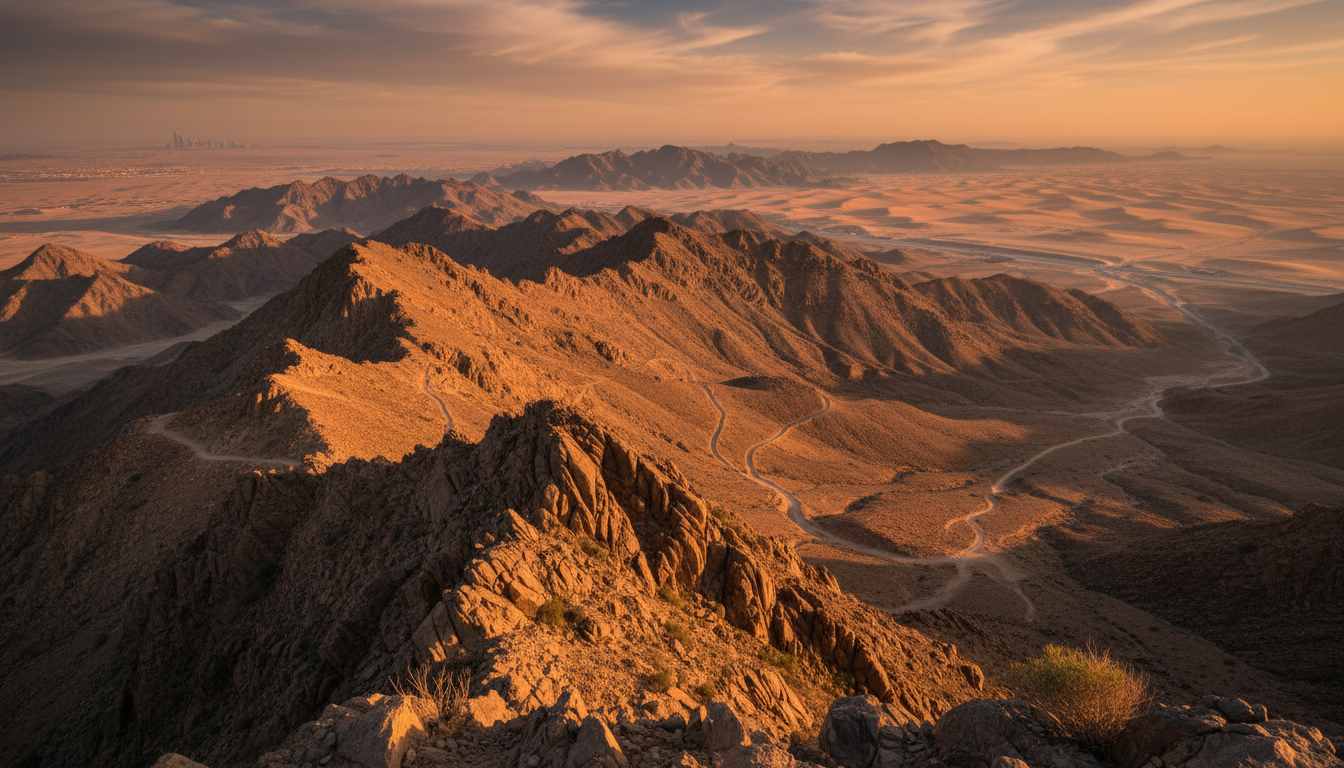
The stunning Hajar mountains offer breathtaking views for hikers near Dubai
Dubai’s outdoor scene surprises many visitors: beyond the cityscape you’ll find hiking routes that range from easy family walks to rugged mountain routes. Below are the top reasons to lace up your boots and explore the trails in the UAE.
- Diverse landscapes: Hike across Mars-like red rock, soft desert sand, and narrow wadi canyons — every trail shows a different face of the region’s geology.
- Close to home: Many of the best places for hiking are a short drive from central Dubai — think weekend trips to Hatta or a half-day outing to Wadi Shawka — making these trails ideal for day trips.
- Great hiking season: The cooler months (October–April) offer comfortable conditions for hiking; make sure you plan your hikes in these seasons for the best experience.
- Wildlife and birding: Trails in the mountains and wadis are home to mountain goats, desert foxes, and many bird species — bring binoculars for excellent wildlife and views.
- Cultural and historic interest: Several routes pass old watchtowers, heritage villages, and traditional farms, giving you a glimpse of local history while you walk.
- A quick escape: Hiking is the fastest way to leave the city behind and recharge in nature — whether you want a short walk with scenic outlooks or a longer mountain trek.
Best Time to Go Hiking in Dubai
IMPORTANT SAFETY NOTICE: Summer hiking in Dubai (May to September) can be extremely dangerous due to temperatures that regularly exceed 40°C (104°F). Heat stroke and dehydration are serious risks. Always check weather forecasts before planning any hike.
The region’s climate dictates the hiking calendar. Plan your hikes around cooler months and the best parts of each day to stay comfortable and safe on the trail.
| Season | Months | Temperature | Hiking Conditions |
| Peak Season | December – February | 18-25°C (64-77°F) | Cool mornings and mild afternoons — ideal for longer routes and mountain hikes |
| Shoulder Season (Good) | October – November, March – April | 25-35°C (77-95°F) | Warm but manageable with early starts; shorter routes or shaded wadis recommended midday |
| Off Season (Avoid) | May – September | 35-48°C (95-118°F) | Dangerous heat levels — avoid hiking outdoors; plan indoor activities or very early/late water-based outings |
Best Time of Day for Hiking
Choosing the right hour to start makes a big difference. Use the guidance below based on season and trail difficulty.
- Early Morning (6:00–10:00 AM): The safest window for most trails, especially in shoulder months and on longer hikes — start as early as 6:00 AM for mountain routes to avoid rising heat.
- Late Afternoon (3:30–6:00 PM): Good in winter (December–February) for shorter hikes or valley walks, but watch sunset times and avoid routes with poor navigation at dusk.
- Avoid Midday (11:00 AM–3:00 PM): Sun intensity peaks then. If you must hike in this period, choose shaded wadis or short scenic routes and carry extra water.
Local Tip: Make sure to check the weather app and trail reports before you leave. Rare rains can trigger dangerous flash floods in wadis (dry riverbeds). If heavy rain is forecast upstream, postpone the hike — a dry wadi can turn into a fast, deep channel within minutes.
How to plan by season (quick checklist)
- Peak season: Pack for long hours on the trail — layers for cool mornings, sunscreen for bright afternoons, 3+ liters of water for day hikes.
- Shoulder season: Start earlier, bring extra water and electrolyte drinks, and aim for shaded or higher-altitude routes during hotter afternoons.
- Off season: Avoid long hikes; if you plan a short early-morning outing, limit time on exposed routes, and carry emergency supplies in your car.
Before you head out, sync your route to an offline map app and share your starting point and estimated return time with someone back home. That small step can save hours if you encounter trouble.
Top Hiking Trails in and Near Dubai
Dubai and the neighboring emirates offer a wide range of hiking trails for every fitness level — from short scenic walks to full-day mountain routes. Below are the best routes, grouped to help you pick a day-trip, family-friendly outing, or a more ambitious mountain hike. Each entry includes a quick starting-point/parking tip and what to expect on the trail.
| Difficulty | Trail Name | Location | Highlights |
| 🟢 EASY | Hatta Mountain Trails | Dubai | Color-coded trails; perfect for families. |
| 🟢 EASY | Mushrif Park Trail | Dubai | 10km forest loop; safest for beginners. |
| 🟢 EASY | Al Rabi Tower | Sharjah | Paved path with stunning ocean views. |
| 🟢 EASY | Wadi Abadilah | Fujairah | Features fresh water pools and local farms. |
| 🟡 MOD | Wadi Shawka | RAK | Famous for the “Shawka Stairs” and dam views. |
| 🟡 MOD | Jebel Jais Lower | RAK | High-altitude views with well-marked paths. |
| 🟡 MOD | Wadi Naqab | RAK | Dramatic “Red Wall” limestone formations. |
| 🔴 HARD | Stairway to Heaven | RAK | Expert only. Narrow ledges and steep climbs. |
| 🔴 HARD | Jebel Hafeet | Al Ain | Steep vertical ascent up the limestone face. |
| 🔴 HARD | Leopard Canyon | RAK | Remote, rugged, and requires high endurance. |
1. Hatta Hiking Trails
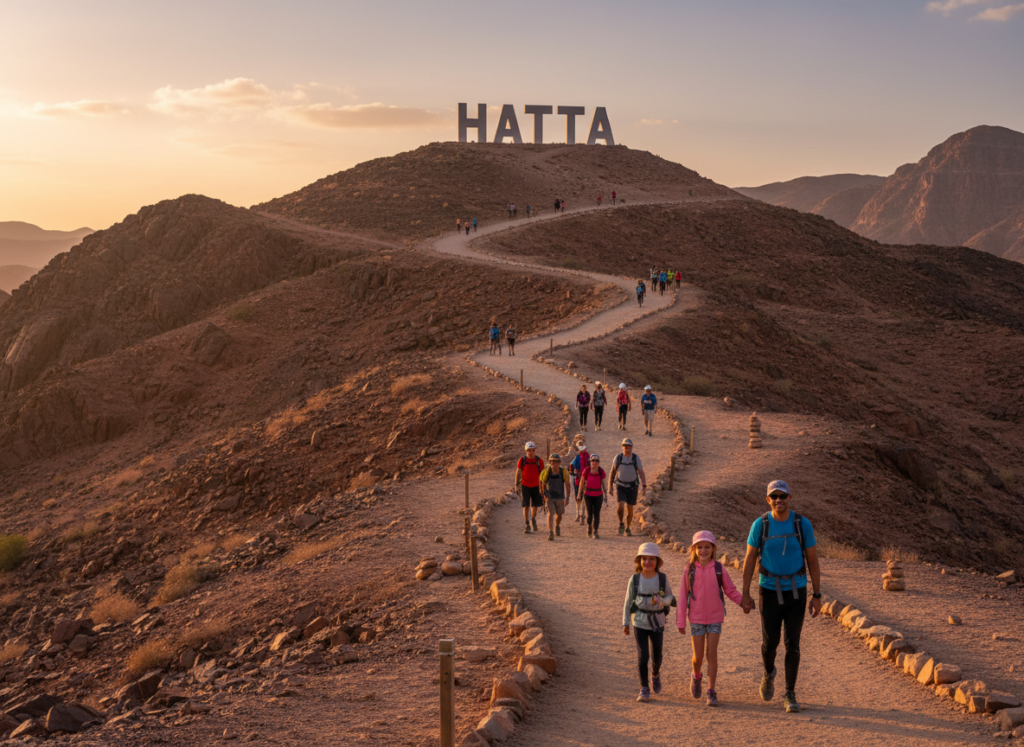
Location: Hatta (an exclave of Dubai Emirate)
Approx. drive time from Dubai: 90 minutes (about 130 km from central Dubai)
Trail network: 32.6 km of color-coded routes (green, blue, red, black) suitable for a range of abilities.
Highlights: Clear signage, the iconic Hatta sign viewpoint with sweeping Hajar mountains views, Hatta Dam vistas, heritage village stops, and mountain-bike tracks.
Starting point & parking: Park at the Hatta Wadi Hub parking area (official hub for trails). GPS: look for Hatta Wadi Hub on maps; arrival early is best on weekends.
What to expect: Mixed terrain — compact dirt paths, rocky sections, and short scrambles on some red/black routes. Watch for heat on exposed ridgelines.
Facilities: Parking, restrooms, Hatta Wadi Hub adventure center, cafés and accommodation options nearby.
Best for: Families, beginners, photographers, and anyone wanting a flexible day trip.
Experience Hatta With Local Experts
Discover official hiking trails, updated route details, and essential visitor information by exploring the Hatta Hiking guide on Visit Hatta. It is the most reliable resource for planning safe, well-marked hikes and making the most of your outdoor experience in Hatta.
2. Wadi Shawka
Location: Wadi Shawka, Ras Al Khaimah
Approx. drive time from Dubai: ~60–75 minutes (around 80 km depending on starting point)
Trail length: ~8 km loop (Shawka Dam to pools and back)
Difficulty: Easy to Moderate
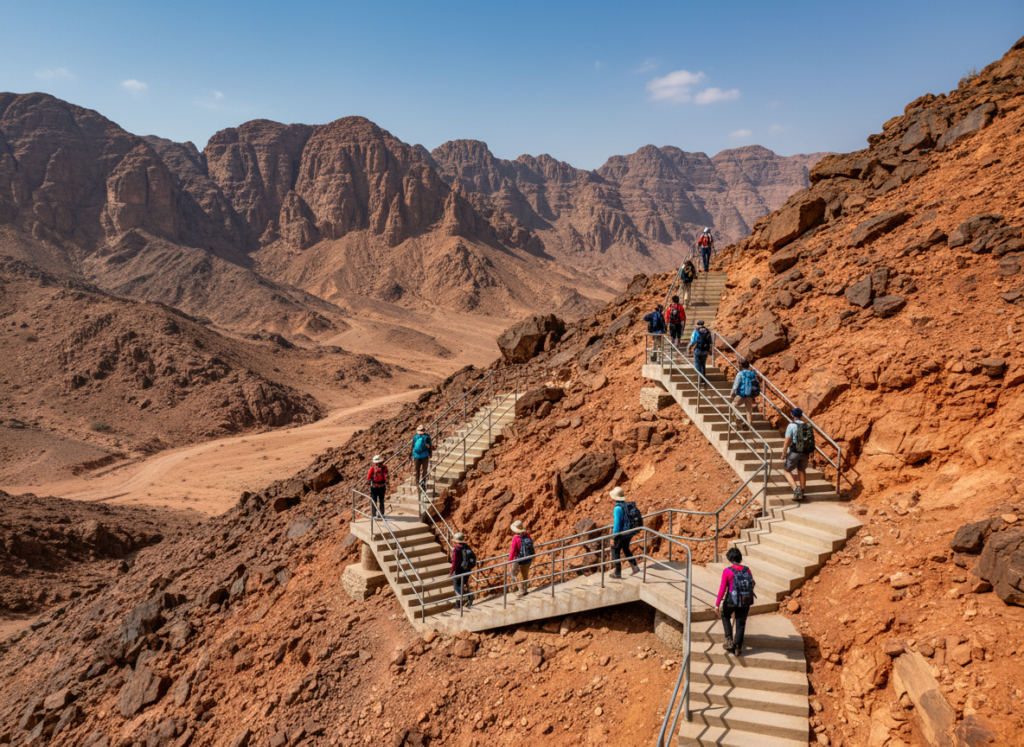
Highlights: Cement stairs from the dam give fast views of the Hajar mountains, then rocky paths lead to seasonal natural pools — excellent for photography and short swims after rain.
Starting point & parking: Park at Shawka Dam parking lot; follow the marked steps up from the dam wall.
What to expect: Rocky terrain, some boulder hopping, and seasonal water — pools may be dry in long arid periods. Bring water and sturdy shoes.
Facilities: Parking at the dam; limited or no restrooms.
Best for: Day-trippers and beginners seeking a scenic but achievable hike close to the city.
3. Al Rabi Tower Trail (Khorfakkan)
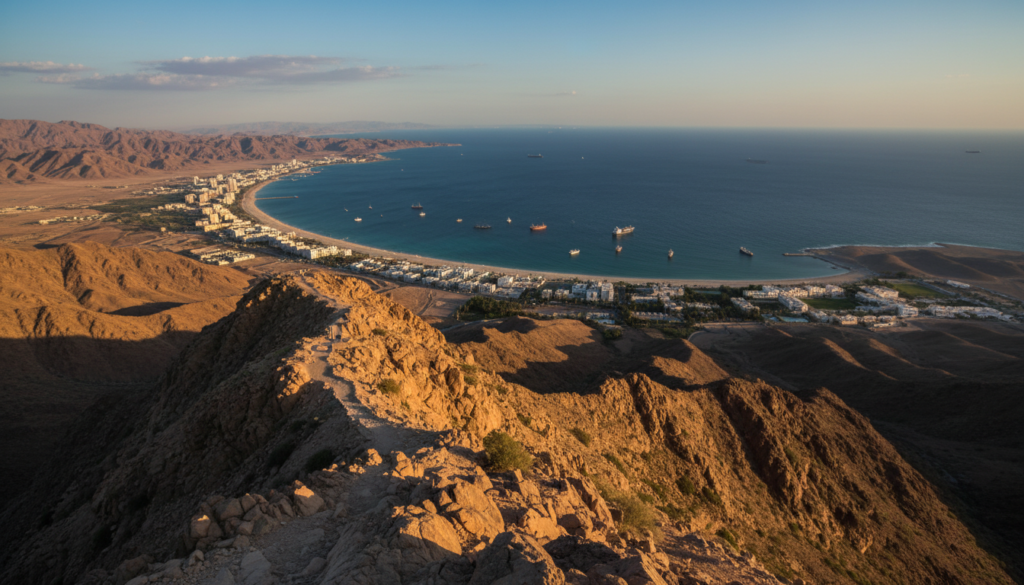
Location: Khorfakkan, Sharjah (coastal Hajar mountains)
Approx. drive time from Dubai: ~90 minutes (about 140 km)
Trail length: ~6 km round trip
Difficulty: Easy to Moderate
Highlights: Panoramic 360-degree views over Khorfakkan, the Gulf of Oman, and the rugged Hajar mountains — a unique coastal mountain viewpoint.
Starting point & parking: Start near the historic Al Rabi Tower parking area; easy to find from the Khorfakkan center.
Facilities: Parking nearby, restaurants and beaches to relax after the hike.
Best for: Photographers, families, and hikers who want coastal mountain views without technical climbing.
4. Fossil Rock (Jebel Mleiha)
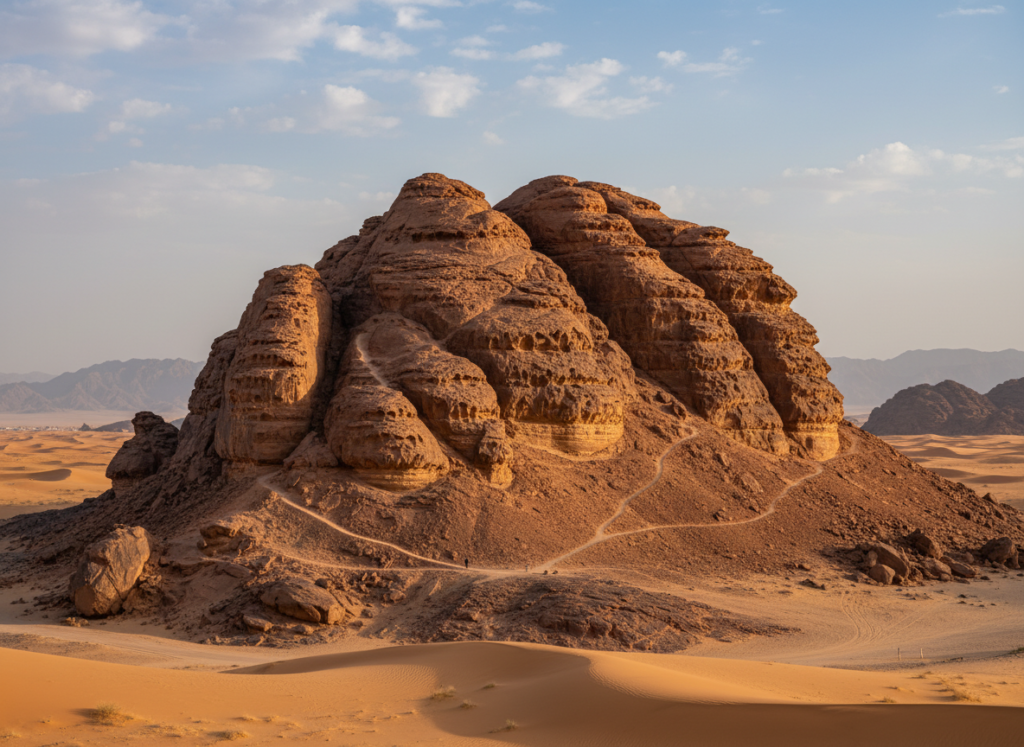
Location: Mleiha, Sharjah
Approx. drive time from Dubai: ~60 minutes (approx. 70 km)
Trail length: ~8 km loop (various routes)
Difficulty: Moderate
Highlights: Walk across orange sandstone and fossil-rich limestone — this route exposes you to ancient marine fossils (nummulites) and dramatic desert scenery.
Starting point & parking: Park near the Mleiha Archaeological Centre and follow marked paths; the center is a useful base for questions and facilities.
Facilities: Mleiha Archaeological Centre (museum, café, restrooms).
Best for: Geology lovers and hikers who enjoy desert routes with interpretive signage.
5. Rainbow Valley (Wadi Ghub)
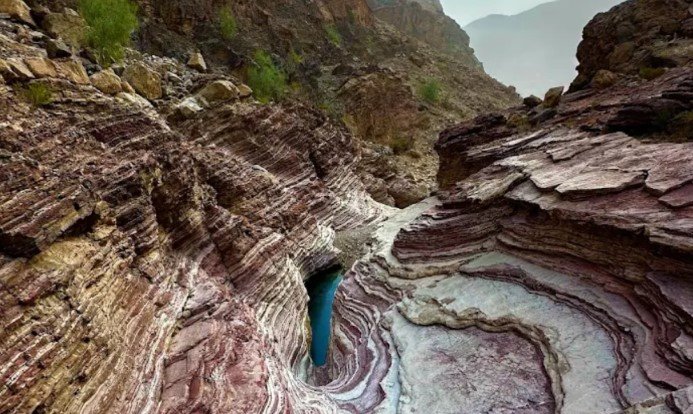
Location: Fujairah (eastern Hajar foothills)
Approx. drive time from Dubai: ~1 hour 45 minutes (about 140 km)
Trail length: ~4 km round trip (short route; longer excursions possible)
Difficulty: Easy
Highlights: Spectacular layered rock formations in multiple colors — an easy walk that’s a favorite for photographers and geology buffs.
Starting point & parking: Limited roadside parking; arrive early and pack basic supplies — there are no formal facilities.
Best for: Those seeking short, colorful photo-friendly hikes and easy exploration of unique rock strata.
6. Jebel Jais — Ghaf Summit Trail
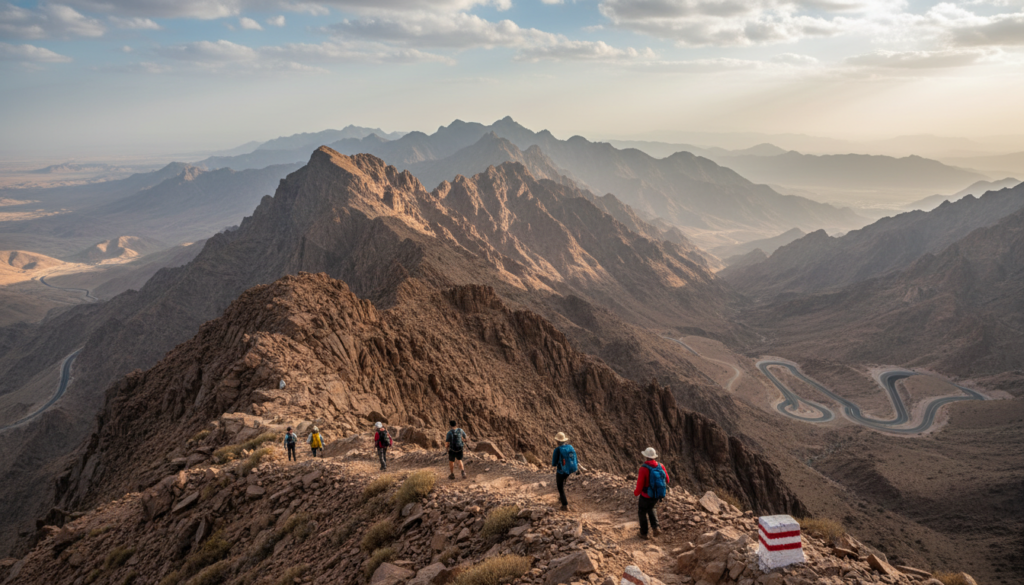
Location: Jebel Jais, Ras Al Khaimah
Approx. drive time from Dubai: ~2.5 hours (around 175 km)
Trail length: ~8 km loop to summit viewpoints
Difficulty: Moderate (altitude and exposure can make it challenging)
Highlights: Hike towards the South Summit (highest publicly accessible point in the UAE) for breathtaking 180-degree mountain views across the Hajar range.
Starting point & parking: Park at the Jebel Jais Viewing Deck Park and follow the marked trailheads; allow extra time for the mountain drive.
Facilities: Viewing decks, restrooms, and the high-altitude restaurant — services are seasonal; check opening times.
Best for: Hikers seeking a high-point achievement and dramatic mountain panoramas.
7. Wadi Abadilah
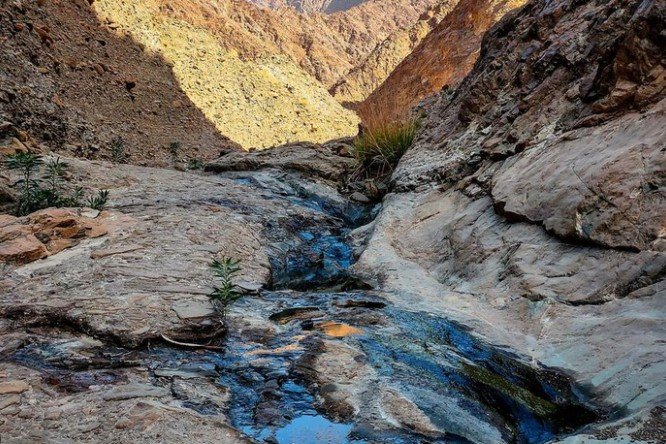
Location: Wadi Abadilah, Fujairah
Approx. drive time from Dubai: ~1.5 hours (about 120 km)
Trail length: ~7 km round trip
Difficulty: Easy
Highlights: A gentle start through a lush farmed valley with palm trees and seasonal streams, followed by a dry riverbed section with light bouldering opportunities.
Starting point & parking: Small parking area near the wadi entrance; keep valuables locked in the car and note the parking location as your starting point.
Best for: Families, beginners, and nature photographers who like varied scenery within a single walk.
8. Wadi Naqab (NEW)
Location: Near Ras Al Khaimah / Fujairah border in the Hajar mountains
Approx. drive time from Dubai: ~1.5–2 hours (depending on route)
Trail length: Variable — popular routes 6–12 km one-way or loop options
Difficulty: Moderate to Challenging (depends on route and boulder sections)
Highlights: Dramatic canyon walls, cool shaded pools after rain, and long canyon walks that feel remote and wild. Great for hikers who enjoy scrambling and canyon navigation.
Starting point & parking: Park at the nearest trailhead or village access road; GPS coordinates are recommended — use AllTrails/Wikiloc route to locate the exact starting point.
What to expect: Rocky canyon floors, slippery stones when wet, and potential seasonal pools. Avoid during heavy rain due to flash-flood risk.
Facilities: Minimal — bring full water supplies, snacks, and a power bank. No guaranteed restrooms.
Best for: Experienced hikers who want canyon-style hikes and remote wadis — a top pick among hikes uae for adventurous walkers.
9. Wadi Shees
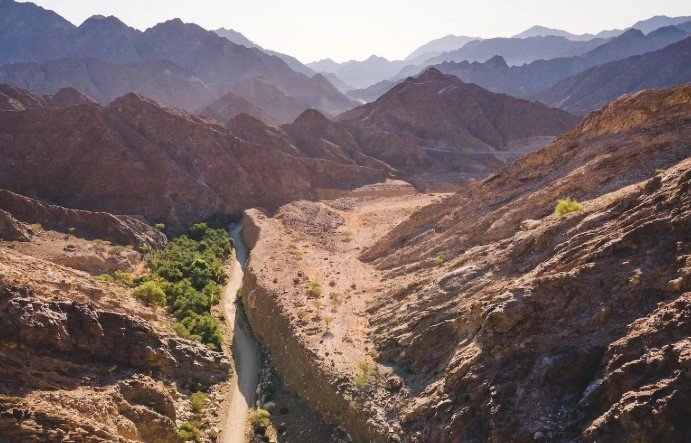
Location: Eastern Hajar foothills, Fujairah region
Approx. drive time from Dubai: ~1.5–2 hours (about 120–150 km)
Trail length: Short to medium routes (3–8 km depending on entry)
Difficulty: Easy to Moderate
Highlights: Scenic wadi with seasonal water pools, rocky gorges and easy valleys — excellent for a half-day escape with good photo opportunities and pleasant shade.
Starting point & parking: Park at marked pull-outs or small village car parks; confirm exact starting point on your chosen trail route via a hiking app or local guide.
What to expect: Sandy and rocky paths, some light bouldering, and shaded stretches with seasonal water. Flexible routes make it a good choice for families or shorter hikes.
Facilities: Limited; bring water and plan for no-restroom conditions on many routes.
Best for: Families, photographers, and hikers looking for a scenic wadi walk without long drive times.
Quick selection tips: choose Hatta or Wadi Shawka for easy day trips from Dubai; pick Jebel Jais for the highest mountain views (longer drive); visit Wadi Naqab or Wadi Shees for canyon-style hikes and seasonal pools. For route-level directions, see the gear/apps section and use AllTrails or Wikiloc to download GPS tracks before you drive.
10. Jebel Hafeet (The Summit Trail)
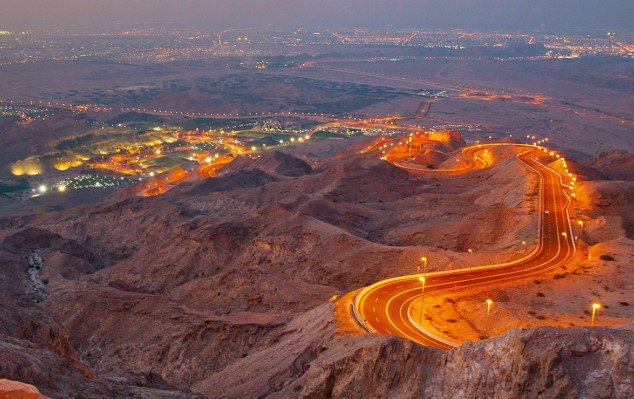
Location: Al Ain (Abu Dhabi Emirate)
Approx. drive time from Dubai: 1 hour 45 minutes (about 150 km)
Trail network: Primarily a steep vertical ascent (roughly 4–5 km one way) following the rocky ridges toward the summit.
Highlights: Panoramic views of Al Ain city and the Empty Quarter desert, the “Green Mubazzarah” hot springs at the base, and unique limestone fossil formations.
Starting point & parking: Park at Green Mubazzarah park (lower parking area). GPS: Look for “Green Mubazzarah Park” Al Ain.
What to expect: Very steep, rocky terrain with significant elevation gain. There is very little shade, and the limestone can be sharp and loose. Good cardio is required.
Facilities: Restrooms and cafés at the base (Green Mubazzarah), chalets for overnight stays, and a large parking lot at the top (accessible by car).
Best for: Fitness enthusiasts, experienced hikers, and those wanting a vertical challenge.
11. Mushrif Park Trail (The Urban Loop)
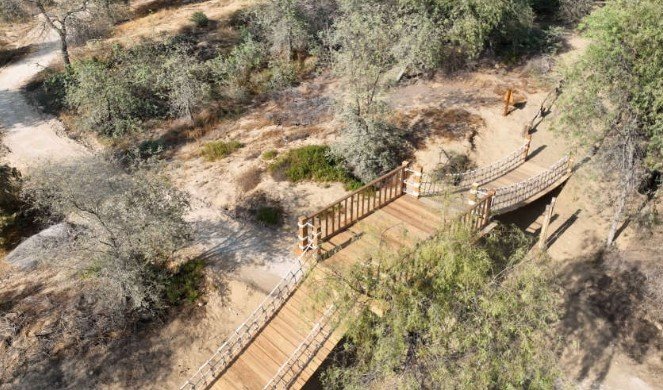
Location: Mushrif, Dubai
Approx. drive time from Dubai: 20 minutes (within city limits)
Trail network: A dedicated 10 km hiking loop (separate from the mountain bike tracks) with color-coded markers.
Highlights: Dense Ghaf tree forests, sightings of local birds and desert foxes, and a rare feeling of being “lost in nature” while still being in the city.
Starting point & parking: Park inside Mushrif Park at the dedicated Hiking Trailhead parking. GPS: “Mushrif Park Hiking Trail.” (Note: There is a small entry fee per car/person via Nol card).
What to expect: Generally flat, sandy, and gravel paths. It is the safest “entry-level” hike in the country with clear signage and easy exits.
Facilities: Full park amenities including restrooms, prayer rooms, benches, Aventura Parks (zip-lining), and nearby food trucks.
Best for: Beginners, families with children, trail runners, and those with limited time.
12. Stairway to Heaven (The Legend)
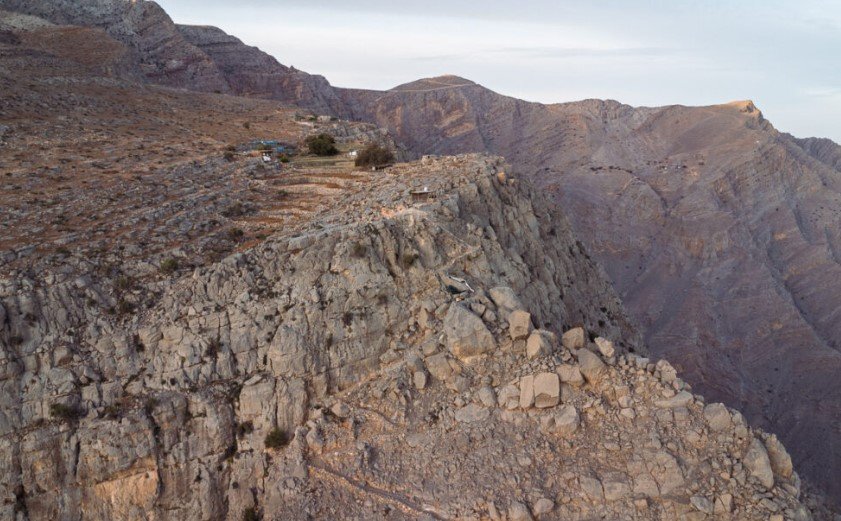
Location: Wadi Ghalilah, Ras Al Khaimah (RAK)
Approx. drive time from Dubai: 2 hours 15 minutes (about 160 km)
Trail network: A grueling 12–15 km loop that climbs over 1,000 meters vertically via an ancient mountain shepherd path.
Highlights: The “Stairs”—narrow rock ledges built into the cliff face; breathtaking views of the RAK coastline from the summit; and extreme isolation.
Starting point & parking: End of the road in Wadi Ghalilah. GPS: “Wadi Ghalilah Dam.” You will need to walk from the dam to the trailhead.
What to expect: Extremely dangerous and technical. Involves high-exposure ridges, narrow ledges with “no-fall” zones, and heavy scrambling. Not for those with a fear of heights.
Facilities: None. This is a remote wilderness area. You must bring all supplies with you.
Best for: Advanced/Expert hikers only, mountaineers, and thrill-seekers with high endurance.
Essential Gear & Preparation for Hiking in Dubai
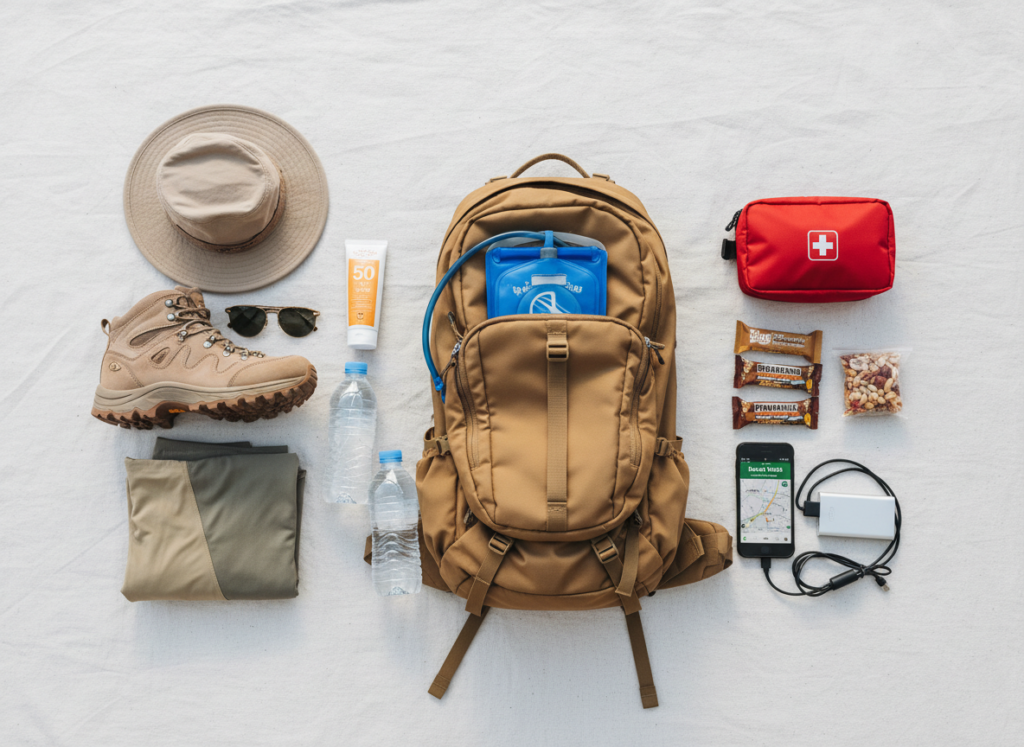
Hiking in Dubai demands a bit more planning than a city walk. The desert heat, rocky paths, and limited facilities on many trails mean you should be self-sufficient. Below is a practical, scenario-based checklist so you pack the right gear for the route and the season.
Hiking Essentials Checklist
Water & Nutrition
- Water: Minimum 3 liters per person for short day hikes; increase to 4–5+ liters in shoulder months or for longer/hotter routes. For multi-hour mountain hikes, carry even more and stash spare water in the car.
- Hydration bladder: Easier than bottles for steady sipping during long hikes.
- Electrolyte drinks: Powder sachets or ready-made drinks help replace lost salts.
- Energy-dense snacks: Nuts, dried fruit, and protein bars for quick fuel on the trail.
- Light meal: Sandwiches or wraps for full-day outings (store in a shaded part of your pack).
Sun Protection
- Sunscreen: Broad-spectrum SPF 50+, and reapply every 2 hours or after sweating.
- Hat: Wide-brimmed preferred for face and neck protection.
- Sunglasses: Proper UV protection to reduce glare on rock and sand.
- Lightweight long sleeves: UPF-rated shirts cut sun exposure without overheating.
- Neck gaiter/buff: Multi-use for sun, wind and dust protection.
Footwear & Clothing
- Hiking boots/shoes: Good grip and ankle support are important on rocky trails and wadis; choose a comfortable, broken-in pair.
- Moisture-wicking socks: To prevent blisters on long walks.
- Breathable clothing: Quick-dry fabrics are better than cotton in desert heat.
- Light jacket/fleece: For cold mornings in peak season (temperature drops at altitude and before sunrise).
- Change of clothes: Keep a dry set in the car for the drive home and to avoid sitting in wet/dirty clothing.
Navigation & Safety
- Smartphone: Download offline maps and the specific trail route before you start (AllTrails, Wikiloc or Maps.me).
- Power bank: Fully charged — you may need GPS or to call for help hours into the hike.
- Hiking apps: Use Wikiloc or AllTrails to find reliable GPS routes and recent trail reports.
- First aid kit: Include blister plasters, antiseptic, bandages, and basic pain relief.
- Headlamp/flashlight: Always carry one in case your hike takes longer than planned.
Packing by hike type (quick guide)
- Short family hike (under 3 km): 2–3 liters water per car, snacks, sun protection, comfortable shoes.
- Half-day trail (3–8 km): 3–4 liters per person, electrolytes, full first-aid kit, offline route saved, power bank.
- Full-day / mountain route (>8 km or >500m elevation): 4–6+ liters, hearty lunch, extra layers, emergency shelter/foil blanket, let someone know your starting point and hours expected.
- Wadi/canyon routes: Sturdy shoes with good grip, towel, dry-bag for electronics, and avoid immediately after heavy rain due to flash-flood risk.
Free Dubai Hiking Checklist
Download our printable checklist for half-day and full-day hikes — a quick reference to pack by route and season.
Recommended Hiking Apps & Extras
Wikiloc
Excellent for hiking trails UAE — lots of user-uploaded routes with GPS tracks and offline capability.
AllTrails
Comprehensive trail database and reviews — great for checking recent trail conditions and exact starting points.
Maps.me
Reliable offline mapping when cell coverage is weak — useful for remote drives and finding parking or trailheads.
Car & Parking Tips
- Park smart: Use marked parking areas where available and lock valuables out of sight. Note your starting point on your phone so you can find the car after the hike.
- Car supplies: Keep spare water, a towel, an extra shirt, and a small first-aid kit in the car — these small things save time and discomfort after the hike.
- Drive time planning: Factor in 30–60 minutes extra for narrow mountain roads; many popular trails fill early on weekends, so drive early to secure parking.
Make sure to tailor what you carry to the trail and the expected hours on route. If you don’t own specific gear, consider joining a guided hike — many operators supply water and basic equipment for beginners.
Safety Tips & Hiking Etiquette in Dubai
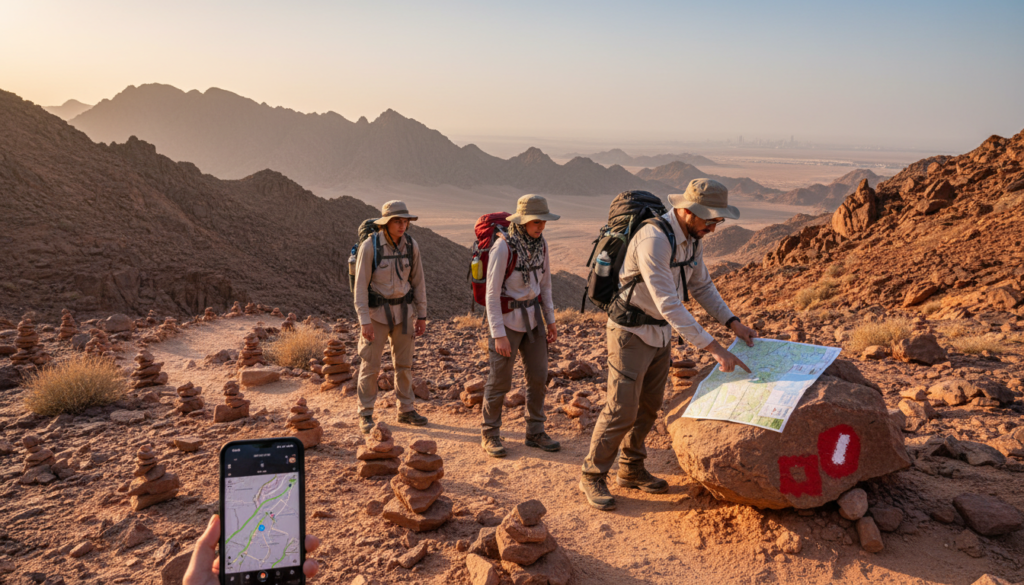
Dubai’s trails are rewarding but come with specific risks — heat, rough terrain, and occasional flash floods in wadis. Follow these practical safety steps and etiquette tips to keep your hike enjoyable and safe.
Before Your Hike
- Research the trail: Know the distance, elevation, expected terrain, and approximate hours it will take. Check recent trip reports on AllTrails or Wikiloc for current conditions.
- Check the weather: Make sure there’s no extreme heat or rain in the forecast. Even if your local spot is dry, upstream rain can cause flash floods in wadis.
- Tell someone your plan: Share your starting point, route, and estimated return time with a friend or family member.
- Start early: Begin in the early morning for longer hikes to avoid midday heat and to give yourself plenty of daylight hours.
- Charge devices: Fully charge your phone, download offline maps, and bring a power bank — you may need GPS or to call for help after several hours on the trail.
During Your Hike
- Hike with company: Never hike alone on remote trails unless you are an experienced solo hiker with full navigation skills; aim for at least one companion on unfamiliar routes.
- Stay hydrated: Sip water regularly and replenish electrolytes on longer hikes — don’t wait until you feel thirsty.
- Pace your effort: Take regular breaks in shade where possible and monitor your time so you finish well before dusk.
- Stick to the trail: Follow marked paths — going off-route increases the risk of getting lost and damages fragile desert ecosystems.
- Watch your step: Wadis have loose rocks and uneven surfaces; wear appropriate footwear and be careful on slippery stones near pools.
If you get lost or delayed (quick protocol)
- Stop and assess: Don’t panic — sit down, check your map and GPS, and note landmarks.
- Try to backtrack: If safe, return to the last known point on the trail.
- Share your coordinates: Use your phone to get GPS coordinates and send them to your contact or emergency services.
- Conserve energy and water: Stay put if you can’t find the trail and wait for help — conserving water and energy increases your chances of a safe outcome.
Flash-flood & Wadi-specific advice
- Avoid wadis after rain: Flash floods can occur even when it’s not raining at your location. If rainfall is forecast upstream, postpone the hike.
- Recognize flood channels: Narrow, steep-sided sections and smooth, scoured rock indicate fast-flowing flood paths — avoid camping or lingering in these spots.
- Safe crossing: Never try to cross fast-moving water; find higher ground and wait for safer conditions.
Environmental Etiquette
- Leave No Trace: Pack out all trash, including organic waste like fruit peels. Carry everything back to the car or dumpster.
- Respect local culture: Dress modestly where trails pass villages and be polite to locals you encounter.
- Preserve the landscape: Do not remove rocks, fossils, or plants, and avoid carving or painting on natural features.
- Keep noise down: Respect wildlife and other hikers by maintaining a low noise level.
Emergency info: In UAE emergencies call 999 for police and 998 for ambulance. If possible, share your GPS coordinates. Download official safety apps for location sharing (check current app names and availability before you hike).
Make sure to leave your car keys in an accessible place and drop the parking location into your map app before you start, so you can find the car quickly after a long day on the trail. For an emergency checklist and app links, see the gear section and the downloadable checklist in the conclusion.
Guided Hikes vs. Solo Adventures
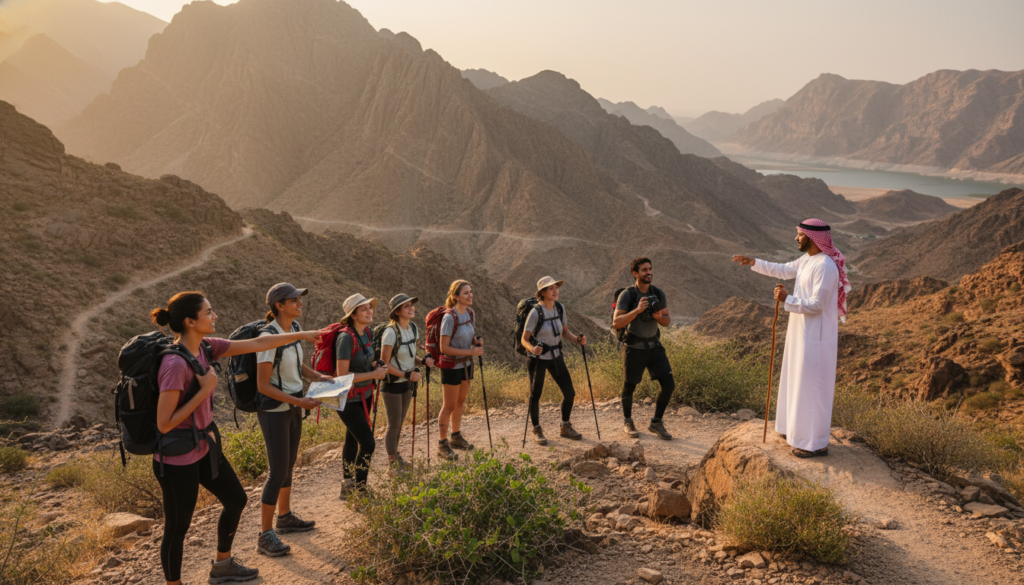
Deciding between a guided hike and going solo depends on your experience, the trail you choose, and how comfortable you are with navigation and remote conditions. Both options work well in the UAE — here’s a clear look at the pros and cons to help you choose.
Benefits of Guided Hikes
- Local knowledge: Guides point out geology, flora, and history you’d likely miss on your own — great for learning about the Hajar mountains and wadis.
- Safety: Professional guides are trained in wilderness first aid and emergency response, which is reassuring on remote routes.
- Navigation and logistics: Guides handle route-finding, parking, and timing, and many provide water or basic gear so you can travel lighter.
- Access and permissions: Guides often know the best starting points and any access requirements for specific areas.
- Social experience: Group hikes are an easy way to meet fellow hikers and share logistics like carpooling and drive time.
Benefits of Solo/Independent Hiking
- Flexibility: Go at your own pace, choose your starting point, and modify the route on the fly.
- Lower cost: No guide fees — you only cover transport, parking, and personal gear.
- Solitude and challenge: Solo or small-group hikes give you quiet and a chance to develop navigational skills and self-reliance.
- Photography and pace: Stop as long as you want to capture views without waiting for a group.
Which is right for you?
If you’re a beginner or short on time, a guided hike is the fastest, safest way to experience the trails. Experienced hikers who know navigation, have offline routes downloaded, and are comfortable driving to trailheads often prefer independent hikes.
Recommended Hiking Groups and Tour Operators
Bear Grylls Explorers Camp
Bear Grylls Explorers Camp, located on Jebel Jais in Ras Al Khaimah, complements hiking in Dubai by offering guided mountain hikes combined with outdoor survival and navigation skills.
ECC Adventures
ECC Adventures is a UAE-based outdoor adventure and hiking tour operator specializing in guided trekking experiences, primarily in the Hajar Mountains and natural landscapes of the Emirates.
UAE Trekkers
UAE Trekkers is a Dubai-based adventure tourism company specializing in guided hiking and trekking experiences across the UAE’s mountains, wadis, and desert landscapes. Established in 2011, it offers beginner-to-advanced hikes
Note on qualifications: check that guides hold appropriate first-aid certification and insurance coverage. Guided day tours typically include transport and water — costs vary, so compare offerings and read recent reviews for current pricing and route details.
Always hike with a licensed group or experienced guide, especially on mountain and wadi trails. UAE terrain can be remote, poorly marked, and weather conditions change quickly—guided hikes ensure proper route planning, safety support, and emergency readiness while helping beginners build confidence and skills safely.
Frequently Asked Questions About Hiking in Dubai
Is hiking in Dubai safe?
Yes — generally safe if you follow basic precautions. The main risks are heat-related illness in summer and getting lost on unmarked routes. Hike with a partner, carry plenty of water, protect yourself from the sun, and tell someone your starting point and estimated return hours. Avoid long hikes during extreme heat (May–September).
Pro tip: Start early and plan shorter hikes in shoulder months to reduce heat exposure.
Do I need a permit to hike in Dubai?
Most trails in and around Dubai are open to the public and do not require a permit. Some protected areas or sites may have fees or access rules — for example, certain parks charge a nominal vehicle entry fee. Check local authority websites or guide pages for the specific trail before you drive.
Pro tip: If you’re heading to border areas (or less-traveled wadis), check recent trip reports for access restrictions or temporary closures.
What should I wear for hiking in Dubai?
Wear lightweight, breathable clothing that covers skin for sun protection, and choose moisture-wicking fabrics over cotton. Good hiking shoes with ankle support and a grippy sole are essential on rocky trails and wadis. Bring a wide-brim hat, sunglasses, and a light jacket for cool mornings during peak season.
Pro tip: Bring a change of clothes in the car for the drive home — desert dust and sweat add up quickly.
Are there any dangerous animals while hiking in Dubai?
Encounters with dangerous animals are rare. The region has some venomous snakes and scorpions, but they usually avoid humans and are uncommon on well-trodden trails during daytime. Take care when reaching into rock crevices or moving stones — wear closed shoes and check before sitting or stepping.
Pro tip: Shake out shoes and clothing left on the ground before putting them on after a hike.
Can beginners go hiking in Dubai?
Absolutely. Dubai and nearby emirates have many beginner-friendly trails such as Hatta Green Trail, Al Rabi Tower Trail, and Wadi Abadilah. Start with short routes, hike during cooler months, and consider joining a guided group to learn navigation and safety routines.
Pro tip: Join a local guided hike for your first few trips — it’s a quick way to learn starting points, parking tips, and route etiquette.
What app should I use to navigate trails?
Use AllTrails or Wikiloc to find GPS routes and recent trail reports, and download the route for offline use. Maps.me is a reliable offline map for driving to the starting point. Always save the trail and starting point to your phone before you lose cell coverage.
Pro tip: Share your saved route and estimated hours with someone at home before you start.
How do I get to these trails from Dubai?
Most of the recommended trails are a drive from central Dubai — Hatta is roughly 90 minutes, Wadi Shawka about an hour, and Jebel Jais around 2–2.5 hours. Driving is the easiest way to reach trailheads; guided tours often include transportation if you prefer not to drive. Check the distance and expected drive time before you go and allow extra time for mountain roads and weekend traffic.
Pro tip: Factor in 30–60 minutes extra for narrow or winding mountain approaches.
Are Wadi Naqab and Wadi Shees easy to access?
Wadi Naqab and Wadi Shees are accessible but often require more planning. Both have limited facilities and parking, so use a navigation app to find the exact starting point and bring full water supplies. Some routes involve scrambling and uneven canyon floors — they suit intermediate hikers more than absolute beginners.
Pro tip: Use recent GPS tracks from Wikiloc or AllTrails to find the best entry points and parking spots.
Conclusion: Discover Dubai Beyond the Skyscrapers
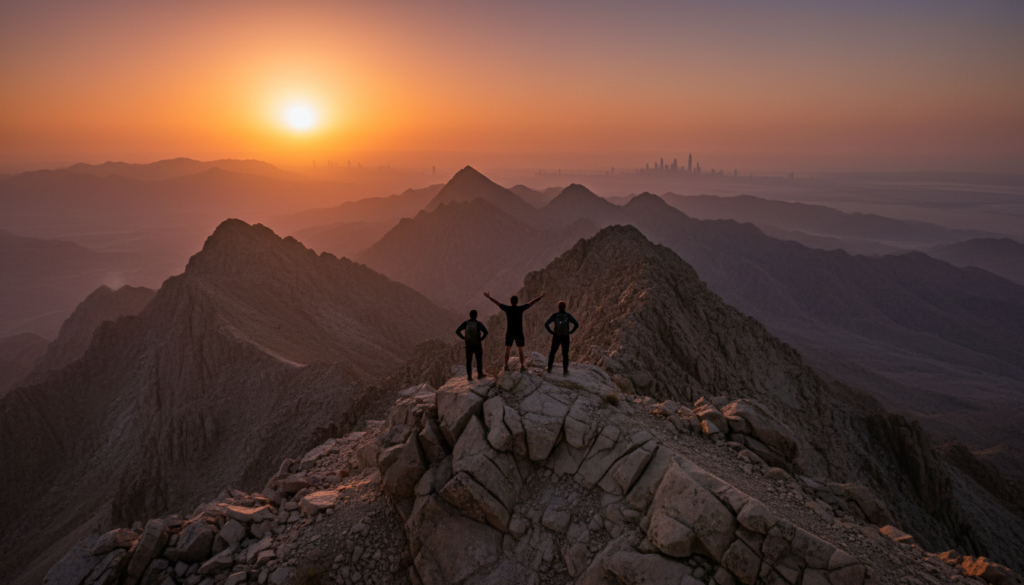
Hiking in Dubai opens up a surprising and varied outdoor world: from the accessible, family-friendly routes around Hatta and the Hatta Wadi Hub to challenging high-point climbs on Jebel Jais. Whether you prefer short trails with great views or full-day mountain routes, the hiking trails UAE offers something for every ability and interest.
The contrast of desert and mountains means each route has its own character — red-rock canyons, shaded wadis with seasonal pools, coastal mountain viewpoints at Al Rabi Tower overlooking the Gulf of Oman, and fossil-rich desert plains. As you explore, you’ll gain a deeper appreciation for the Hajar mountains and the traditional landscapes that shaped this region.
Quick-start plan
If you’re wondering where to begin: beginners — try Hatta green trails (easy, family-friendly); families — Wadi Abadilah for shade and streams; experienced hikers — Jebel Jais for altitude and long routes; adventurous hikers — Wadi Naqab or Wadi Shees for canyon-style scrambling and pools.
Sample Day Hike Itinerary: Dubai to Hatta
06:00 AM – Depart Dubai
Leave early to avoid traffic and heat. The drive to Hatta typically takes 90–120 minutes, factoring in slower mountain roads near arrival.
08:00–08:15 AM – Arrive & Park
Allow extra time to locate parking, prepare gear, hydrate, and review trail signage before starting your hike.
08:30–09:00 AM – Begin Hiking
Complete a Green or Blue trail loop depending on fitness level. Expect 3–5 hours of hiking, including breaks and photo stops.
01:00–02:30 PM – Hatta Dam Visit
Cool down and relax at Hatta Dam. Ideal for light snacks, stretching, or optional kayaking. Plan for 60–90 minutes.
03:30–04:00 PM – Return to Dubai
Begin the drive back, allowing for fatigue, winding roads, and afternoon traffic. Arrival in Dubai is typically by 6:00–6:30 PM.
Total Time Commitment: Approximately 8–9 hours (driving + hiking)
Responsible Hiking Tip
Respect local communities and nature: pack out all waste, stay on marked trails, avoid removing rocks or fossils, and dress modestly near villages. If unsure about route difficulty or access points, consider a licensed guided hike for safer navigation and time efficiency.
Critical Safety Warning & Disclaimer
Hiking in the UAE involves risk factors including extreme heat, rapid dehydration, and sudden flash floods in wadis.
- Official Monitoring: Always check the National Center of Meteorology (NCM) for live weather alerts and the National Emergency Crisis and Disaster Management Authority (NCEMA) for safety protocols.
- Emergency Contact: In case of emergency, dial 999 (Police) or 998 (Ambulance). For mountain rescues, specifically mention your GPS coordinates.
- Legal Note: This document is a guide only. Users assume all responsibility for their own safety, navigation, and compliance with local laws (such as Fujairah’s mandatory guide requirements for certain trails). Never hike alone.
- If you notice any inaccuracies or outdated information in this guide, please contact me directly to ensure the safety of our hiking community.
Ultimate Dubai Hiking Checklist
Plan your hikes in Dubai like a pro! This checklist covers all the essentials — gear, safety tips, and more — to make every trail safe and enjoyable. Perfect for beginners and experienced hikers alike.
Download Your Free PDF*By downloading, you agree to use this checklist responsibly and follow local hiking regulations.