Lunchbox Ideas: Food-safe, school-friendly ideas that hold up between 7am and lunchtime — and actually get eaten.
The new school year is back. Packed at 6:30 or 7am, the lunchbox travels to school, gets stored in a locker or cubby until break or lunch, and then has to be appealing enough for a child to actually eat it — ideally over a canteen that sells hot food and ice cream. The whole journey from fridge to mouth runs five to six hours.
Dubai’s classrooms run air conditioning at around 20 to 22°C throughout the school day, which is an important practical point: food stored in a classroom for four hours in those conditions faces a very different temperature environment from food left in an outdoor bag in the sun. The main heat risk is the car journey — in September, October and again from March to the end of the school year, a car interior at a school drop-off queue heats up quickly. In December and January, the transit is much cooler.
Dubai Municipality’s Food Safety Department requires high-risk perishables — dairy, eggs, cooked meat, cut fruit — to be kept below 5°C. In practice, one small ice pack or a frozen yoghurt pouch handles the car transit for most of the year, and the AC classroom does the rest. In the hot transit months, two gel packs are the safer choice. Neither scenario requires elaborate insulation.
Dubai has over 200 nationalities and its schools reflect that. The ideas below draw from Indian, Filipino, East Asian, British, Levantine, Gulf and Western cooking — because a lunchbox that fits the child’s home food culture is far more likely to come back empty.
| Always check your child’s specific school food policy before packing. Most UAE schools are nut-free. Some restrict chocolate, high-sugar snacks and soft drinks. Dubai Municipality’s My School Food programme at myschoolfood.com publishes nutritional guidelines for Dubai schools. These ideas are general suggestions and not medical or nutritional advice — if your child has a food allergy or dietary restriction, consult your doctor or nutritionist. |
No cooling needed — truly shelf-stable
Top Lunchbox Ideas
1. Mini Onigiri — Japanese Rice Balls
East Asian / Japanese · No cooling needed if made fresh and sealed well
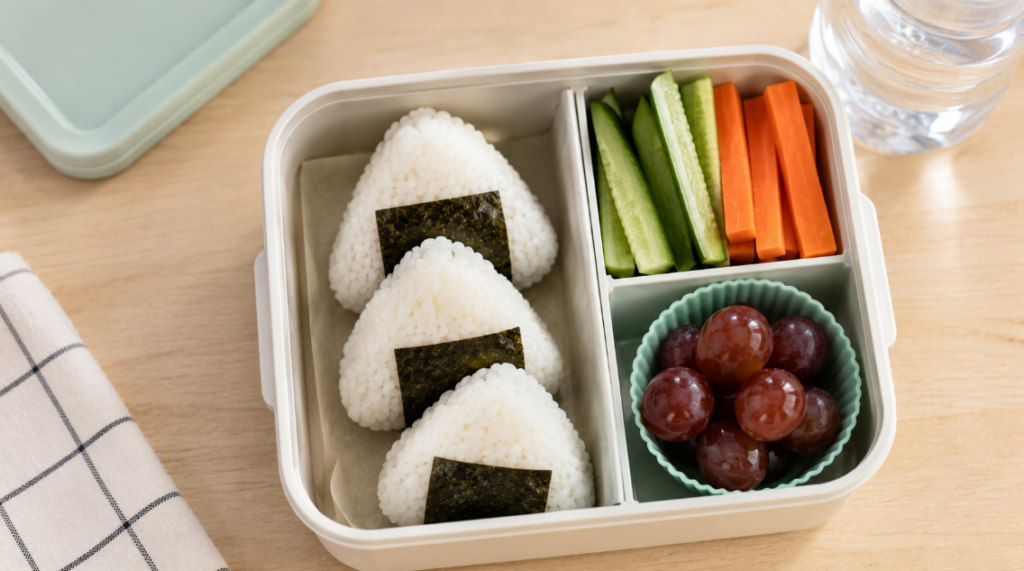
Onigiri are triangular rice balls wrapped in nori (dried seaweed), and they are one of the most practical lunchbox staples from Japanese school culture — a fact that transfers well to Dubai’s many Japanese, Korean and internationally food-curious families. Made with short-grain rice, lightly salted, they can be filled with tinned tuna mixed with a little soy sauce, umeboshi (pickled plum), or kept plain. Wrap each one individually in cling film or foil as soon as they cool.
Plain rice balls are shelf-stable for four to five hours if made fresh. Filled versions with tuna or other protein benefit from one ice pack during transit. Children who eat rice at home tend to find these immediately appealing — and children who haven’t tried them often become converts quickly.
2. Mini Paratha Roll with Potato or Paneer Filling
Indian / Pakistani · One ice pack for transit
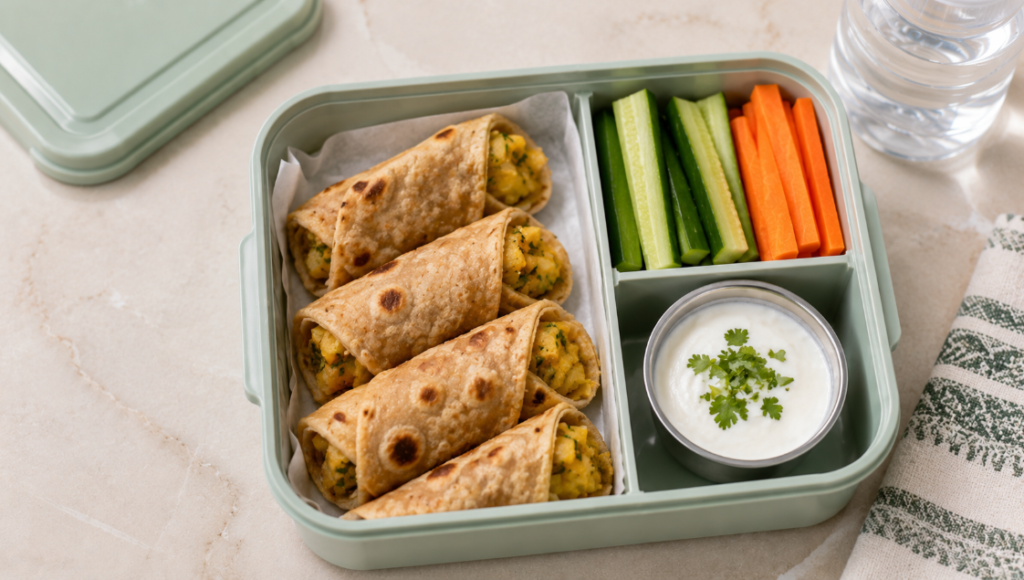
A small paratha rolled around a simple spiced potato or paneer filling is one of the most culturally familiar and genuinely filling lunchbox options for Dubai’s large South Asian community. Make the filling the night before — potato cooked with a little cumin, coriander and salt, or crumbled paneer with green chilli and coriander — roll into the paratha while warm and wrap tightly in foil or parchment.
By lunchtime the paratha is at room temperature and tastes perfectly fine. It doesn’t need reheating. Avoid filling with anything egg or mayo-based without two ice packs. A small pot of yoghurt or mint chutney on the side makes it more appealing to children who like a dip, but keep the yoghurt pot cool with the transit ice pack.
3. Garlic Rice Parcels
Filipino / East Asian · One to two ice packs
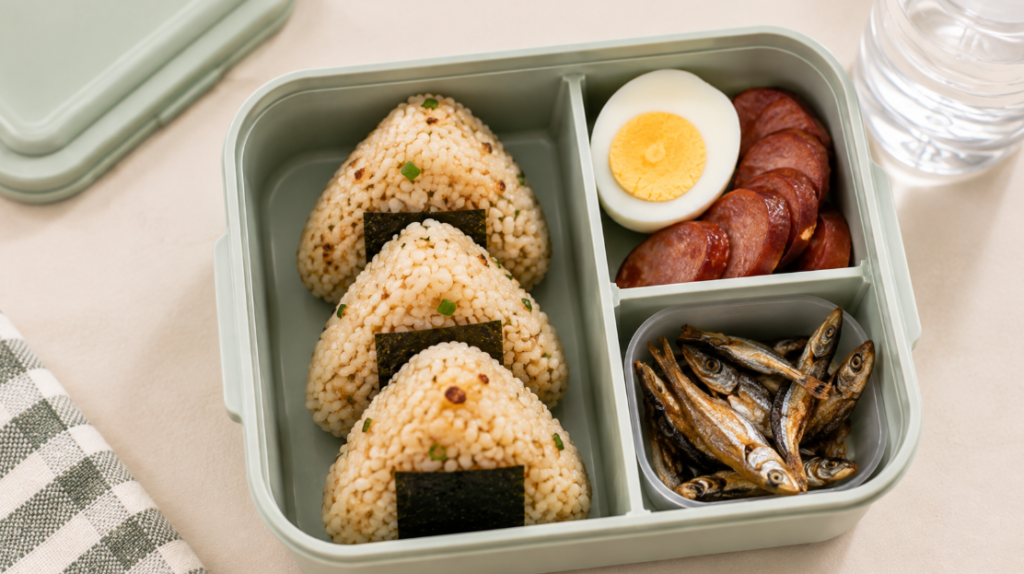
Sinangag — Filipino garlic fried rice — is a staple in Filipino homes across the UAE and makes an excellent packed lunch when formed into small parcels or triangles, wrapped in nori or simply sealed in a container. Cook the rice with garlic the night before, shape into compact portions and pack cold. Filipino children in Dubai’s schools consistently prefer home food to canteen food when it genuinely resembles what they eat at home — this is one of the strongest options for exactly that reason.
Add a small container of dried fish (tuyo) for older children who enjoy it, though this is worth considering carefully in a shared classroom environment. A boiled egg or a few slices of longanisa sausage alongside completes a lunch that’s both familiar and filling.
4. Kimbap — Korean Seaweed Rice Rolls
Korean / East Asian · One ice pack
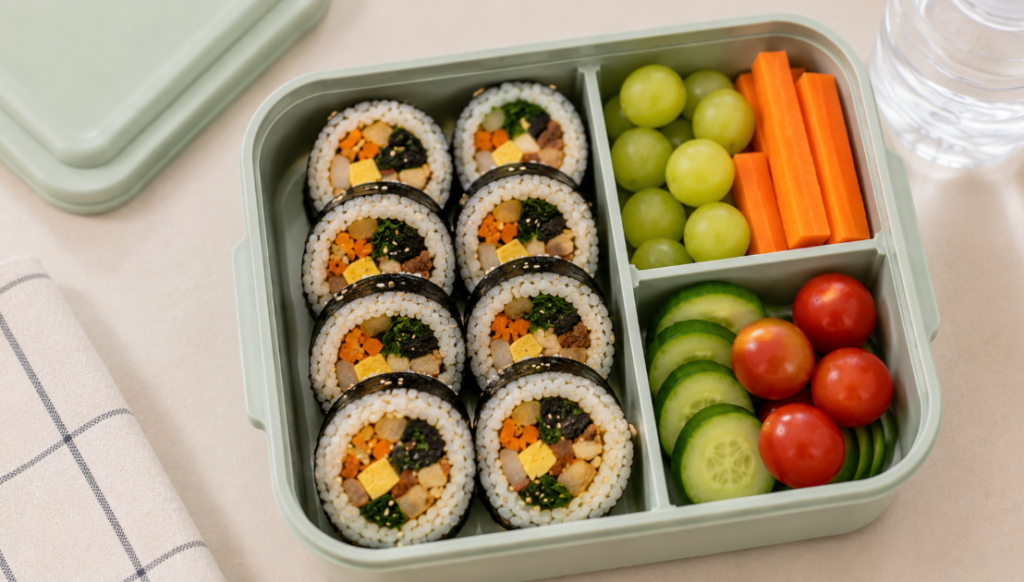
Kimbap are Korean rice rolls wrapped in nori, similar in appearance to sushi but made with sesame-seasoned rice and filled with cooked vegetables, egg and optional protein. They’re compact, not messy, easy to eat without cutlery and visually appealing in a way that lunchbox food sometimes isn’t. The growing Korean community across Dubai’s schools has made them more familiar to classmates from other backgrounds too.
Make them the night before, slice into rounds, pack in a sealed container with one ice pack if they contain egg or cooked meat. The rice should be seasoned with sesame oil and a little salt rather than vinegar — kimbap rice is less acidic than sushi rice and holds up better at room temperature. Fillings can be as simple as spinach, carrot and egg for a vegetarian version.
5. Labneh with Mini Pitta and Vegetables
Levantine / Gulf · One ice pack for transit
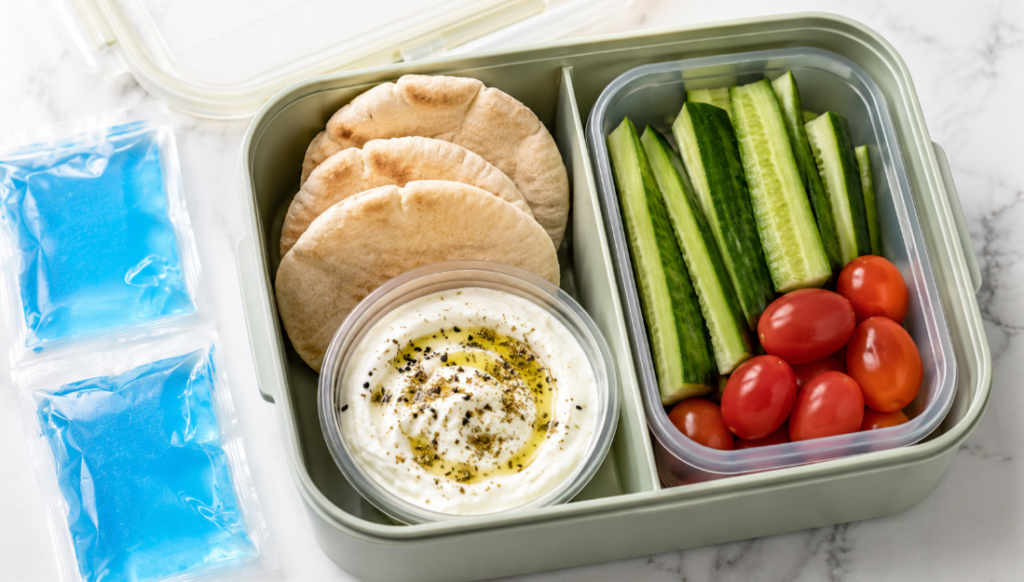
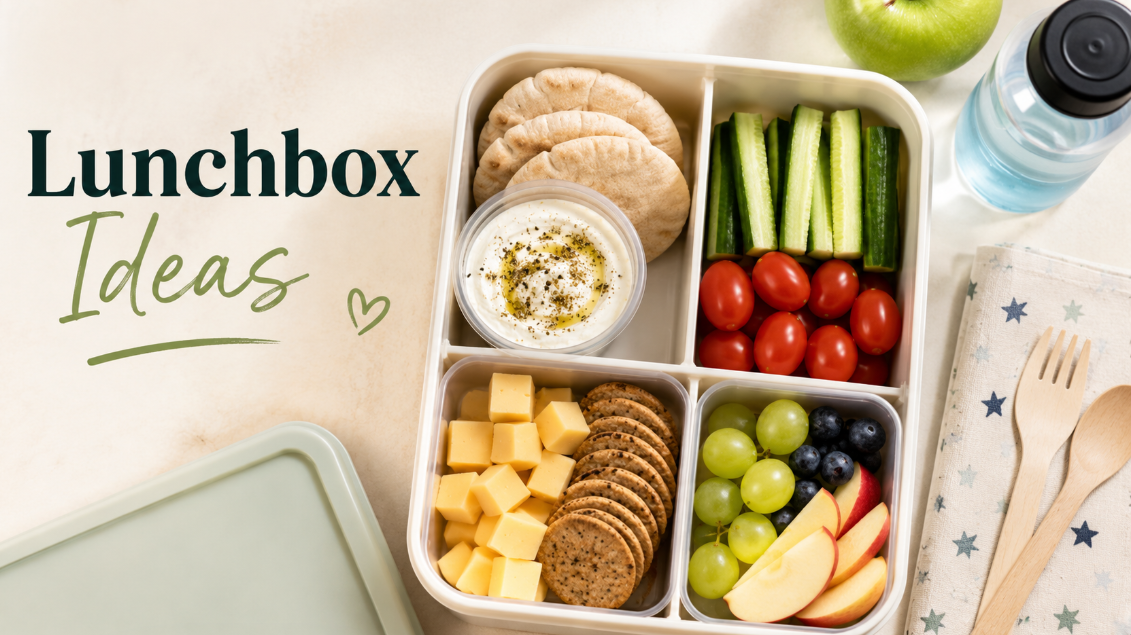
Labneh — the thick strained yoghurt used throughout the Levant and UAE — is one of the most practical high-protein lunchbox options available locally. It’s thick enough not to leak, familiar to children across Arabic-speaking families and to many others who’ve grown up in the UAE, and works as a spread inside mini pitta or as a dipping pot with cucumber sticks and cherry tomatoes.
Keep the pitta in a separate compartment from the labneh so it doesn’t go soft. A small drizzle of olive oil and a pinch of za’atar on the labneh lifts it significantly. The classroom AC handles the storage fine once the transit ice pack has done its job.
6. Chicken or Turkey Wholemeal Wrap
Western / International · One ice pack
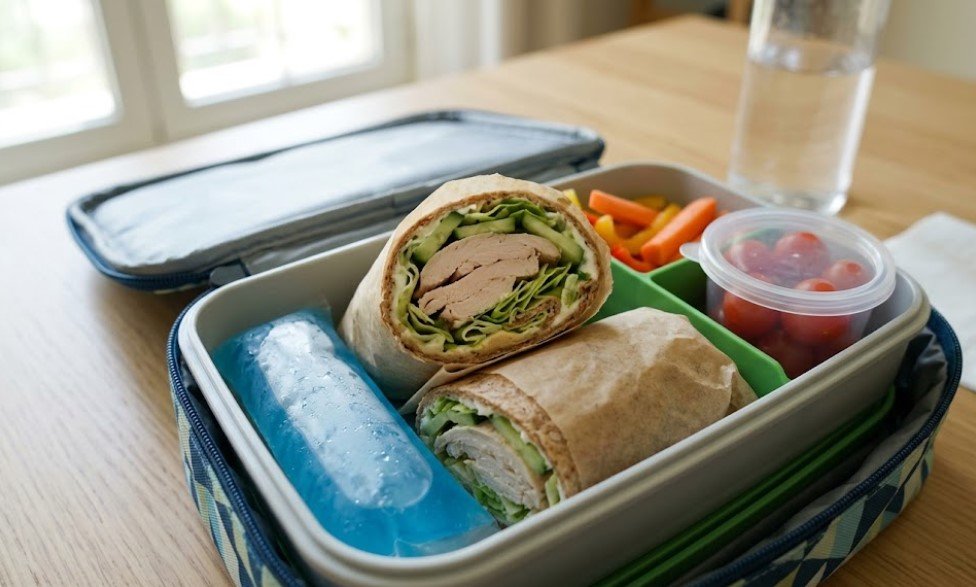
A simple wrap of sliced cooked chicken or turkey breast, shredded lettuce, cucumber and a smear of cream cheese or hummus in a wholemeal tortilla is one of the most reliably eaten lunchbox options across Western-background families in Dubai. It’s familiar, filling, easy to eat without utensils and doesn’t require heating. The key is keeping tomato separate — packed directly into the wrap, it releases water and turns the bread soggy by lunchtime. Pack cherry tomatoes in a small separate pot.
One ice pack during transit is sufficient. Avoid any version with mayonnaise unless you’re using two ice packs and a properly insulated box — mayo-based dressings fall into the high-risk category in the danger zone. Cream cheese or hummus are the safer and equally tasty substitutes.
7. Baked Mini Samosa with Mint Chutney
Indian / Pakistani / South Asian · No cooling needed
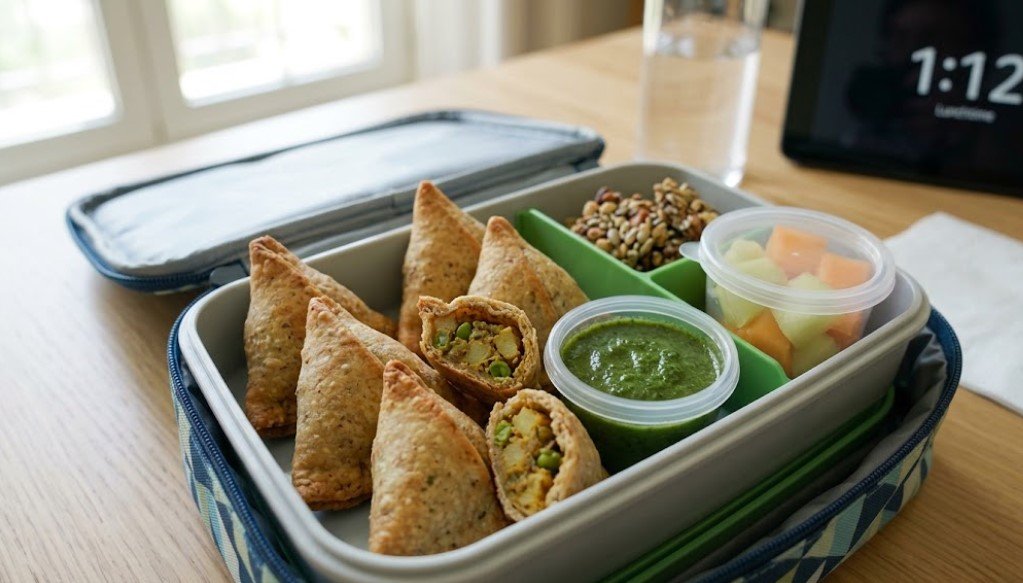
Baked mini samosa — rather than deep-fried — hold their shape and crisp for three to four hours without any cooling, which makes them one of the genuinely shelf-stable protein options. Fill with spiced potato, lentils or peas, bake until golden the evening before, and cool completely before packing. A small sealed pot of mint chutney or tomato ketchup on the side is the dip most children want.
Available pre-made from most South Asian grocery stores across Dubai and Abu Dhabi if time is short. Check the ingredient list of commercial versions for added preservatives if that matters to you. Baked rather than fried makes the fat content significantly more reasonable.
8. Hummus with Colourful Vegetable Sticks
Middle Eastern / Universal · One ice pack for transit
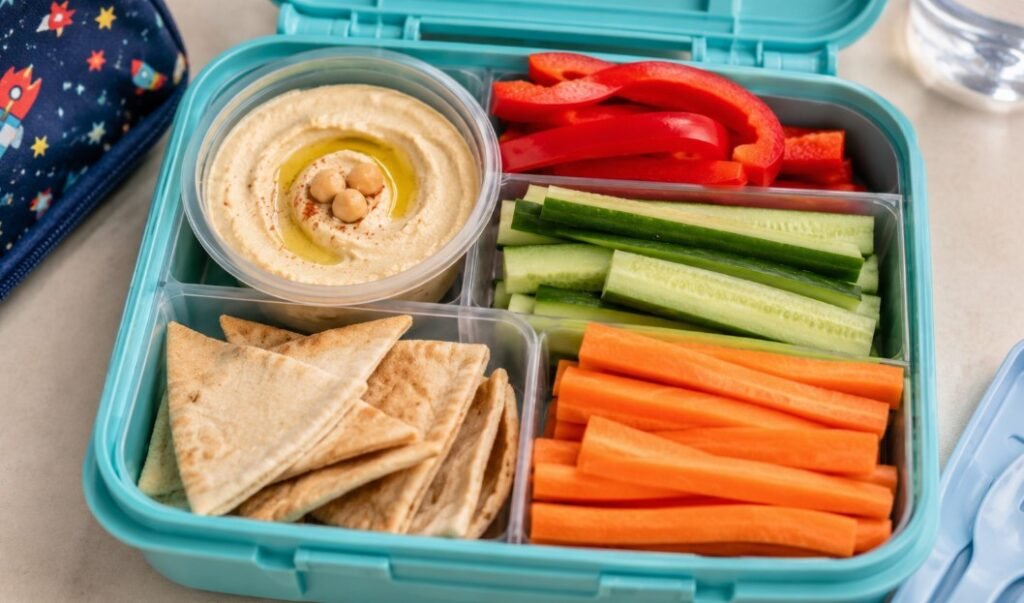
Hummus is genuinely useful in a Dubai lunchbox — widely available pre-portioned, high in protein and fibre, and familiar to children across most cultural backgrounds. The key is the pairing: carrot sticks, cucumber batons and red pepper strips hold their shape and colour for six hours without wilting. Pack the hummus in a sealed small pot and the vegetables separately so nothing goes soft.
Keep the pitta or pita chips dry in a separate bag rather than adjacent to the hummus — moisture turns them soft quickly. One ice pack during transit is sufficient for standard hummus. Plain hummus is better than flavoured varieties for children who are still developing their palate.
9. Hard-Boiled Egg in Shell with Crackers
Universal · One ice pack; shell on until eaten
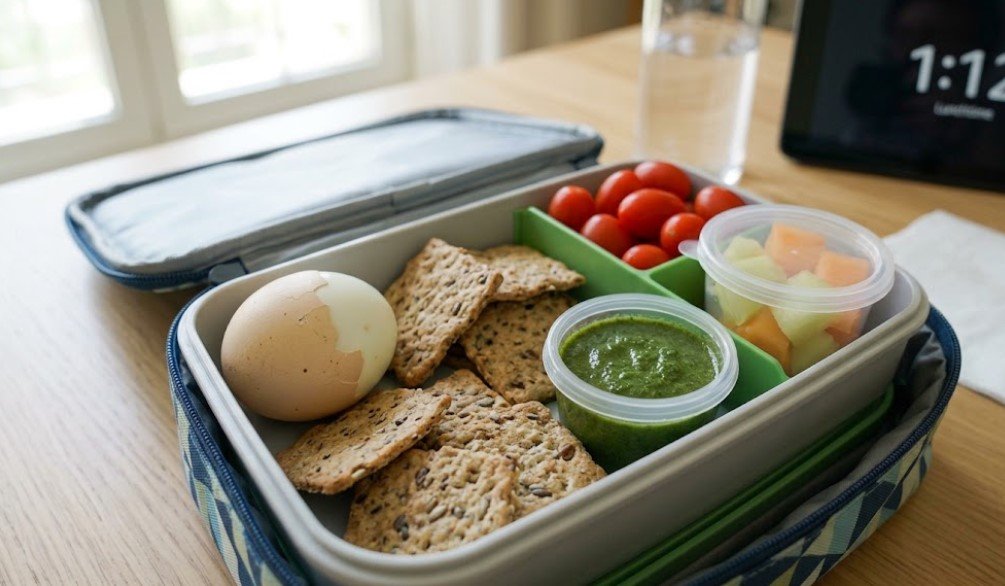
A whole boiled egg in its shell is one of the most portable protein sources available. Cook to hard-boiled the night before, cool completely in the fridge and pack with the shell intact — it acts as both natural packaging and protection. The child peels it at school, which most children find satisfying in itself. Pair with a few wholegrain crackers and some grape tomatoes.
One ice pack is fine for the transit. The classroom AC handles the rest of the storage time. Avoid sending peeled boiled eggs — once the shell is removed they are exposed and should be eaten within two hours of peeling. Always send it whole.
10. Cheese Portion with Crackers — with a Note on Amount
Western / International · One ice pack for transit
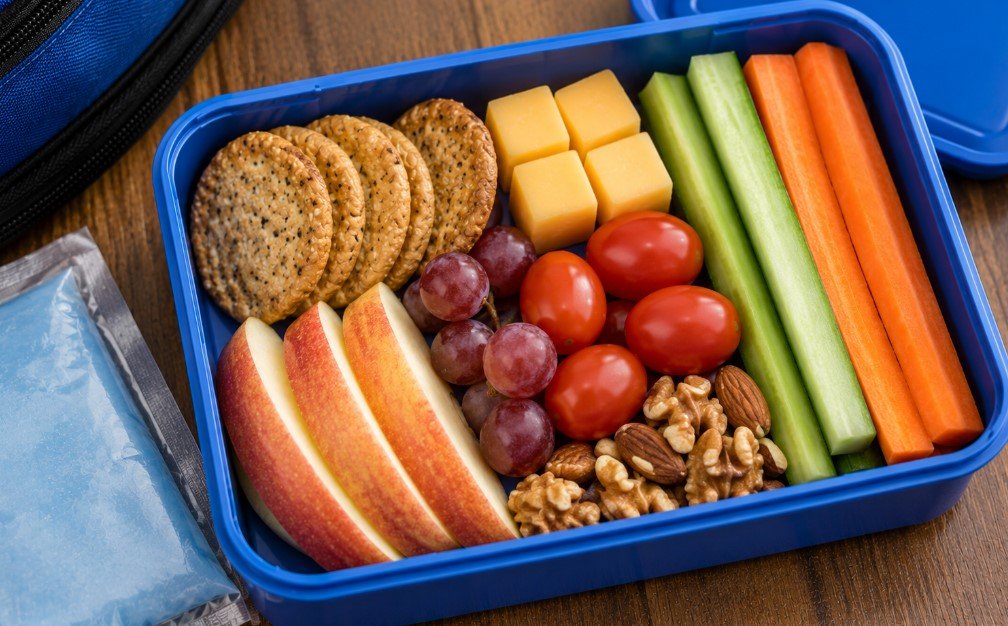
A modest portion of hard cheese — cheddar, Gouda, Edam — with wholegrain crackers is a reliable source of calcium and protein. The honest caveat: a generous serving of full-fat cheddar carries significant saturated fat, so the portion matters. Two to three small cubes or thin slices alongside crackers is appropriate for a school snack; a large tub of cheese cubes is nutritionally heavy for a midday meal. Grape tomatoes or cucumber sticks alongside balance the plate.
One ice pack for transit is sufficient for hard cheese — it’s a lower-risk dairy product than soft cheese or cream cheese. Light string cheese sticks or reduced-fat Laughing Cow triangles are leaner alternatives children generally enjoy equally. The key with any cheese in Dubai is not the classroom, where AC keeps it fine — it’s the car journey in the hotter months.
11. Pasta Salad with Olive Oil and Vegetables
Mediterranean / International · One ice pack for transit
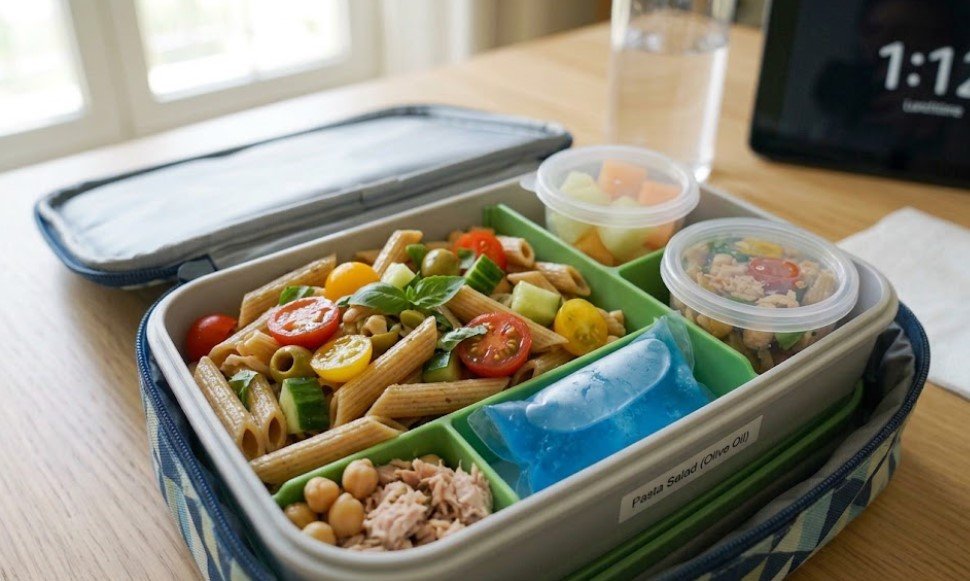
Cook pasta al dente the night before, toss with olive oil, a squeeze of lemon, halved cherry tomatoes, olives and cucumber, and refrigerate overnight. An oil-based dressing rather than mayonnaise or cream keeps this in the safer category — it tastes good at room temperature by lunchtime and doesn’t require refrigeration beyond the transit phase.
Keep protein additions modest: a few chickpeas or some tinned tuna add substance without tipping into high-risk territory. Avoid adding cheese or meat unless packing with two ice packs. This is one of the more filling and genuinely varied options on the list, and it works across most dietary backgrounds — vegetarian families, Italian families, Western families and families from other backgrounds who eat pasta regularly.
12. Mini Egg Muffins with Vegetables
Western / Universal · Two ice packs
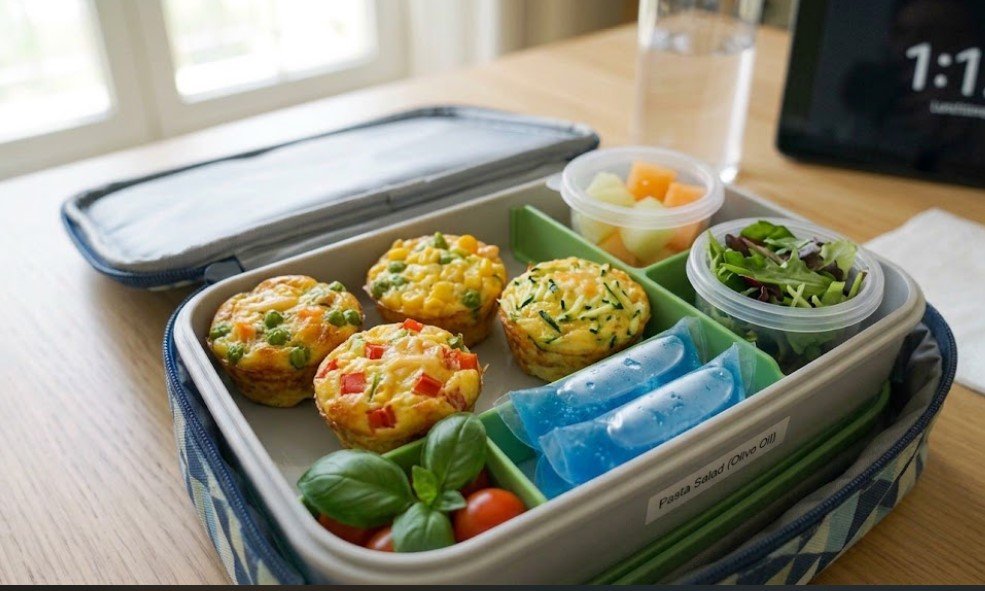
Baked egg muffins made in a mini muffin tin — beaten eggs, diced vegetables, optional small amount of cheese — are compact, portable and filling. They hold their shape well, don’t require cutlery and taste fine at room temperature. The vegetable mix can vary: sweetcorn, peas, grated courgette, diced pepper — whatever the child will accept.
Egg is a high-risk food under Dubai Municipality food safety guidelines, so two ice packs are the appropriate standard for this one, particularly during the hot transit months. Make them on Sunday; they keep refrigerated for three days. Pull straight from the fridge into the box in the morning.
13. Za’atar Flatbread
Levantine / Gulf / Universal · No cooling needed
Za’atar mixed with olive oil, spread onto a flatbread or pitta and either served fresh or lightly toasted is one of the best zero-cooling lunchbox options available in Dubai. It’s shelf-stable for the full school day, familiar to a wide range of children across the UAE’s Arabic, Levantine, Syrian, Lebanese and Palestinian communities, and increasingly popular with children from other backgrounds who’ve grown up here.
Most major supermarkets in the UAE stock ready-mixed za’atar. Spread it generously, fold the flatbread in half, wrap in parchment and pack. It works as a main item or as a substantial carbohydrate alongside other elements. A small pot of olives or cherry tomatoes completes it without adding cooling requirements.
14. Date Balls
Gulf / Universal · No cooling needed
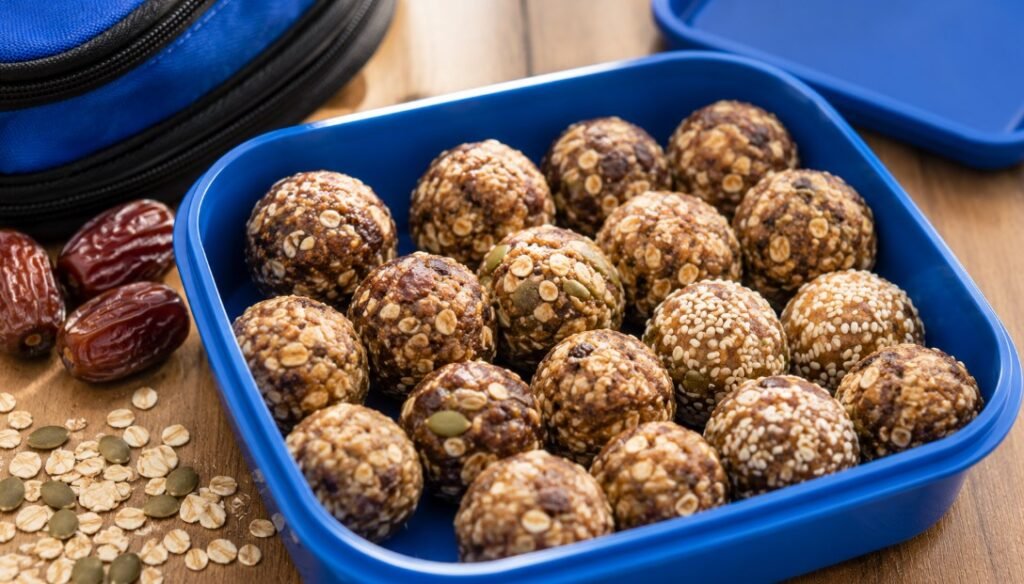
Blended Medjool dates with rolled oats and seeds — rolled into small balls and refrigerated until firm — are genuinely shelf-stable, high in natural sugar for energy and deeply familiar to children who’ve grown up in the UAE regardless of nationality. They’re popular across school communities partly because they don’t look like ‘health food’ and partly because Medjool dates from the UAE are genuinely excellent.
If the recipe includes nut butter, check the school’s nut policy first. Sunflower or pumpkin seed butter is an identical substitute for nut-free environments. Make a batch on Sunday and they keep refrigerated all week — grab a few each morning without any additional prep.
15. Frozen Yoghurt Pouch
Western / Universal · Self-cooling — the pouch is the ice pack
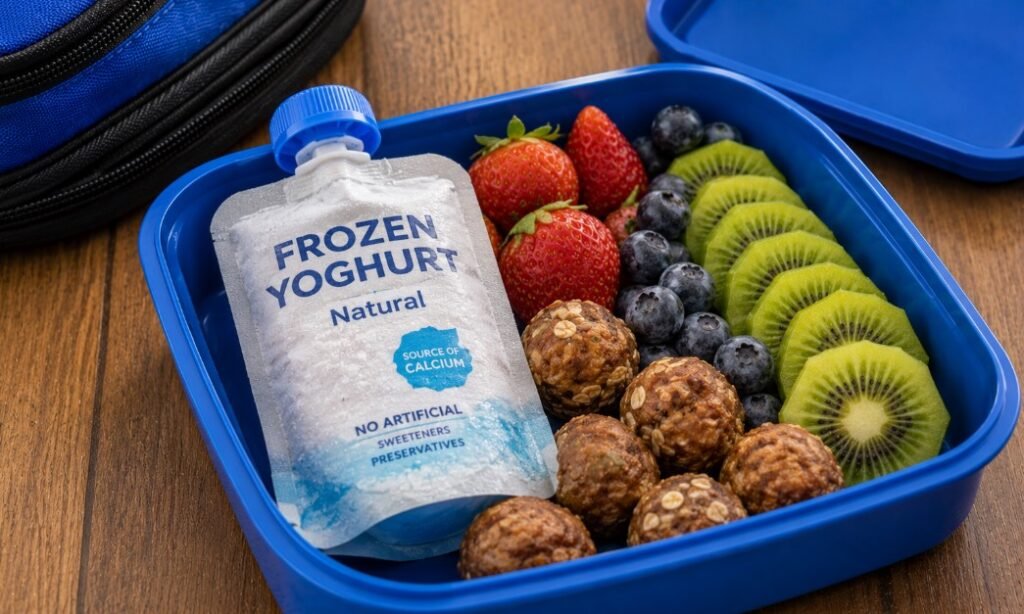
Freeze a yoghurt pouch the night before. It goes into the lunchbox frozen and thaws to a soft, cold, spoonable consistency by lunchtime — and in the meantime it has been keeping everything else in the box cool. It solves the transit cooling problem and the snack problem simultaneously, which is why it appears on almost every experienced Dubai parent’s short list.
Check the sugar content before buying regularly. Some commercial pouches contain high levels of added sugar. Plain or lightly flavoured yoghurt pouches from brands like Chobani or FAGE, or supermarket own-brand natural yoghurt pouches, are the better choice for regular use. A frozen fruit smoothie pouch works on the same principle.
16. Chapati Roll with Egg or Paneer
Indian / Pakistani / East African · One ice pack for protein versions
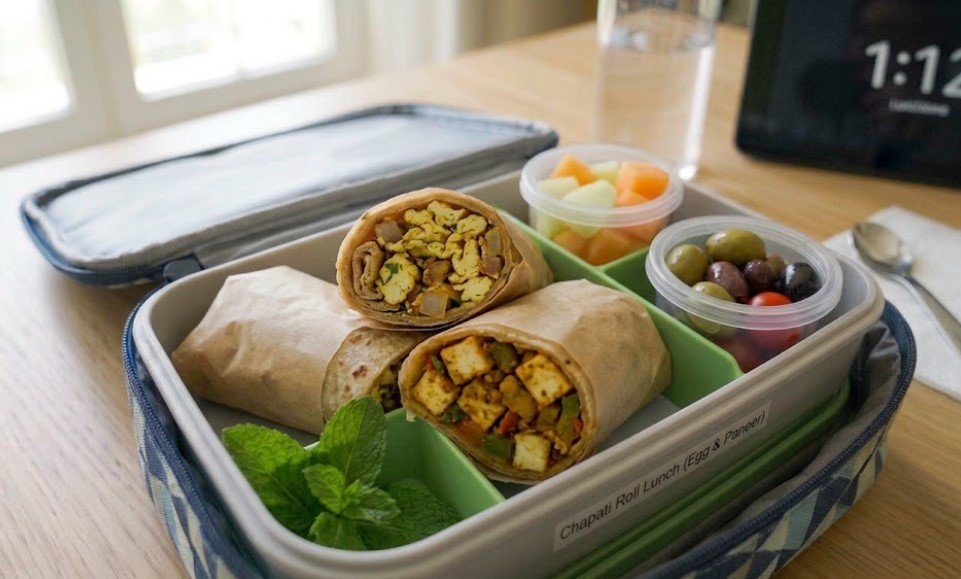
A fresh chapati rolled around scrambled egg cooked dry, or around spiced paneer, makes a satisfying and culturally familiar lunch for Indian, Pakistani, Bangladeshi and East African families — all of whom are well-represented in Dubai’s school population. Cook the filling the night before if using egg; pack cold with one ice pack. Plain chapati with a side of dal in a small thermos flask is another option for children who like a hot element.
Chapati are widely available from Indian grocery stores across Deira, Al Karama and Al Qusais if making from scratch isn’t feasible. They hold up better than bread-based wraps in terms of not going soggy and tend to stay pliable for several hours.
17. Avocado and Feta Wrap
Western / Mediterranean · One ice pack
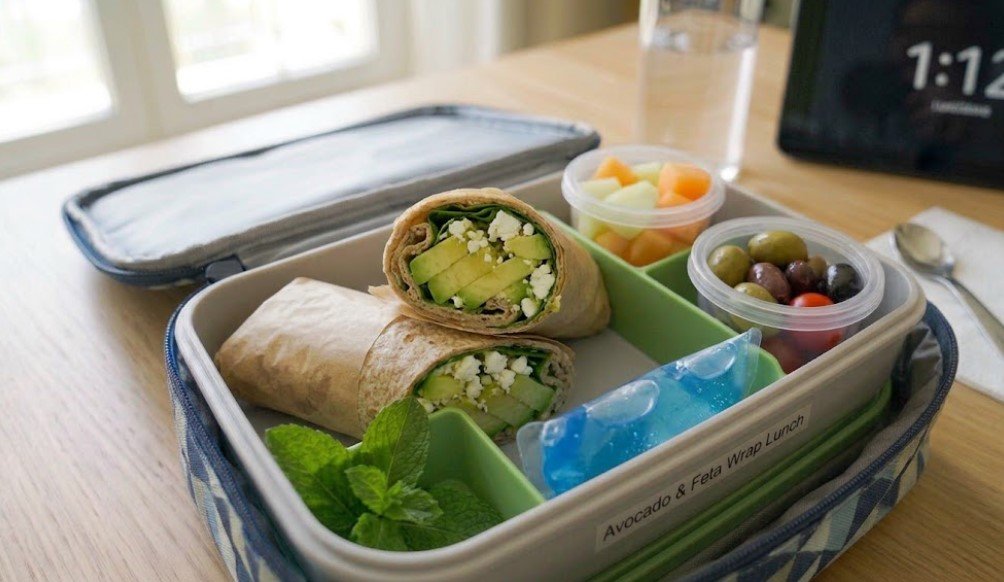
Sliced avocado with crumbled feta in a wholemeal wrap is filling, nutritious and holds reasonably well for five hours with one transit ice pack. The lemon juice squeezed over the avocado before wrapping slows browning significantly. Feta is a lower-fat cheese than cheddar while still being flavourful enough to appeal to children who like something savoury.
As with any wrap, keep tomato separate and pack it in a small pot on the side. Wrap tightly in parchment. One ice pack during the hot transit months; the classroom AC handles the rest. This one tends to appeal more to children aged eight and up than to very young children who may find feta too salty.
18. Mini Banana Oat Muffins
Western / Universal · No cooling needed
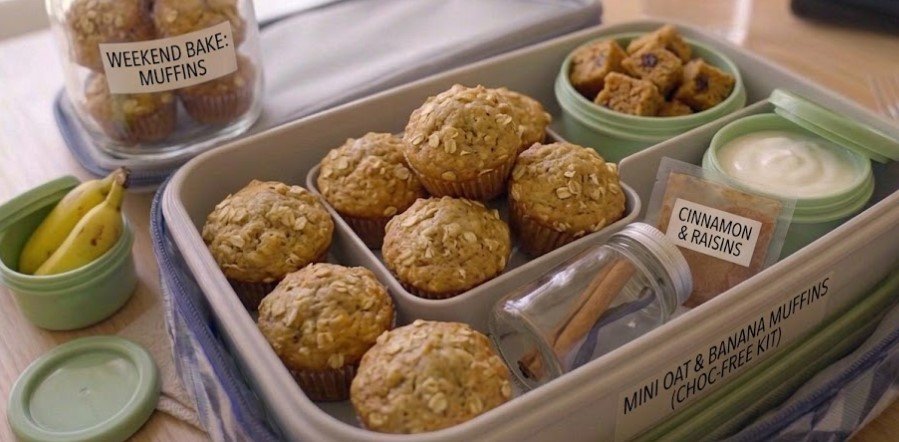
Three ingredients at the most basic: overripe bananas, oats and egg. The natural sugar from the banana means very little or no added sugar is needed. Bake in a mini muffin tin on Sunday, cool completely and pack in a sealed container — they keep at room temperature for twenty-four hours and in the fridge for four days. They’re soft, easy to eat without mess and generally popular across age groups.
The recipe is flexible: add cinnamon, vanilla, a few raisins or grated carrot depending on what the child likes. Avoid adding chocolate chips if the school restricts chocolate, which some do. These are one of the very few protein-and-fibre options that genuinely need no cooling at all.
19. Whole Fruit — The Underrated Constant
Universal · No cooling needed
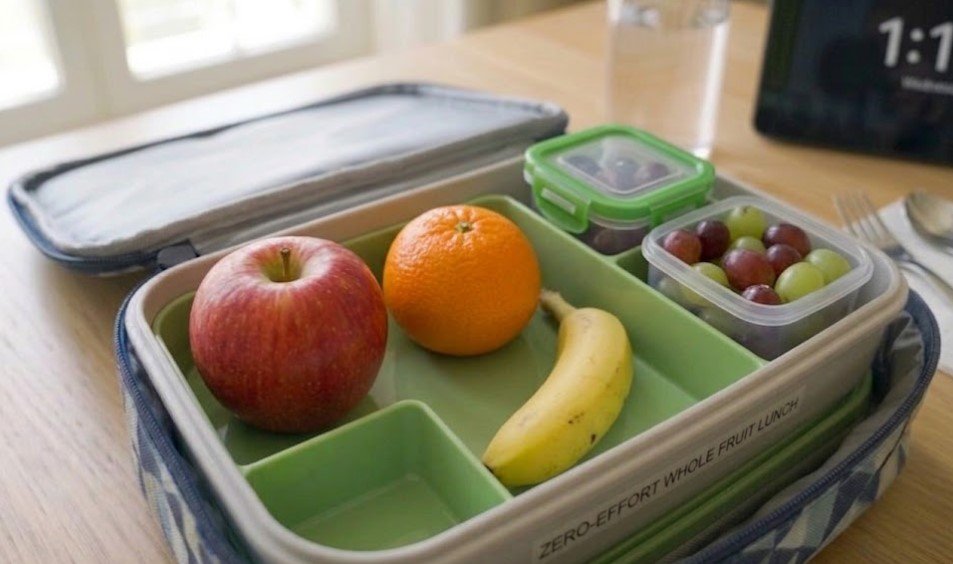
An uncut apple, a mandarin in its skin, a banana, a small sealed container of grapes — whole fruit with its skin intact is the one option that needs nothing: no ice pack, no prep beyond washing, no cutlery and no cooling. The skin protects the flesh from heat, moisture and contamination.
The distinction worth repeating clearly: whole fruit is fine without cooling; cut fruit is not. A sliced apple or watermelon chunks without an ice pack for five hours in a Dubai lunchbox is a food safety concern. If you want to send cut fruit, seal it in a container with one ice pack. If you want zero-effort, send it whole. Both are good — the method matters.
21. Thermos of Dal and Rice
Indian / Pakistani / Sri Lankan — No ice needed, hot food stays hot
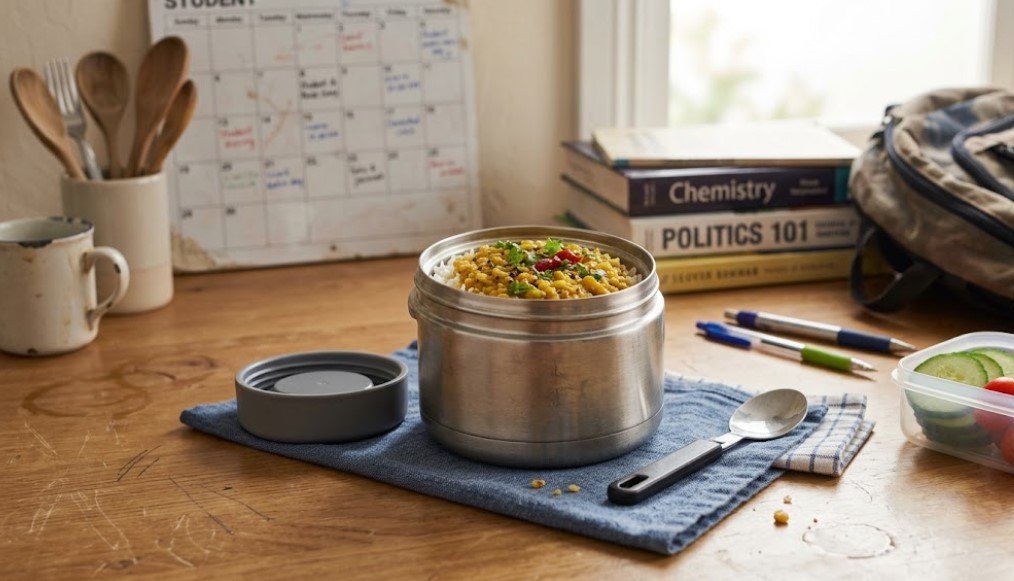
A good wide-mouth thermos keeps food hot for five to six hours. Fill it the morning with freshly cooked tarka dal and plain rice — or leftover from the night before reheated properly. Hot food in a thermos sidesteps the cold-chain issue entirely and is one of the most filling, genuinely home-cooked options on the list. Popular across South Asian families and increasingly common across other communities once children try it.
22. Noodle Box with Sesame Dressing
East Asian / Chinese / Japanese — No ice needed if oil-dressed
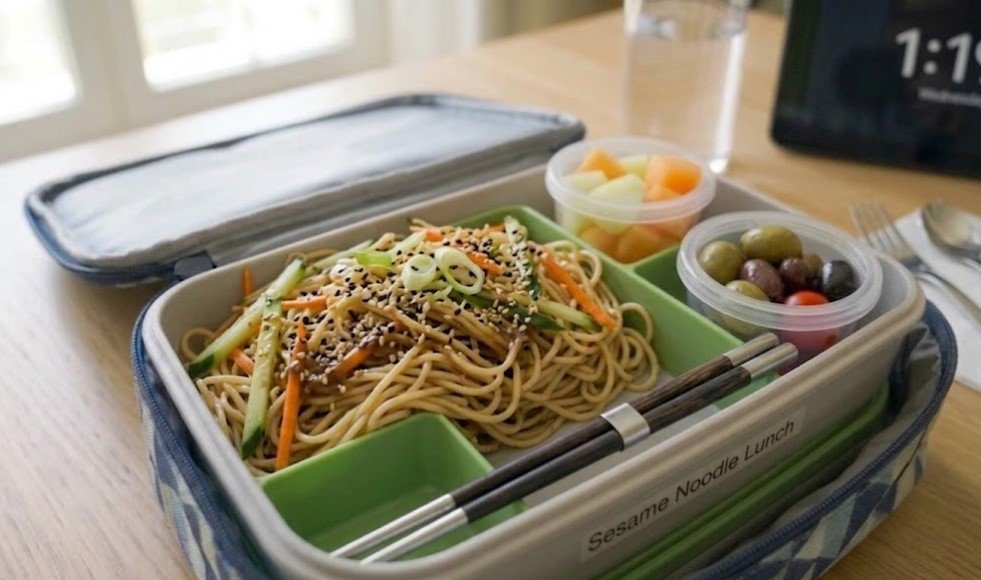
Cold sesame noodles — cooked the night before, tossed with sesame oil, soy sauce, a little rice vinegar and julienned cucumber — hold perfectly at room temperature for five hours. No dairy, no egg, no mayo. Pack in a sealed container with chopsticks or a fork. This is a genuinely different texture and flavour from anything else on the list and tends to get eaten.
23. Mini Pancakes with Jam or Honey Dip
Western / Universal — No ice needed
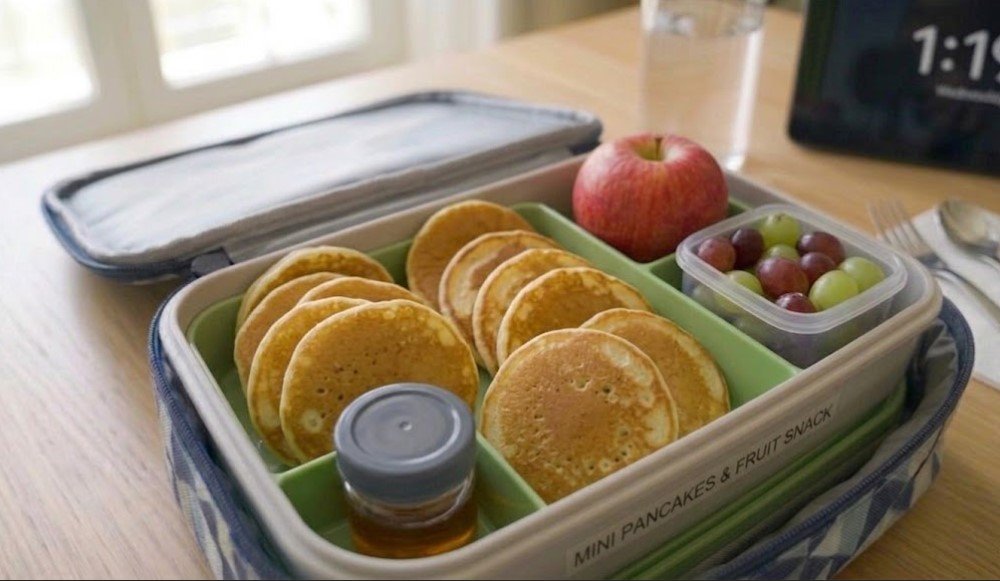
Small American-style pancakes made the night before and packed at room temperature with a small sealed pot of jam or honey on the side. They’re soft, sweet, hand-held and work as a break snack rather than a full lunch. Most children eat them immediately. Add a piece of whole fruit alongside to balance it out.
24. Corn on the Cob (Boiled)
Universal — No ice needed
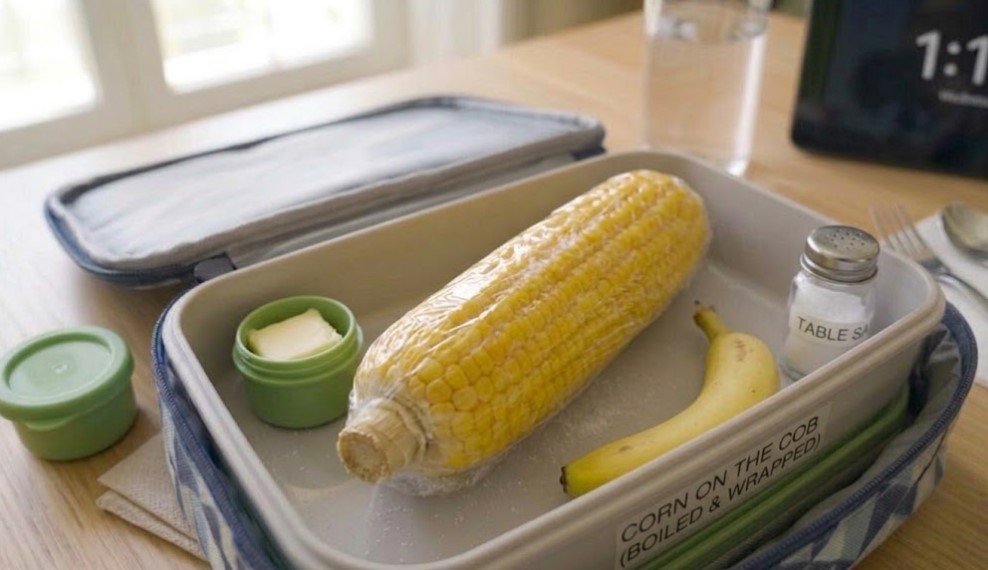
Boiled corn on the cob, cooled and wrapped in foil or cling film, is shelf-stable for four to five hours and is one of the most universally accepted foods across children of every background. High in fibre, naturally sweet, zero prep at lunchtime. Sprinkle with a little salt before wrapping. Available everywhere in Dubai and very cheap.
25. Vietnamese-Style Summer Roll (Fresh Spring Roll)
Vietnamese / Southeast Asian — One ice pack in transit months only
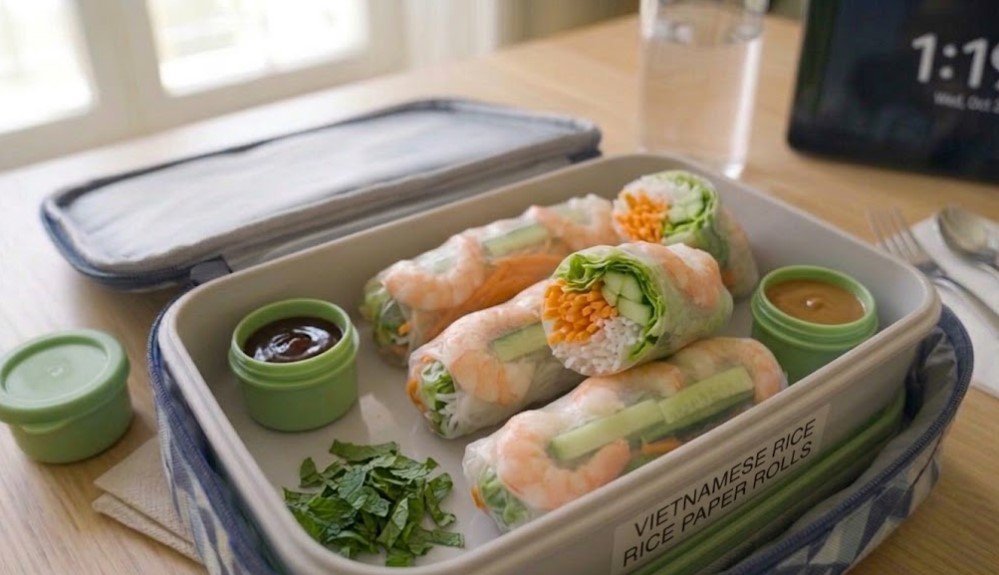
Rice paper rolls filled with vermicelli noodles, shredded lettuce, carrot, cucumber and cooked prawns or tofu — no frying, no heat required. The rice paper keeps everything enclosed and makes them non-messy to eat. A small pot of hoisin or peanut dipping sauce alongside (check nut policy for peanut sauce). These look impressive, are genuinely different, and children who’ve eaten them at Vietnamese restaurants in Dubai will ask for them again.
26. Mini Corn Tortilla Tacos — Flat-Packed
Mexican / Latin American / Western — No ice needed for vegetarian version
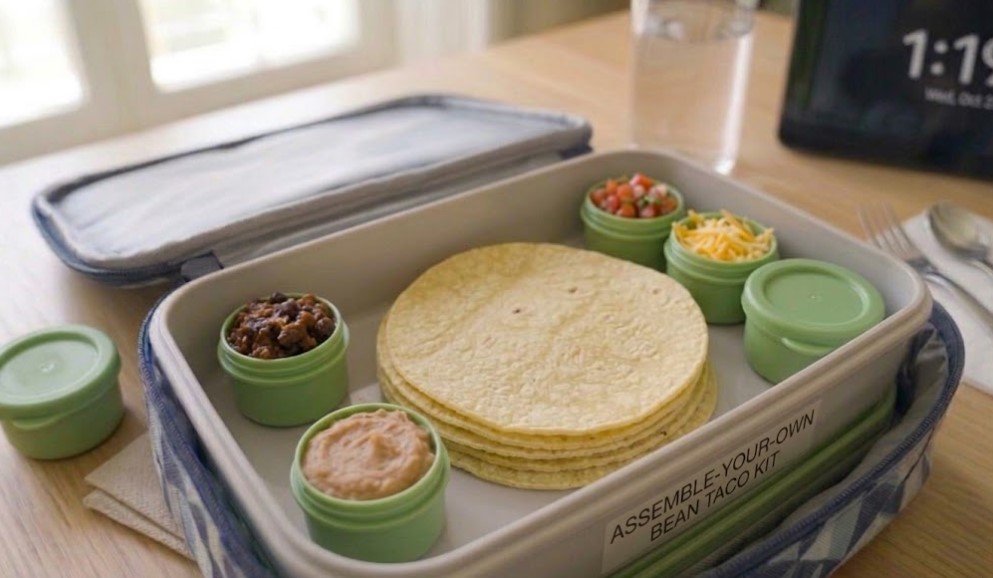
Pack small corn tortillas flat in a sealed container with a side of seasoned black beans or refried beans, shredded cheese in a separate small pot, and salsa in another. The child assembles at lunchtime. Bean-based tacos without meat need no ice. Add some guacamole if sending with an ice pack. This is genuinely different from anything else on the list and works well for children who enjoy interactive food.
27. Miso Soup in a Thermos
Japanese / East Asian — No ice, hot food
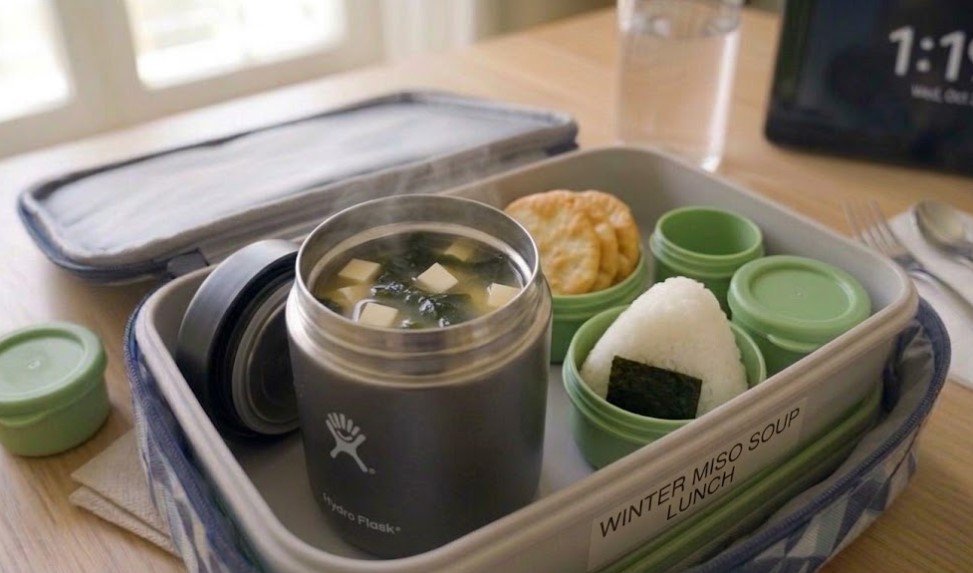
Dissolve a sachet of miso paste in hot water, add tofu cubes and seaweed, pour straight into a pre-warmed thermos. Light, warming in winter, deeply familiar to Japanese and Korean families and increasingly known to children from other backgrounds who’ve grown up in Dubai’s food scene. Pair with plain onigiri or crackers. A proper winter lunchbox option that makes no concessions to the summer format.
28. Roasted Chickpeas
Universal — Completely shelf-stable
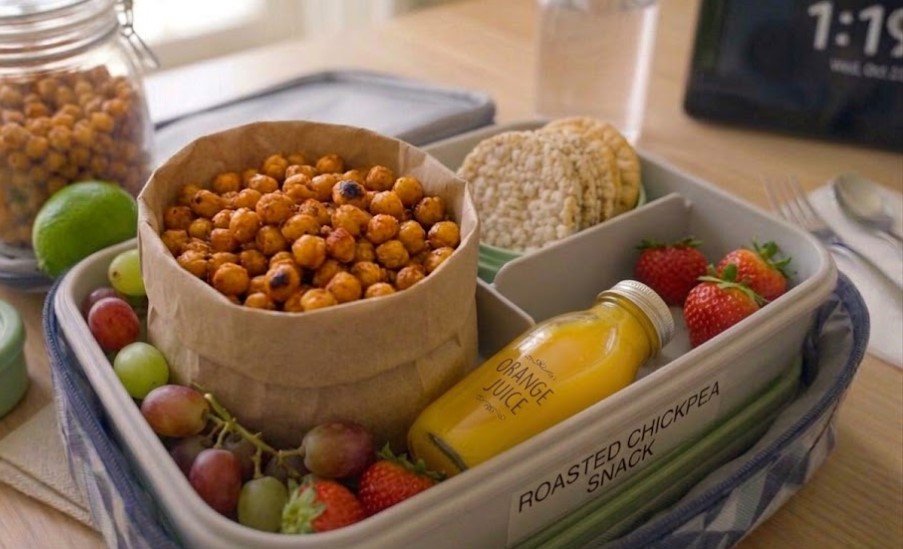
Tinned chickpeas, drained, tossed with olive oil, cumin, smoked paprika and salt, then roasted at 200°C for 25 minutes until crunchy. Cool completely and pack in a paper bag or open container — any trapped moisture softens them quickly, so airflow matters. Completely shelf-stable, high in protein and fibre, and satisfying to eat by the handful. Make a big batch on the weekend; they keep in an airtight jar for three days.
29. Steamed Bao Bun with Filling
Chinese / East Asian — Thermos or ambient if eaten within 4 hours
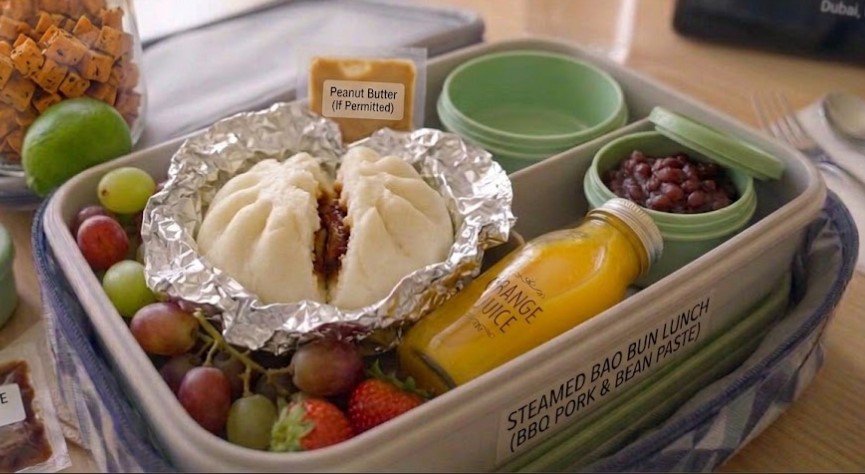
A steamed bao bun filled with barbecue pork, sweetened red bean paste or even just peanut butter (if school permits) is one of the most popular grab-and-go foods across Chinese, Taiwanese and Hong Kong families. Available frozen from most Asian supermarkets in Dubai — steam in the morning, wrap in foil and pack. Soft, substantial and different from anything bread-based on the rest of the list.
30. Roasted Sweet Potato Wedges.
Universal / Western / Caribbean — Shelf-stable, no ice
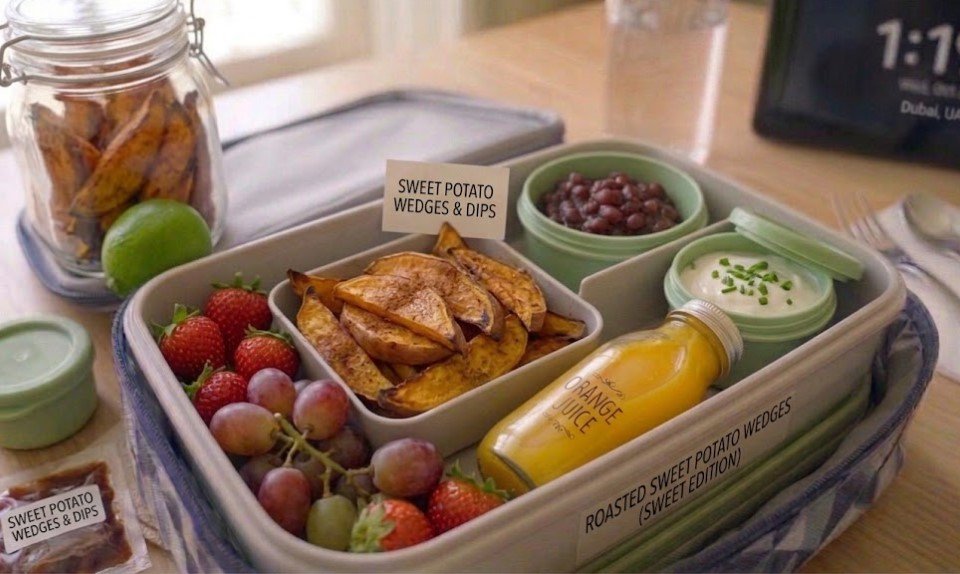
Roasted sweet potato wedges cooked the night before, cooled completely, packed at room temperature. They’re naturally sweet enough that children who reject vegetables often accept them, they hold their shape and don’t go soggy, and they’re genuinely filling. Season with cinnamon and a little salt for a sweet version, or with paprika and garlic for savoury. A small pot of sour cream or yoghurt dip on the side adds protein — in winter no ice pack needed for a small portion of yoghurt in a cool classroom.
What to Avoid and Why
The following come back to school frequently and regularly create problems — either food safety issues or full lunchboxes.
- Mayonnaise-based fillings without two ice packs — tuna mayo, egg mayo and chicken mayo sandwiches are high-risk in the danger zone. Without consistent cooling from pack time to eating, these should not be included.
- Cooked rice sent at room temperature — cooked rice is specifically high-risk for Bacillus cereus, a bacteria that produces heat-resistant toxins even after reheating. If sending rice, pack it fresh from the fridge with ice packs, or send it in an insulated thermos.
- Soft cream-filled pastries or custard-based items — high-risk dairy products that deteriorate quickly outside refrigeration.
- Cut fruit without any cooling — sliced apple, melon or strawberries without a sealed container and at least one ice pack are unsafe for a five-hour window, particularly in the car transit months.
- Foods the child has never eaten before — the lunchbox is not the place for a first encounter with a new food. Children who find something unfamiliar in their box at lunchtime, surrounded by friends, will almost always leave it untouched. Introduce new foods at home first.
A Few Practical Notes
Most UAE schools are nut-free — both tree nuts and peanuts. Some schools restrict chocolate, crisps and carbonated drinks. A few also restrict highly processed snacks regardless of nut content. The My School Food portal from Dubai Municipality publishes the nutritional guidelines that most Dubai schools align with, and includes an AI chatbot that can answer food and nutrition queries specific to the Dubai school context.
The most reliable lunchbox is the one that reflects what the child already eats and enjoys at home. In a city where a classroom might have children from twenty different countries, there is no single ‘standard’ lunchbox — and that’s exactly why there are twenty ideas here rather than five.