We went looking for gadgets that actually solve a specific, recurring kitchen annoyance — not ones that just look clever on a shelf. Here’s what earned a permanent spot on the counter.
Most kitchen gadgets are designed to solve problems you didn’t know you had. The useful ones tackle those small frustrations you deal with every week — the can that takes forever to open, garlic that leaves your fingers smelling for hours, or a simple kitchen task that could be done much more easily with the right tool.
This guide focuses on gadgets built around those everyday annoyances. We’ve looked closely at what each tool is designed to do, how practical it looks for everyday cooking, and the details that matter once the novelty wears off — including whether it genuinely earns a place in your kitchen.
Cool Kitchen Gadgets – Our Pick
How to Wash Sneakers in the Machine Without Damaging Them
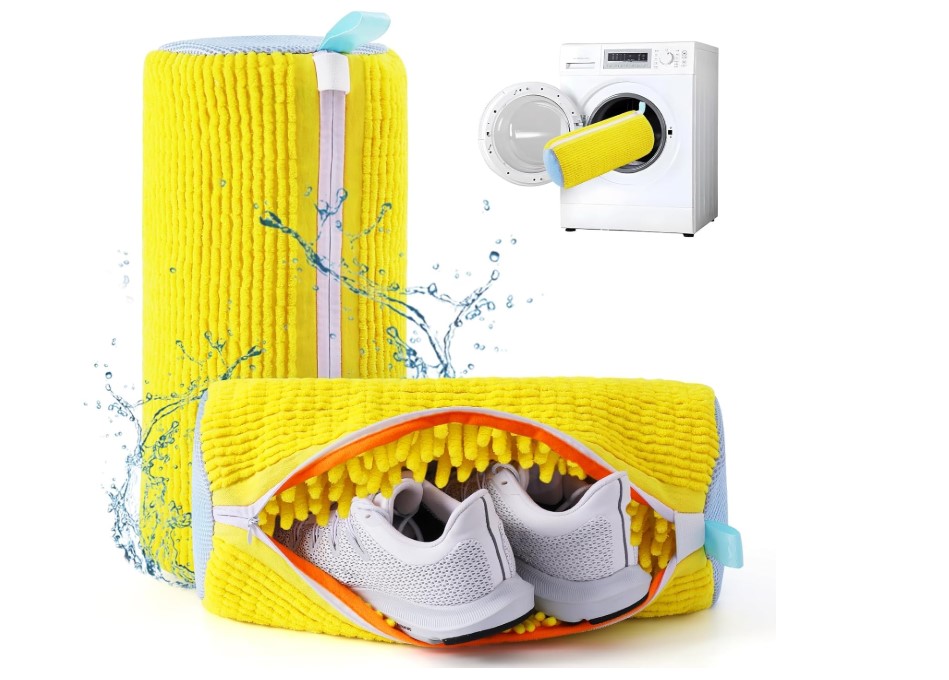
If you are tired of your sneakers clanking against the washer drum like a bag of rocks, this shoe washing bag actually solves the problem pretty well. The inner lining is packed with thick chenille microfiber strands that cushion the shoes, cut down on all that heavy noise, and scrub dirt off the uppers while they spin. The zip design is also surprisingly thoughtful—it locks in place and tucks under a small elastic band so it will not pop open mid-cycle or scratch the inside of your machine. It is an inexpensive trick to keep your everyday runners and gym shoes clean without beating them up in the wash.
That said, it is worth keeping your expectations in check regarding deep stains. While the 360-degree bristles work great for lifting light surface dust, mud, and everyday grime, they will not magically replace a hand-scrub with a stiff brush if you have set-in dirt or filthy white outsoles. The 38x18cm size comfortably fits standard men’s and women’s trainers, but if you wear high-tops, bulky chunkier boots, or larger shoe sizes, the fit might get a little tight. Overall, as an everyday laundry accessory to protect both your footwear and your washing machine drum, it easily delivers enough value to justify the low price tag.
Dreamfarm Supoon Non-Stick Sit-Up
Dreamfarm Supoon – Silicone, heat-resistant to 260°C . A flat-tipped silicone spoon that scrapes a pan or bowl clean and stands itself up off the counter between uses.
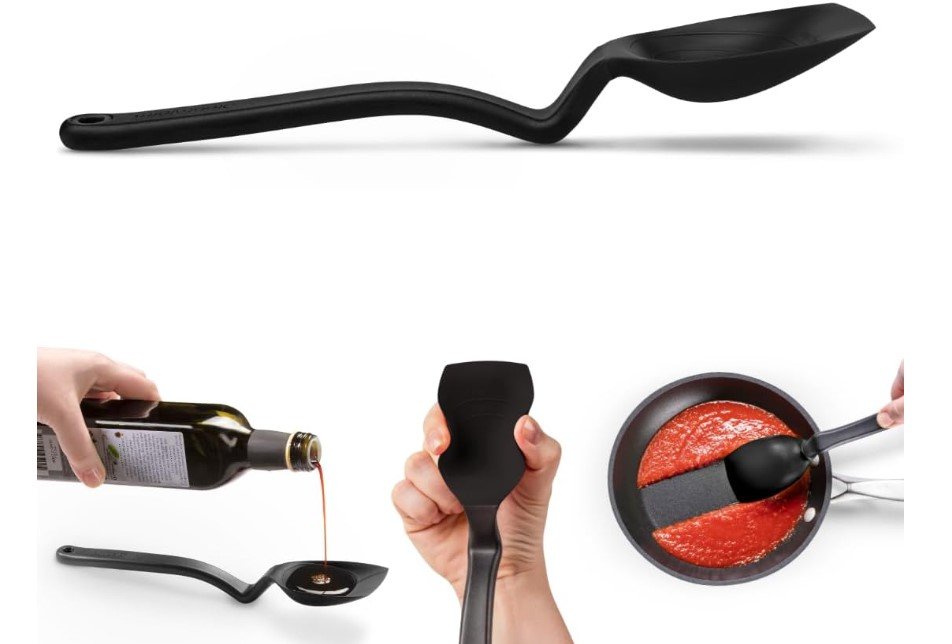
A wooden spoon or a standard silicone spatula each do half the job — one stirs well but doesn’t scrape corners, the other scrapes but doesn’t hold sauce. The Supoon’s deep, flat-tipped head is shaped to do both: the flexible silicone sides squeegee against the curve of a pan while the bowl of the spoon still holds enough liquid to serve or stir without dripping. It’s rated to 260°C, so it can sit directly in a pan on the stove without softening or melting against a hot nonstick surface.
The detail that matters most day to day is the angled handle: rather than resting flat on the counter, the head tips up when the spoon is set down, so it never touches the surface it’s just been cooking in. That single design choice removes the need for a spoon rest, which is a small thing until you’ve stopped washing one. It also carries etched teaspoon and tablespoon markings, useful in a pinch but not a substitute for real measuring spoons when accuracy matters. The trade-off is that, like most silicone tools, it holds onto strong food odors over time, so a spoon used for chili is worth keeping separate from one used for dessert.
OTOTO Splatypus Jar Scraper Spatula
Silicone and plastic, dishwasher-safe , a long, narrow silicone spatula built specifically to reach the bottom and sides of deep, narrow jars a standard spatula can’t get into.
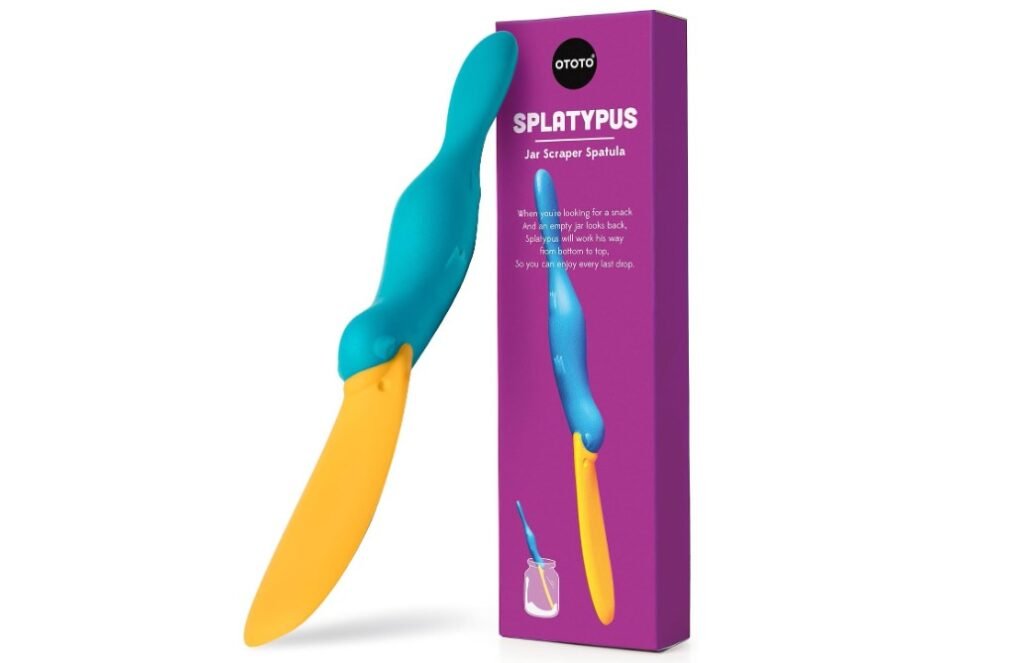
Peanut butter, jam, and nut butter jars all have the same design problem: they’re taller and narrower than any spatula meant for a mixing bowl, so the last quarter of the jar either gets left behind or requires a butter knife and some patience. The Splatypus is built at 21 centimeters long and just 3.4 centimeters wide specifically to fit that shape — its slim silicone body reaches straight down to the bottom of a standard jar and its flexible edge follows the curve of the glass on the way back up, pulling out what a wider spatula would leave stuck to the sides.
Where it earns its place next to the Supoon rather than duplicating it is scope: the Supoon is built for pans and bowls in active cooking, while the Splatypus is a single-purpose tool for jars specifically, and its narrow head would be a poor choice for stirring anything in a wide pot. It’s food-safe silicone and dishwasher-safe, so cleanup isn’t a factor, and the flexible tip has enough give to handle both stiff nut butters and looser jams without tearing. The main limitation is that same narrow focus — it’s excellent at the one job it’s shaped for and not particularly useful for anything else in the kitchen.
Anova Culinary Precision Cooker 2.0
Clips onto almost any stockpot and holds a water bath within a fraction of a degree — the most reliable way to hit an exact doneness without babysitting a pan.
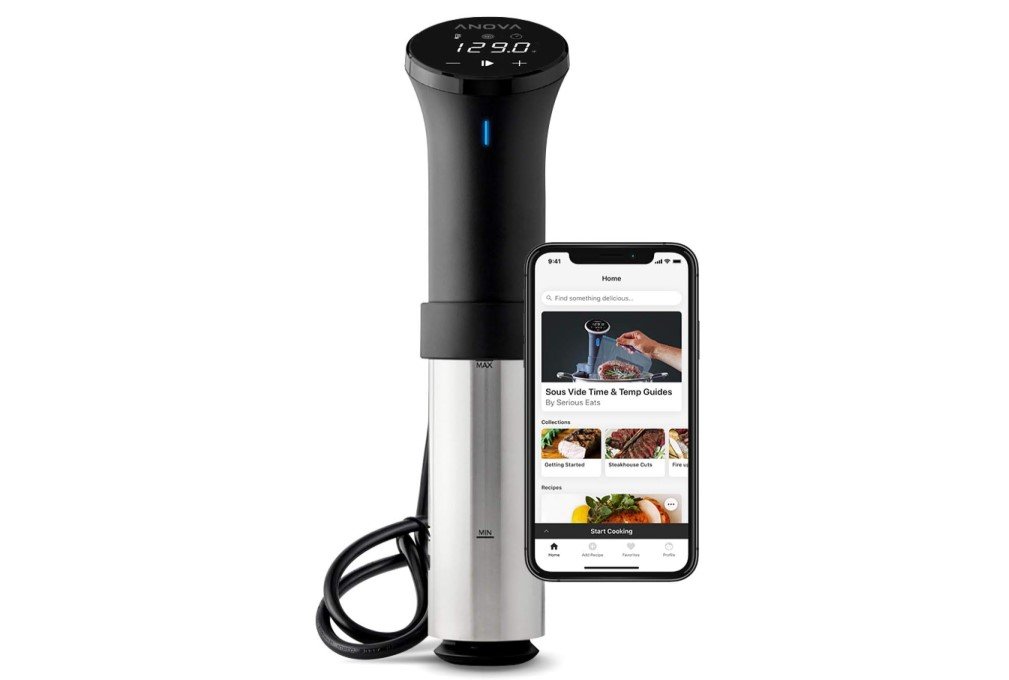
A pan or an oven cooks by proximity to heat, which is why a steak can go from perfect to overdone in the ninety seconds it takes to answer the door. The Anova sidesteps that problem entirely by cooking through water instead of air: its immersion circulator pulls water in, heats it, and pushes it back out fast enough to hold the whole bath within a fraction of a degree of whatever temperature you set, for as many hours as the recipe needs. That means a chicken breast set to 149°F comes out at 149°F whether you check on it after twenty minutes or two hours — there’s no window to miss.
It clamps onto the side of nearly any pot with an adjustable bracket, so you’re not buying a dedicated vessel, and the 1000-watt element brings a full pot of water up to temperature quickly enough that the wait doesn’t feel like the whole point of using it. The app is genuinely useful for long cooks — you can start dinner from across the house and get a notification when it’s ready — but it’s an add-on to the core function, not a requirement for it; the dial on the unit itself does the job.
The catch is that it’s a component, not an appliance: you still need your own pot, and for a fully hands-off setup you’ll want a lid or plastic wrap to cut down on evaporation over a multi-hour cook. And its 200°F ceiling means it only gets food to temperature — anything that wants a sear still needs a hot pan afterward.
Related : Top 10 Smart Home Devices Dubai Worth Buying
Dreamfarm Fluicer
A folding two-arm press that catches seeds as it juices and flattens down to almost nothing in a drawer.
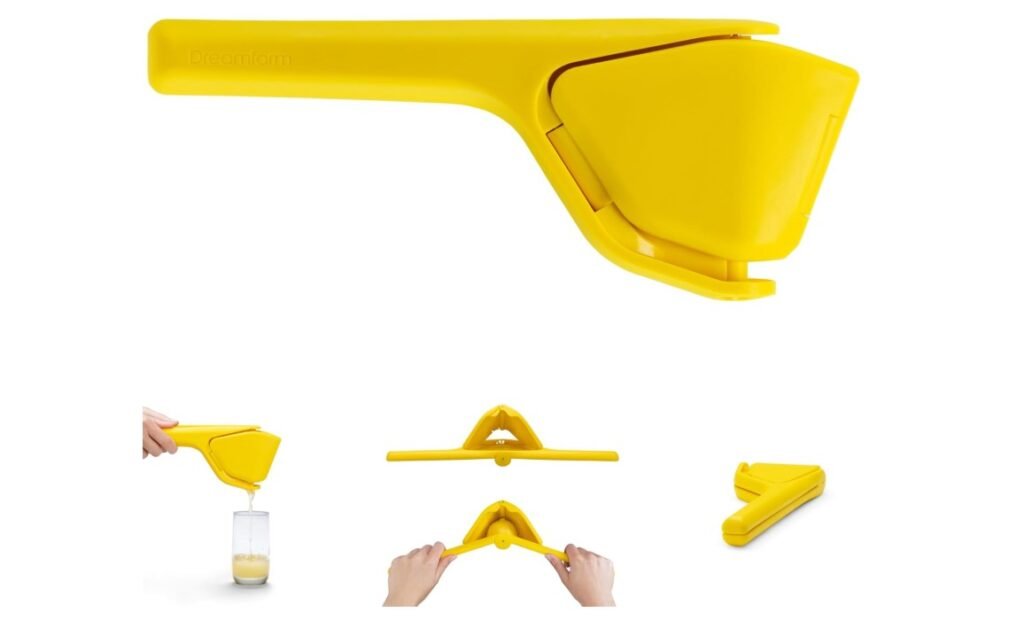
Juicing a lemon by hand usually ends with seeds in the bowl and juice on the counter. The Fluicer’s folding arms close around a citrus half and press evenly across the whole cut face rather than concentrating force at one point, which gets more juice out per squeeze than a standard reamer — and a catcher built into the hinge traps the pips as you go, so nothing needs to be strained out afterward.
It’s a two-handed tool despite the name — you close the arms together rather than operating it with one hand — but that trade-off buys real mess reduction, and it rinses clean in seconds or goes straight into the dishwasher. It folds flat to about the size of a coaster, which matters more than it sounds like it should in a drawer that’s already full of things exactly this shape. The main limit is size: it’s built for lemons and limes, and a grapefruit or orange half needs to be cut down before it’ll fit the press.
Dreamfarm Ortwo Lite
6 grind settings, ceramic mechanism .Squeezes instead of twists, so it works when your other hand is holding a pan — with the same coarse-to-fine range as a standard mill.
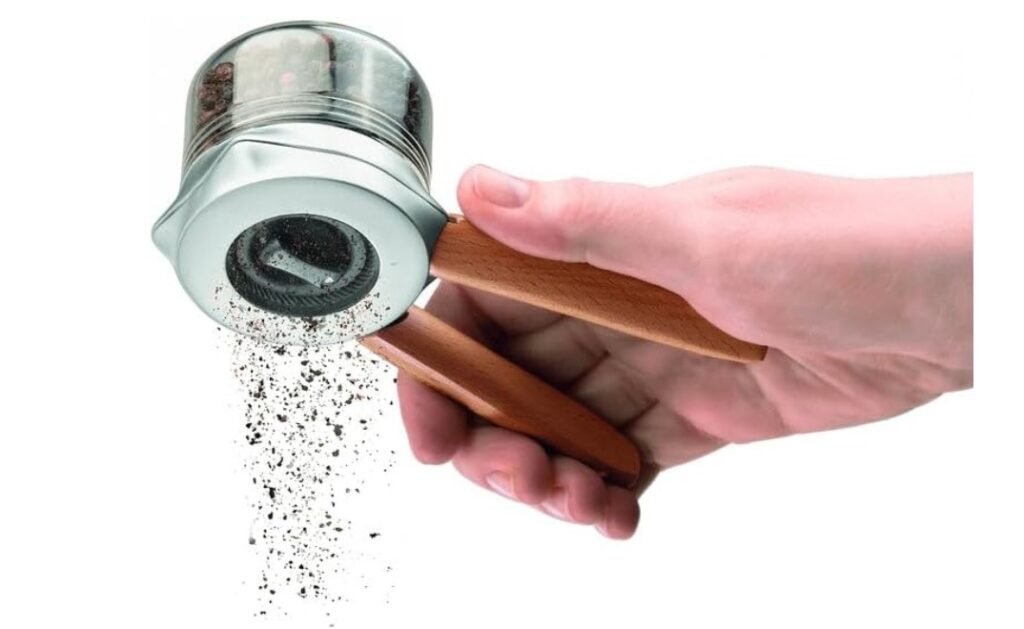
Most pepper mills assume you have a free hand to spare, which is rarely true mid-recipe. The Ortwo Lite swaps the usual twist motion for a squeeze — the housing opens on a hinge, and closing it drives a ceramic grinding mechanism that won’t corrode from salt the way metal ones eventually do. Six settings take it from a fine dust to a rough cracked grind, the same spread you’d get from a traditional mill.
In practice, one-handed use works fine for a light grind, but getting a full pinch out of it fast is noticeably easier with both hands — the spring isn’t quite forceful enough to open the mechanism all the way on its own. It also won’t touch anything much larger than a peppercorn; flax seed and similar small, hard seeds tend to pass through unground. The plastic jar is the part we’d worry about over years of use, more than the grinder itself, and it’s worth knowing a sturdier metal-and-wood version exists if that’s a dealbreaker.
Joseph Joseph Align 2-Piece Measuring Jug Set
1L and 50ml jugs . An angled interior lets you read the scale from directly above — no crouching to eye level to get an accurate pour.
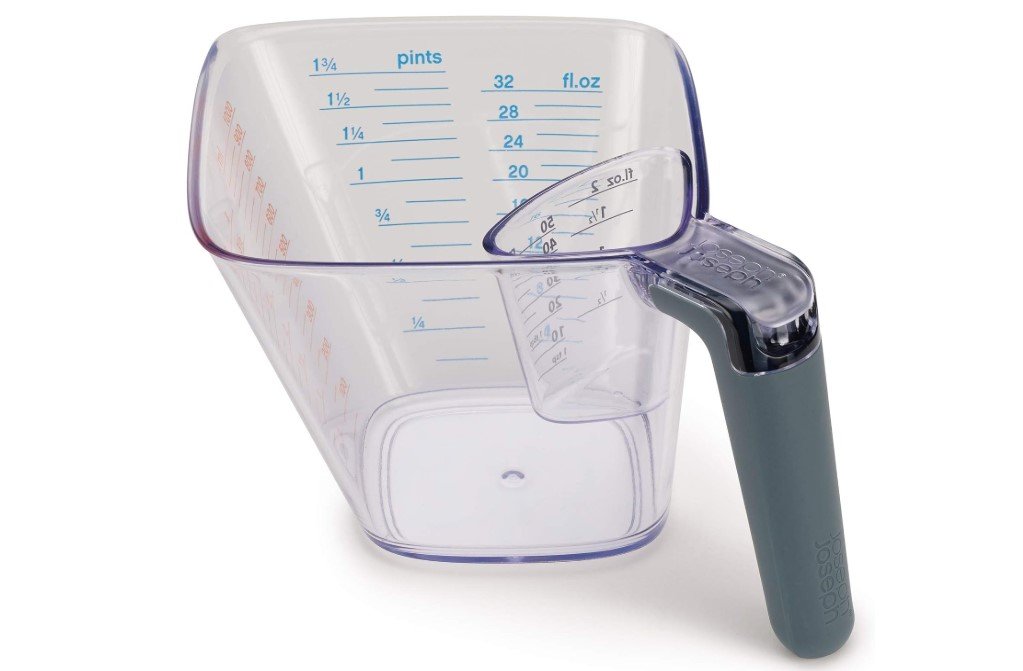
The flaw in a standard measuring jug isn’t the jug, it’s the angle: markings printed straight up the outside wall only read accurately from eye level, so you end up crouching over the counter for anything more precise than a rough pour. Joseph Joseph fixed this by angling the inside wall of the jug so the scale lines up with your eye from a normal standing position — you look straight down and the number you need is right there, level with the liquid.
The set pairs a 1-liter jug with a 50ml one for smaller pours like oil or vanilla extract, and the two nest together for storage instead of eating up two separate spots in a cabinet. It’s plastic, so it’ll scratch and dull faster than glass over the years, and the 1-liter ceiling means bigger batches still need a bowl or a scale. But for the everyday task of measuring stock, milk, or water without guessing, it solves the actual problem more cleanly than jugs twice the price.
NutriChef PKFD12 Food Dehydrator
Five stackable trays and circulated airflow make it the rare home dehydrator built for batch quantities, not a handful of slices at a time.
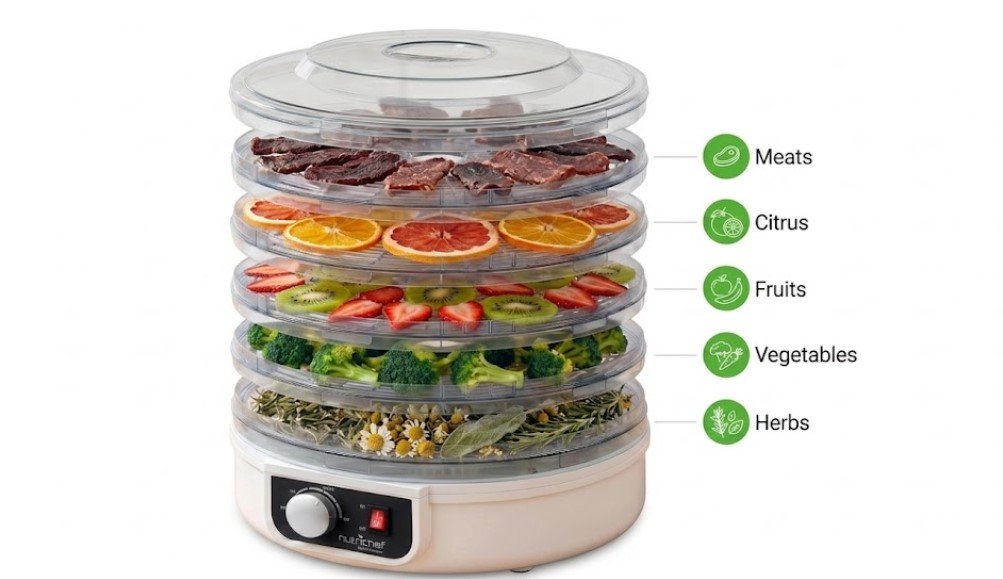
Air-drying on a rack is slow and uneven, and freezing changes the texture of fruit and meat in ways that don’t suit jerky or dried snacks. The NutriChef gets around both by circulating heated air through five stacked trays at once, so a whole tray of apple slices or a batch of beef jerky dries at roughly the same rate top to bottom instead of drying unevenly the way passive methods do. It runs on one button, capped at 180°F — enough to dry food thoroughly without cooking it.
The trade-off for that batch capacity is size: at 33 centimeters across, it’s not a tool you leave out permanently, and it needs real storage space between uses. None of the parts are dishwasher-safe, so a full batch means hand-washing five trays afterward, which is the real cost of ownership here. And because there’s only one temperature ceiling, you can’t dial down for something delicate like herbs and up for meat in the same session — it runs at one setting regardless of what’s on the trays.
Wevac Vacuum Sealer Bags, 6×10″ (100-pack)
BPA-free, embossed channel design . Pre-cut, textured bags that pull a tighter seal than flat bags, extending fridge and freezer life by several times over standard storage bags.
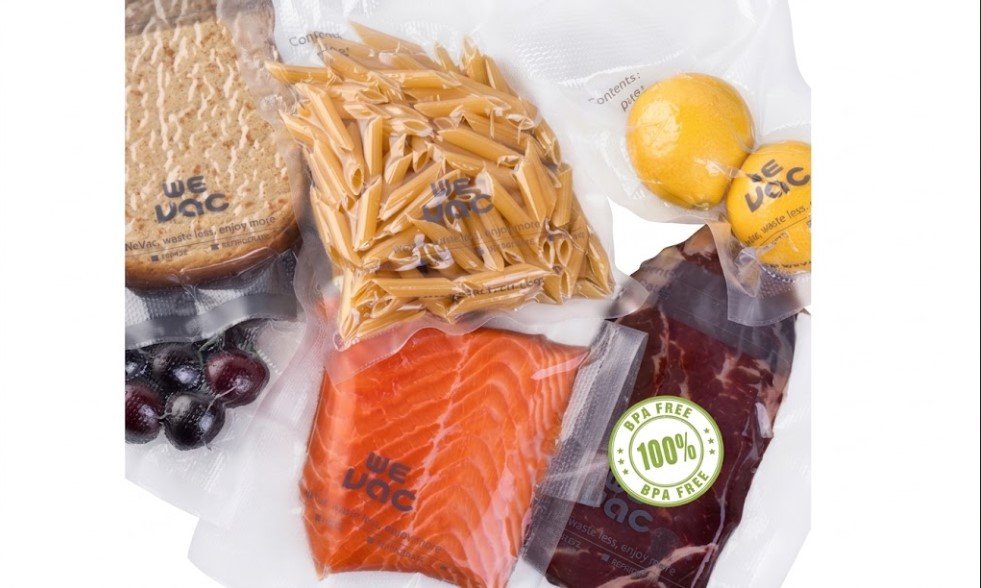
Food kept in a regular zip bag or open container loses moisture and picks up freezer burn within weeks, because there’s still air trapped against the surface. These bags are built to work with any standard suction vacuum sealer — the embossed channel pattern across the surface lets air get pulled out evenly along the whole bag rather than just near the opening, which produces a tighter seal than a smooth, unstructured bag manages. Anything sealed this way, including a batch fresh out of the dehydrator above, keeps three to six times longer than it would loose in the fridge or freezer.
They’re pre-cut to a standard pint size rather than sold as a roll, which trades some flexibility for convenience — there’s no cutting and sealing your own length, you just load and go. Being BPA-free and rated for sous vide as well as freezer storage makes them useful well beyond the dehydrator, from marinating meat to prepping meals ahead. The real limitation is that they’re a consumable, not a gadget in their own right: they only do anything once paired with a vacuum sealer, and a 100-pack works through faster than it looks like it should if vacuum-sealing becomes a regular habit.
Kitchen Mama Mini Plus Rechargeable Electric Can Opener
USB-C, 1500mAh, 223g .A one-press, hands-free can opener that cuts from the side and leaves no sharp edge — genuinely useful for anyone with limited hand strength, not just a novelty.
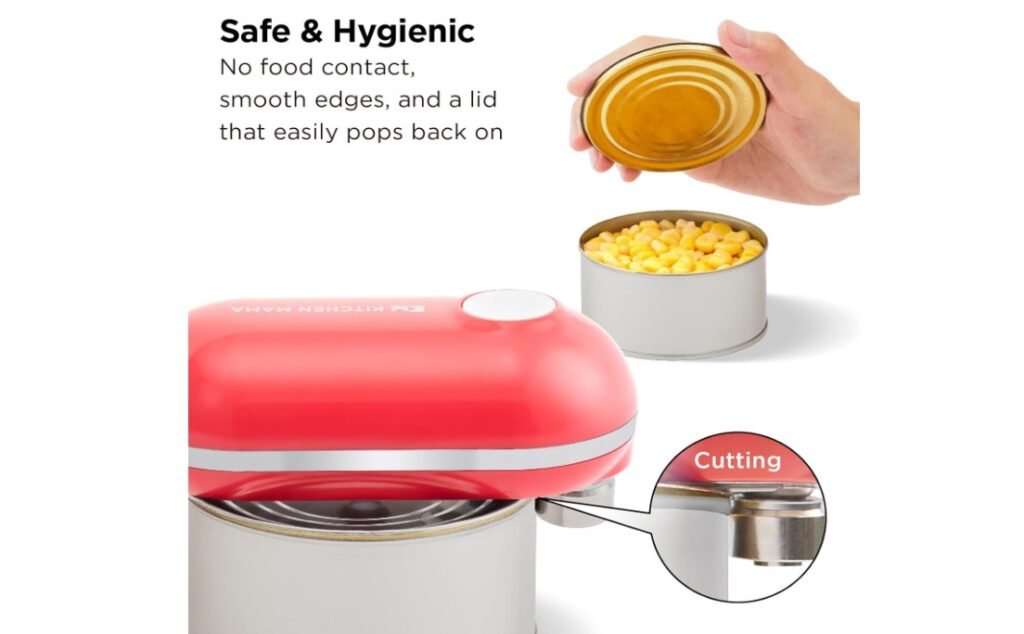
A manual can opener asks for a steady grip and repeated twisting force, which is a real barrier for arthritic hands and just an annoyance for everyone else. The Mini Plus removes both: clamp it onto the rim, press the single button, and a motor drives the cutting wheel around the can on its own, lifting off automatically once the cut is complete. It runs on a rechargeable 1500mAh battery over USB-C rather than disposable batteries, and one charge is rated for well over a hundred small cans, so it’s not something you’re topping up weekly.
The cutting wheel works from the side of the lid rather than the top, which leaves a smooth edge with no sharp lip left behind on either the can or the lid — a real safety improvement over a standard opener, and it means the blade never actually touches the food inside. At 223 grams it’s light enough to keep in a drawer without feeling like a dedicated appliance, and the size that makes it portable is also the trade-off: it’s built for standard small-to-medium cans, and a large catering-size tin will test the clamp’s reach. It’s also one more rechargeable gadget to remember to charge, which matters if it goes untouched for a few weeks between uses.
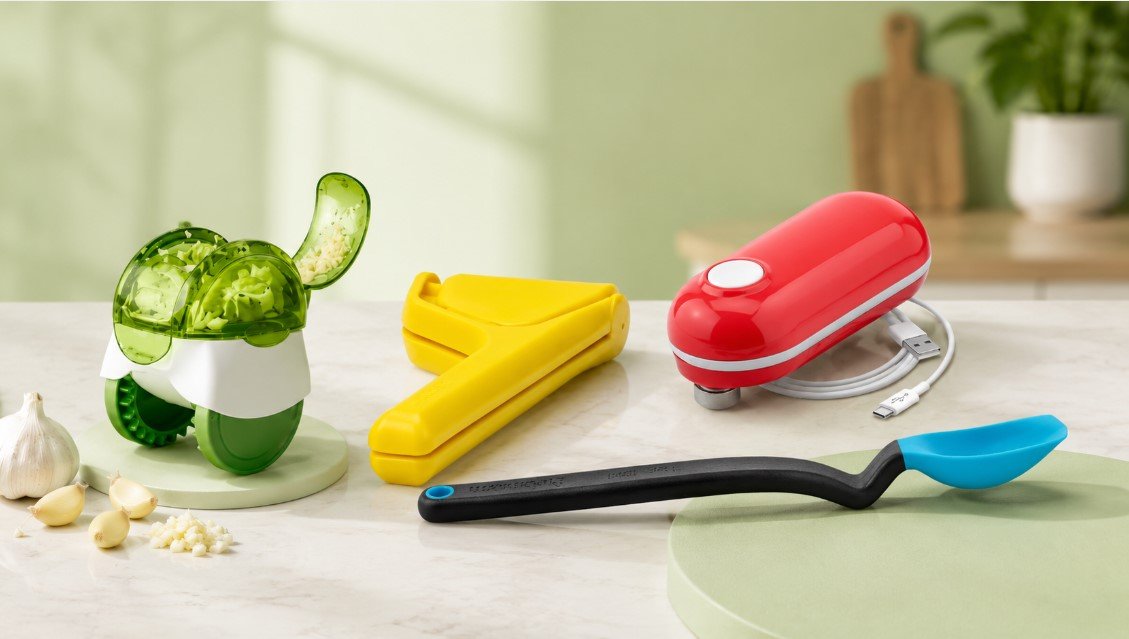
Chef’n GarlicZoom Garlic Chopper
Plastic, dishwasher-safe .A rolling chamber that minces garlic through internal blades, so cloves never touch a knife, a cutting board, or your fingers.
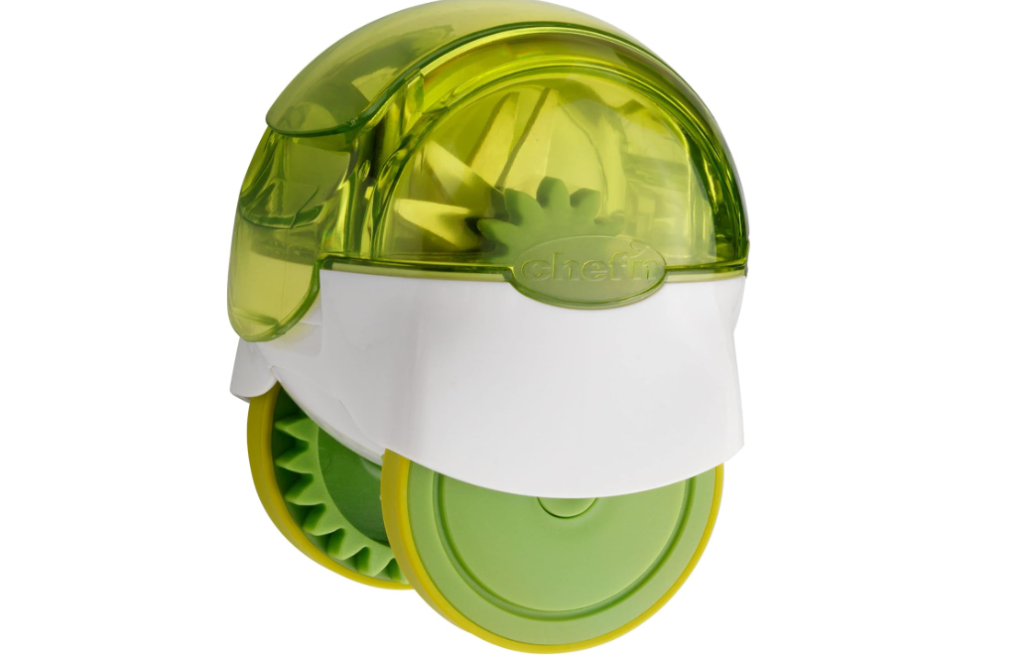
Mincing garlic by hand leaves sticky juice on the board, the knife, and often your fingers, and a fine mince takes real knife skill to get even. The GarlicZoom sidesteps all of it: load peeled cloves into the chamber, roll the unit back and forth on the counter, and internal gears turn a set of blades that do the cutting inside a sealed housing. Nothing touches your hands until the mince is done, and the board stays clean because the garlic never leaves the chamber.
Texture is controlled by how much you roll it — a few passes gives a coarse chop, more gives a fine mince — which is a reasonable substitute for knife control once you’ve used it a couple of times. It’s compact enough to store in a drawer without taking up real space, and it’s dishwasher-safe on the top rack, though garlic residue in the gearing means it benefits from a rinse soon after use rather than sitting dirty. The obvious limit is scope: it’s built for garlic specifically, and the chamber size means it’s not a tool for chopping onions or larger vegetables.
OXO Good Grips Little Salad & Herb Spinner
BPA-free plastic, 3-quart bowl . A one-handed pump spinner sized for a single serving, so drying a handful of herbs or one portion of lettuce doesn’t require dragging out a full-size spinner.
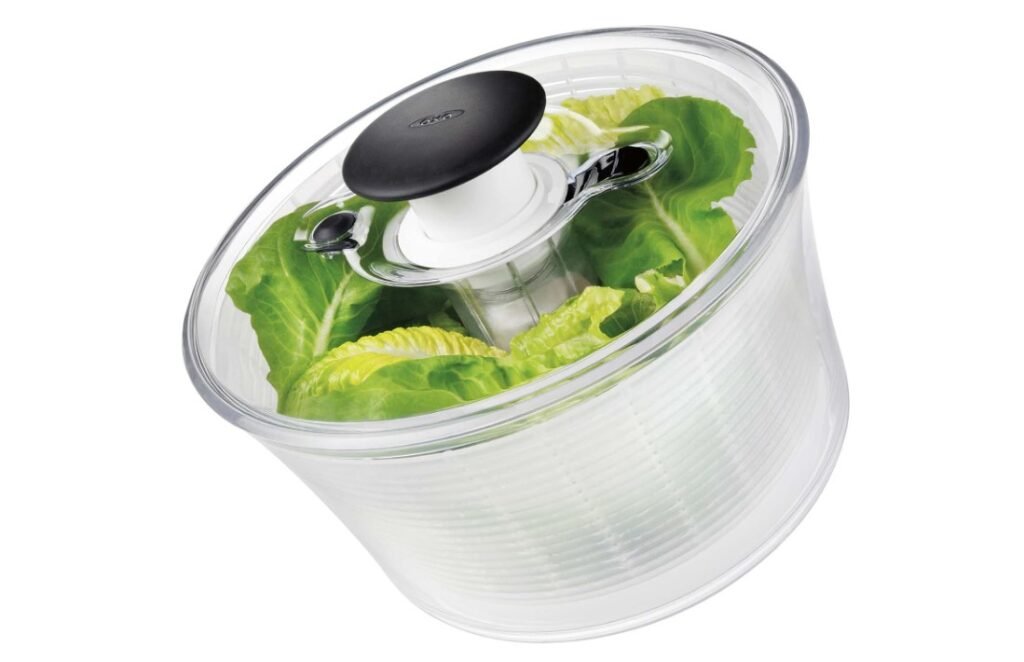
A full-size salad spinner is overkill for a few sprigs of parsley or a single-portion salad — it’s a lot of bowl, a lot of cranking, and a lot of washing for a small job. The Little Salad & Herb Spinner is built around that specific mismatch: the bowl holds 3 quarts and the basket 2.44 quarts, small enough that spinning dry a couple of servings’ worth of greens or herbs doesn’t feel like using the wrong tool for the job.
The pump mechanism is what separates it from a crank-handle spinner. One hand pushes the plunger down, the basket spins, and a patented brake stops it dead the moment you press it — no winding down, no waiting for the basket to coast to a stop before you can open the lid. That single-hand operation matters most exactly when you don’t have a spare hand: mid-recipe, holding a colander of wet lettuce, trying not to get water everywhere. The pump also locks flat against the lid for storage, so it’s not sticking up and catching on the shelf above it in a cabinet.
The crystal-clear bowl doubles as a serving bowl once the basket comes out, which cuts down on dishes if you’re plating straight from it. The basket alone also works as a stand-alone colander, so it’s not a single-purpose tool even outside of spinning.
The trade-off is exactly what makes it useful: capacity. It’s genuinely too small for a full head of lettuce or a big family salad, and pushed past its comfortable range it just takes more pumps and more refills rather than handling the volume in one go. It’s a tool for small, frequent batches — herbs, single servings, a quick rinse of berries — not a replacement for a full-size spinner if that’s the more common job in your kitchen.
What actually makes a gadget worth the counter space
It has to do something a basic tool structurally can’t. A precision cooker holds a water bath tighter than any stovetop ever could — that’s a real advantage, not a marketing one. A gadget that just repackages what a spoon already does well isn’t solving anything.
The extra complexity has to earn its keep. Six grind settings are worth the mechanism if you actually change coarseness by recipe. If a setting gets picked once and never touched again, that complexity is just more to clean and more to break.
Cleanup can’t cancel out the time saved. A tool that saves five minutes of prep but costs fifteen minutes of hand-washing trays afterward isn’t a net win for most people — the real cost of a gadget includes what happens after you’re done cooking, not just the moment you use it.
It should fail loudly, not quietly. The best tools make it obvious when something’s off — a temperature that won’t hold, a connection that drops — instead of underperforming in a way you don’t catch until the food’s already wrong. A gadget that fails silently is worse than the manual method it replaced.
Affiliate Disclosure: This article contains affiliate links. If you purchase through them, we may earn a small commission at no extra cost to you.