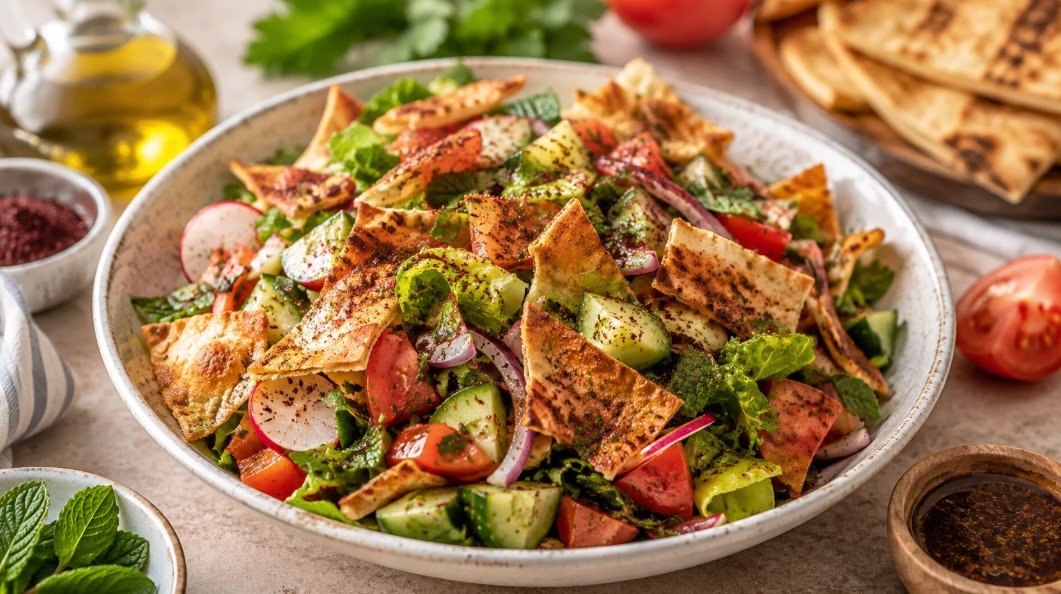
Fattoush is a solution to a problem: what do you do with day-old pita bread? The answer, arrived at somewhere in the Levant centuries ago, was to toast it, break it into pieces, and toss it through a bright salad of fresh vegetables dressed with lemon, olive oil, sumac, and pomegranate molasses. The result is one of the most refreshing salads in the Arabic culinary canon — crunchy, tangy, herbaceous, and satisfying in a way that most salads are not because the toasted pita gives it genuine substance.
In Dubai, fattoush appears at every Lebanese restaurant from the neighbourhood canteens in Bur Dubai to the upscale establishments in DIFC. It is served alongside shawarma, grilled meats, and mezze spreads, and it is specifically designed to complement richer, spiced dishes — the lemon and sumac providing the acidity that cuts through the fat of a lamb chop or the richness of a chicken shawarma.
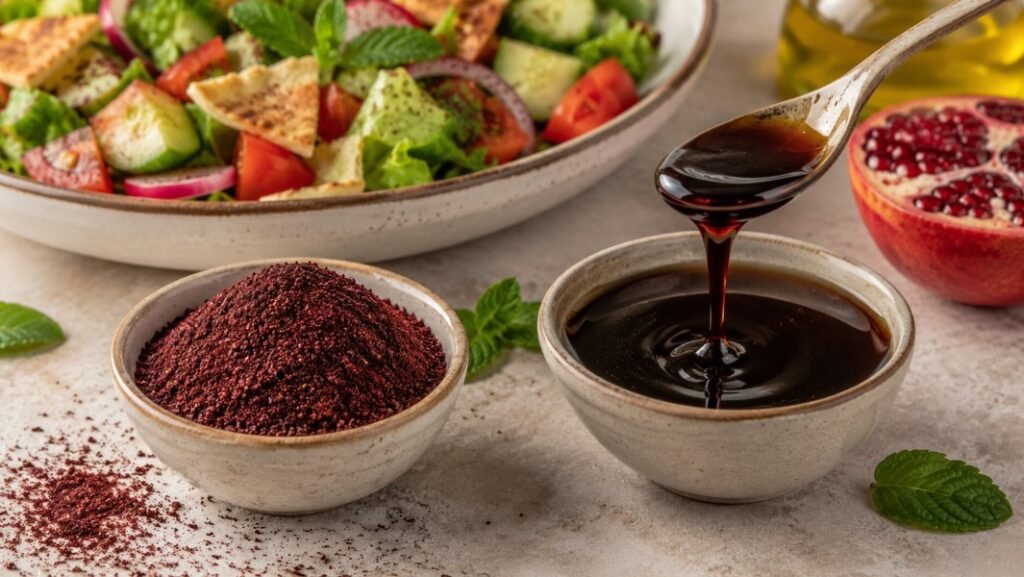
The two defining ingredients that make fattoush authentic rather than a generic tossed salad are sumac— the ground dried berry with a distinctive tart, citrus flavour — and pomegranate molasses, a thick, sweet-sour pomegranate syrup that both darkens the dressing and adds a depth that lemon juice alone cannot provide.
Both are available at all UAE supermarkets and at any Middle Eastern grocery store internationally. If you only take one thing from this recipe, it is this: the sumac is not optional, and the pita must be added at the last possible moment before serving or it absorbs the dressing and turns from crispy to soggy in under three minutes.
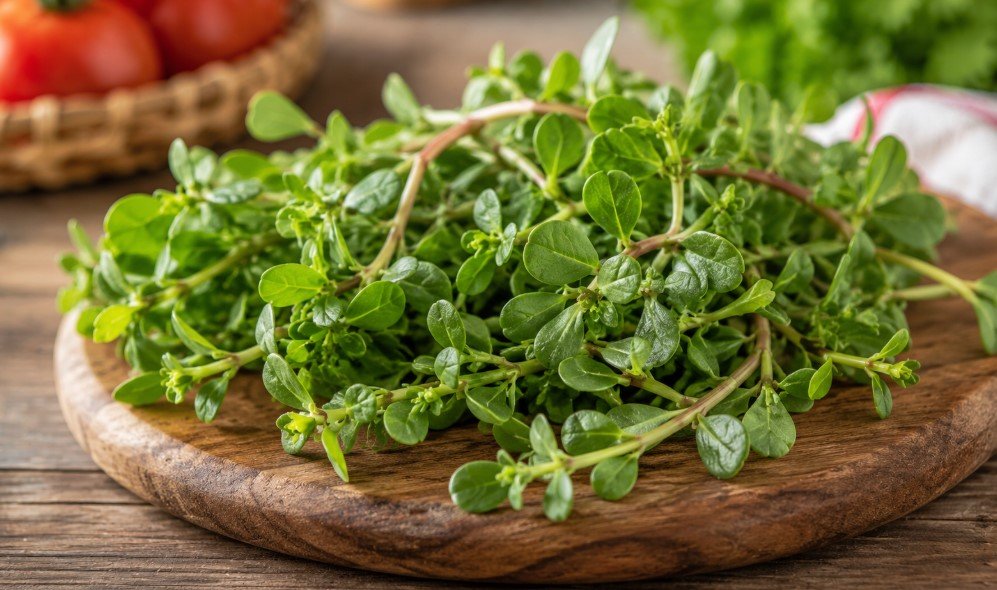
🌿 Purslane — The Traditional Ingredient Most People Skip Traditional Lebanese fattoush includes purslane (baqleh) — a succulent herb with a slightly tangy, mineral flavour and thick, juicy leaves. It is available at Lebanese groceries in Dubai’s Deira and Bur Dubai areas and at some Spinneys locations. If you can find it, use it. It adds a texture and flavour that lettuce alone cannot replicate. If unavailable, substitute with watercress or rocket for a similar peppery, slightly bitter note.
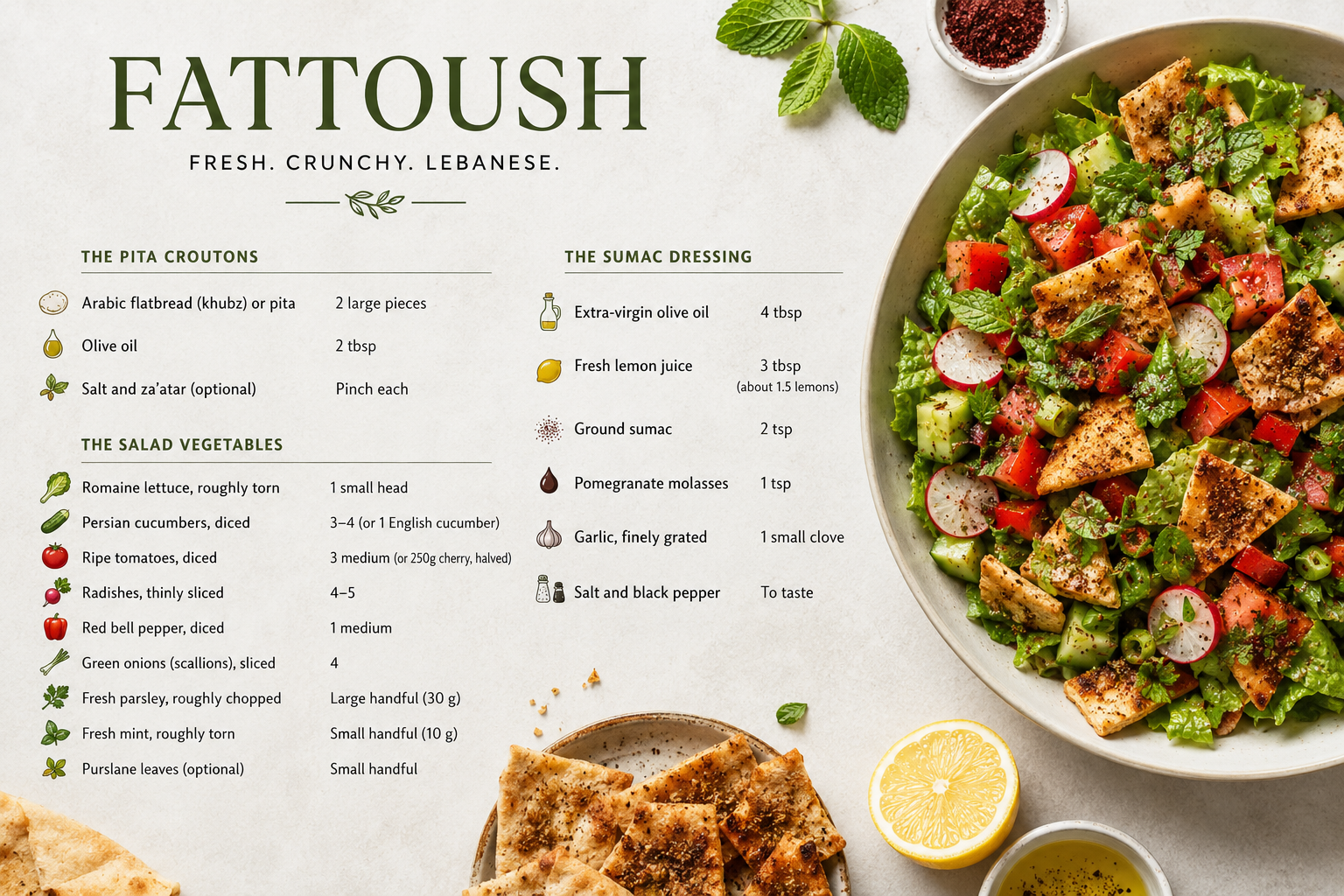
Table : Fattoush Recipe
Fattoush Recipe:Ingredients
Ingredient
Quantity
Notes
THE PITA CROUTONS
Arabic flatbread (khubz) or pita
2 large pieces
Day-old is better than fresh — it crisps more evenly when toasted
Olive oil
2 tbsp
Tossed with the pita pieces before baking
Salt and za’atar (optional)
Pinch each
Seasoning the pita before toasting adds flavour
THE SALAD VEGETABLES
Romaine lettuce, roughly torn
1 small head
Not chopped fine — large pieces give the right texture balance
Persian cucumbers, diced
3–4 (or 1 English cucumber)
Diced to 1.5 cm — not too small or they turn to water
Ripe tomatoes, diced
3 medium (or 250g cherry, halved)
Room temperature tomatoes have significantly more flavour than cold
Radishes, thinly sliced
4–5
Adds crunch and a mild peppery note
Red bell pepper, diced
1 medium
Optional but adds sweetness and colour
Green onions (scallions), sliced
4
Milder than regular onion; use the full length
Fresh parsley, roughly chopped
Large handful (30 g)
Do not mince — large pieces are correct for fattoush
Fresh mint, roughly torn
Small handful (10 g)
The aromatic signature; do not substitute dried
Purslane leaves (optional)
Small handful
The traditional ingredient; substitute watercress if unavailable
THE SUMAC DRESSING
Extra-virgin olive oil
4 tbsp
Use the best quality you have — the dressing is simple enough that quality matters
Fresh lemon juice
3 tbsp (about 1.5 lemons)
Freshly squeezed only; bottled is too flat
Ground sumac
2 tsp
The defining spice of fattoush; do not substitute
Pomegranate molasses
1 tsp
Sweet-sour depth; available at all UAE supermarkets
Garlic, finely grated
1 small clove
Just enough to be present without dominating
Salt and black pepper
To taste
Season assertively — the vegetables dilute seasoning
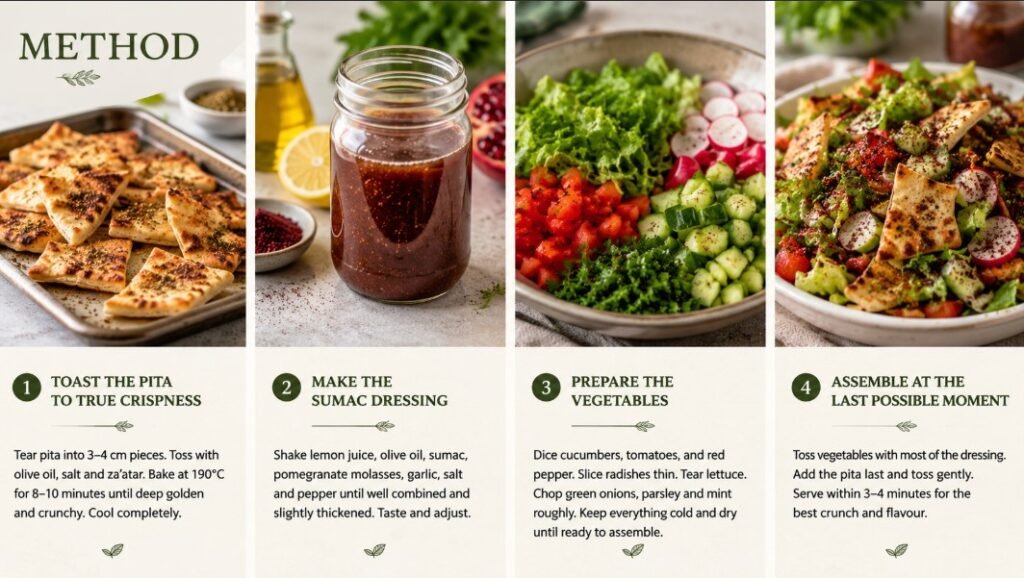
Fattoush Recipe : Method
1
Toast the Pita to True Crispiness Preheat the oven to 190°C. Tear or cut the pita into irregular 3–4 cm pieces — not too uniform. If using pita with a pocket, split them open first to get thinner pieces that crisp faster. Toss with 2 tablespoons of olive oil, a pinch of salt, and za’atar if using. Spread in a single layer on a baking tray. Bake for 8–10 minutes until deep golden and genuinely crunchy — not pale and soft, which absorbs dressing in under a minute. Cool completely on a rack. The pita can be made up to 2 days ahead and stored in an airtight container.
2
Make the Sumac Dressing Combine the lemon juice, olive oil, sumac, pomegranate molasses, grated garlic, salt, and black pepper in a jar with a tight lid. Shake vigorously for 20–30 seconds until the dressing thickens slightly and the sumac is fully dispersed — it will look slightly cloudy from the sumac. Taste: it should be tangy, slightly sweet from the pomegranate molasses, and punchy with sumac. Adjust lemon juice or sumac to taste. Make the dressing before preparing the vegetables so the sumac has time to bloom in the liquid.
3
Prepare the Vegetables Dice the cucumbers, tomatoes, and red pepper to roughly equal 1.5 cm pieces for visual consistency. Slice the radishes paper-thin. Roughly tear the lettuce rather than chopping it. Cut the green onions into 1 cm pieces, using both the white and green parts. Roughly chop the parsley — larger than you would for tabbouleh; the pieces should be identifiable as herb rather than a green dust. Tear the mint leaves roughly by hand. Keep all the vegetables refrigerated and dry until just before assembly.
4
Assemble at the Last Possible Moment In a large mixing bowl, combine all the salad vegetables and herbs. Pour over about three-quarters of the dressing and toss well — every leaf and vegetable should be lightly coated. Taste and add the remaining dressing if needed. Add the toasted pita pieces last, tossing just once or twice to distribute them without immediately saturating them in dressing. Serve within 3–4 minutes of adding the pita. If you are making fattoush to serve in stages or at a buffet, keep the pita separate and scatter it over individual portions just before eating.
The Two Rules of Fattoush
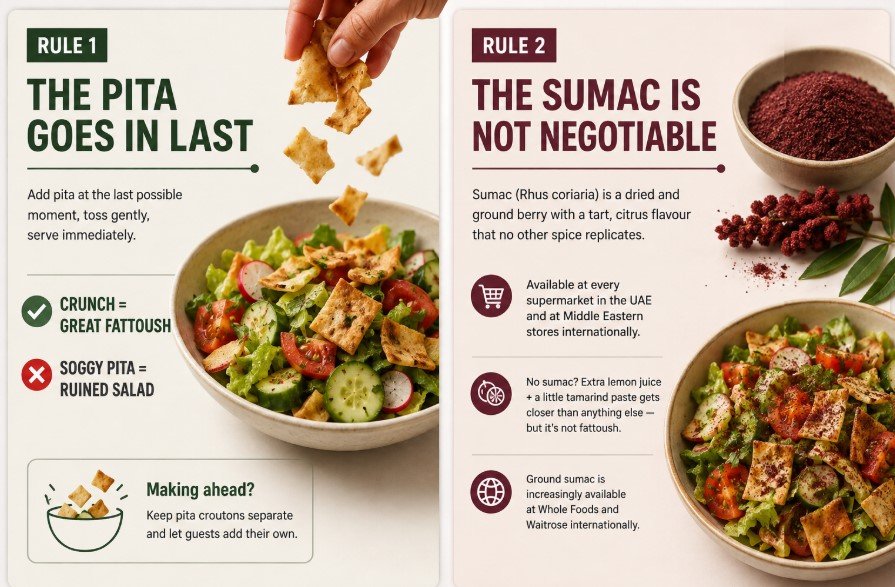
Rule 1 — The Pita Goes in Last
This is the only technique note that matters. Everything else in fattoush is assembly. But the pita: add it at the last possible moment, toss gently, serve immediately. Soggy pita ruins fattoush completely — the crunch is the structural element that justifies calling this a salad rather than just a dressed pile of vegetables. If you are making this for a dinner party and cannot serve immediately, keep the pita croutons in a separate bowl and let guests add their own.
Rule 2 — The Sumac Is Not Negotiable
Sumac (Rhus coriaria) is a dried and ground berry with a tart, citrus flavour that no other spice replicates. It is specifically what makes fattoush taste like fattoush rather than a generic dressed salad. It is available at every supermarket in the UAE and at Middle Eastern stores internationally. If you genuinely cannot find it, a combination of extra lemon juice and a small amount of tamarind paste gets closer than anything else — but the result is not fattoush.
🍋 Fattoush vs Tabbouleh — The Dubai Lebanese Salad Distinction Both appear on every Lebanese restaurant menu in Dubai and both are frequently confused. Tabbouleh is parsley-dominant with fine bulgur wheat, chopped vegetables, and a lemon-olive oil dressing. Fattoush is lettuce-forward with toasted pita, larger vegetable pieces, and the sumac-pomegranate molasses dressing. They serve different purposes at the table: tabbouleh is a herb salad; fattoush is a bread salad. Order both and they complement each other rather than repeating.
Variations
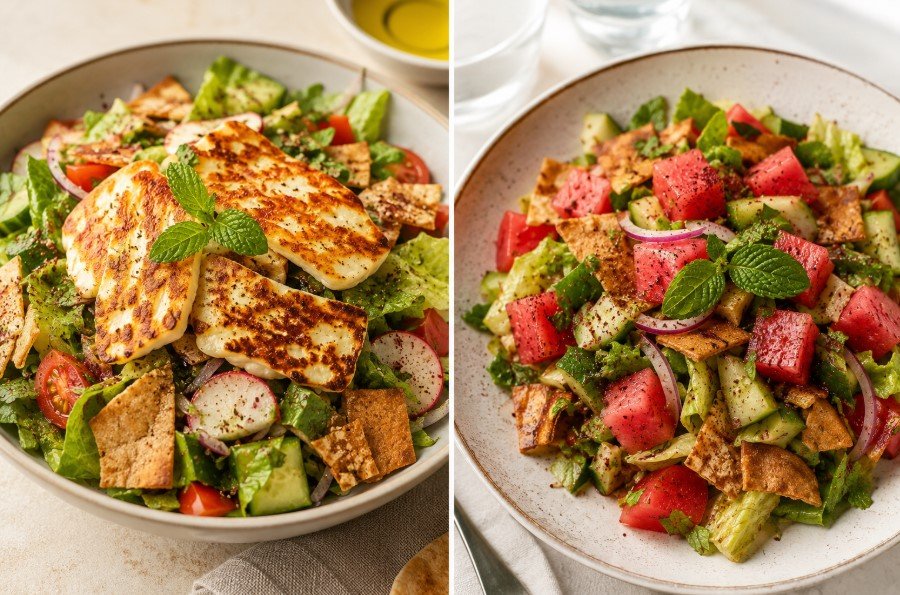
Grilled Halloumi Fattoush — A popular Dubai addition Add 200g of halloumi, sliced 1cm thick and grilled in a dry pan until golden on both sides, to the assembled fattoush. Place the warm halloumi directly on top rather than mixing it through. The salty, slightly squeaky cheese against the tangy dressing is one of the best combinations in Lebanese-influenced Dubai cooking. This version is served at Coya, Asiana, and several Lebanese restaurants across the city.
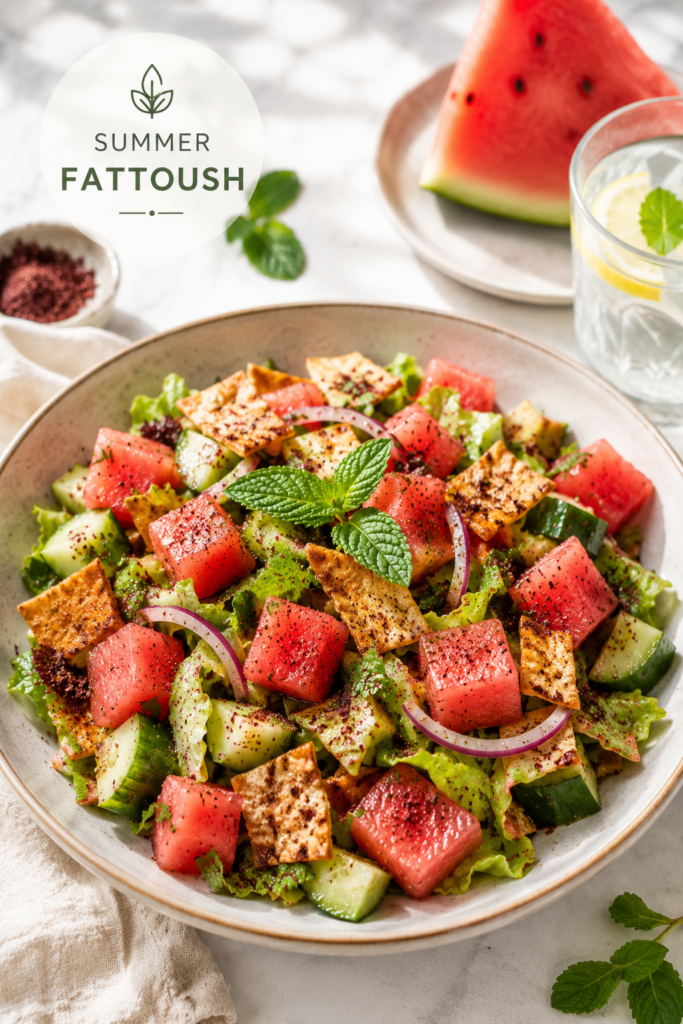
Watermelon Fattoush — A summer variation Replace the red bell pepper with 200g of diced seedless watermelon. The sweetness of the watermelon against the tart sumac dressing is counterintuitive and then immediately obvious. Serve immediately — watermelon releases liquid quickly and the salad wilts faster than the standard version. Popular at Dubai rooftop restaurants in the winter months when watermelon is good and the terrace dining season is at its peak.
Fattoush is proof that the most satisfying salads are the ones that solve a problem. The problem here was day-old bread, and the solution was sumac, pomegranate molasses, and the decision to eat the bread rather than throw it away. Seven centuries of refinement later, this is what every Lebanese restaurant in Dubai puts on the table, and what you can put on yours in twenty minutes with ingredients from any UAE supermarket.
A team of passionate Dubai insiders writing about hidden culinary gems to local lifestyle guides, the DubiTop team cuts through the noise to bring practical, fluff-free insights into the emirate's fast-paced evolution.