If you have been paying for your morning coffee with a fifty-dirham note, you might want to start downloading a few apps. Dubai is in the middle of one of the most ambitious digital payment transitions any city has attempted — and the deadline is the end of this year.
The Dubai Cashless Strategy, first announced in October 2024, has a clear target: 90 percent of all financial transactions across both the public and private sectors to be digital by the end of 2026. And unlike many government initiatives that drift quietly into the background, this one has very visible real-world consequences — including one that took effect on 1 June 2026 at parking meters across the city.
Here are the five things residents and visitors in Dubai genuinely need to understand about what is happening, why it matters, and what it means for daily life.
1. This Is Official Policy — And It Has a Real Deadline
The strategy was approved on 1 October 2024 at a meeting of Dubai’s Executive Council, chaired by Sheikh Hamdan bin Mohammed bin Rashid Al Maktoum, Crown Prince of Dubai. The goal set at that meeting was clear: Dubai wants to be one of the top five cashless cities in the world.
The target is 90 percent of all transactions — government and private sector combined — going digital by December 2026, with the longer-term vision being 100 percent paperless. Dubai Finance has since launched a wide-ranging awareness and promotional campaign to support businesses and consumers through the transition.
90 % of all financial transactions across Dubai’s public and private sectors to be digital by end of 2026
The economic case is built into the strategy too. Officials estimate the shift could add more than AED 8 billion to the economy annually — through faster transaction velocity, reduced cash-handling costs, and a more transparent financial system. This aligns directly with the Dubai Economic Agenda D33, which aims to double the size of Dubai’s economy by 2033.
By 2024, 97% of Dubai’s government services were already digital. The cashless strategy extends that same logic to everyday payments at shops, restaurants, transport, and utilities.
Related : Top 10 Things About Etihad Rail That Will Change How You Travel the UAE
2. Cash Is Not Being Banned — But Carrying It Is Becoming Less Useful
This is the point that causes the most confusion. Going cashless does not mean the dirham ceases to exist. What it means in practice is that more transactions — parking, government services, retail, transport — will move to digital-only options, making cash progressively less functional for daily life.
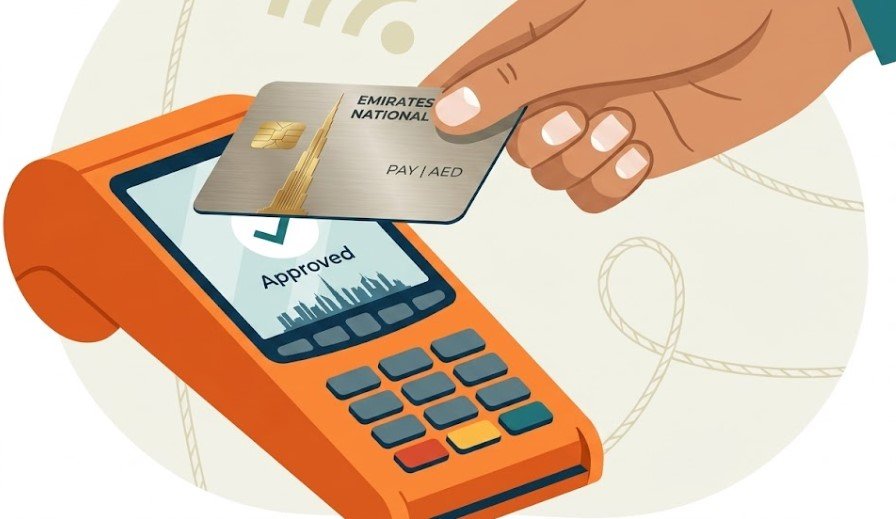
The clearest example so far happened on 1 June 2026. Parkin, which manages the largest network of paid public parking in Dubai, officially phased out cash at all parking meters. You can still pay with a nol card, through the Parkin app, or via SMS — but feeding coins into a meter is no longer an option. That change was signposted months in advance, but it marks a turning point: this is no longer theory. It is infrastructure.
The Department of Finance and the Dubai Free Zones Council signed a coordination agreement in January 2026 to align digital payment adoption across the emirate’s free zones — home to a significant concentration of SMEs and international businesses. More sectors are expected to follow throughout 2026.
- Banking apps and credit cards are currently the primary ways to pay without cash
- Contactless cards, QR codes, and smart wallets are all part of the accepted mix
- AI-driven payment solutions and contactless technologies are on the innovation roadmap
- The nol card remains a valid contactless option for transport and some other payments
3. Tourists Are Part of the Plan — The ‘Tourist Identity’ Is a Game-Changer
One of the most significant developments of 2026 has been the Tourist Identity initiative, launched on 30 April by the Central Bank of the UAE, the Federal Authority for Identity and Citizenship (ICP), and Abu Dhabi Commercial Bank (ADCB). It addresses a long-standing gap in Dubai’s cashless ambitions: many visitors arrive without access to local digital payment systems, making them dependent on foreign cards or cash.
Here is how it works. When a visitor clears immigration at a UAE airport, the ICP system automatically creates a digital Tourist Identity using biometrics and facial recognition captured at the border. That identity is then used to open a digital bank account through ADCB’s mobile app within minutes — no paperwork, no branch visit, no waiting period. The account comes with an instant digital debit card, usable immediately upon activation.
Launched 30 April 2026: tourists can open a UAE digital bank account within minutes of arriving — using only biometric data captured at immigration, no documents required.
The account connects directly to the UAE’s national payment infrastructure: Jaywan, the domestic card scheme, and Aani, the country’s instant payment platform. This means tourists can pay at shops, restaurants, and attractions the same way residents do — without carrying cash or dealing with foreign card fees.
A few practical limits apply: the account stays active for your visa validity or six months maximum (with a seven-day grace period). It is individual only, cannot be combined with other ADCB products, and is not available for 96-hour transit or short-stay visas. There is a monthly fee of AED 26.25, waived if you maintain a minimum balance of AED 2,500.
Emirates and flydubai have also signed agreements with Dubai Finance to promote digital payment options to inbound travellers — meaning the messaging now starts before tourists even land.
4. Businesses Are Getting Support — Not Just a Mandate
A cashless city only works if the businesses within it can actually accept digital payments, and not every merchant was equally prepared. Part of what distinguishes the 2026 strategy from earlier digital payment pushes is the emphasis on transition support rather than simply top-down mandates.
DIFC and Dubai Finance agreed to co-host specialised workshops to help businesses — particularly smaller ones — adopt digital payments. These sessions cover practical infrastructure: which payment systems to integrate, how to work with existing POS setups, and how to access emerging AI-driven fintech solutions. Network International is also partnering with Dubai Finance on fintech tools for broader public use.
The Department of Finance signed an MoU with the General Directorate of Identity and Foreigners Affairs (GDRFA) to expand digital payment channels for government services, and the Free Zones Council agreement formalised coordination between public finance and the business ecosystem for the first time.
The strategy is designed with merchants, payment providers, and consumers all in mind — the coordination between government and business is what makes this different from previous digital payment campaigns.
5. This Is Part of a Much Bigger Vision for Dubai’s Economy
The cashless strategy does not exist in isolation. It sits within Dubai’s broader Economic Agenda D33 — the plan to double the size of Dubai’s economy by 2033 and position the city as one of the top four global financial centres. Digital payments, in that context, are infrastructure: like roads or broadband, they are the foundation on which a modern economy operates.
The ambition is also explicitly international. Positioning Dubai among the top five cashless cities globally means competing with Singapore, Stockholm, and Seoul — not just regional peers. The strategy emphasises AI-driven payment solutions, blockchain integration, smart governance, and contactless technologies as part of a longer-term innovation roadmap.
The Tourist Identity initiative — built on facial recognition, biometric AI, and instant digital onboarding — is the most visible early example of what that innovation layer looks like in practice. It is not a convenience feature; it is an argument that Dubai’s payment infrastructure is now world-class.
Long-term goal: all transactions in Dubai eventually paperless
For residents, the practical implication is straightforward. The infrastructure is being built, the deadlines are being met, and the government is investing seriously in making this work. Getting comfortable with a banking app, a contactless card, and platforms like Aani and Jaywan is no longer optional preparation — it is quickly becoming the baseline for daily life in the city.
What You Should Set Up Right Now
- Download your bank’s app and enable contactless payments if you haven’t already
- Install the Parkin app — cash at parking meters ended 1 June 2026
- Tourists: use the Tourist Identity on arrival to open a digital account via ADCB
- Keep your nol card active — it remains valid for transport and some other payments
- Business owners: check Dubai Finance and DIFC for digital transition workshop schedules
Dubai’s move to a cashless city is not a distant plan. The Parkin change on 1 June 2026 confirmed the timeline is real and the deadlines are being kept. More changes will follow before the year is out — and the infrastructure to support residents, tourists, and businesses through that transition is being built in parallel.