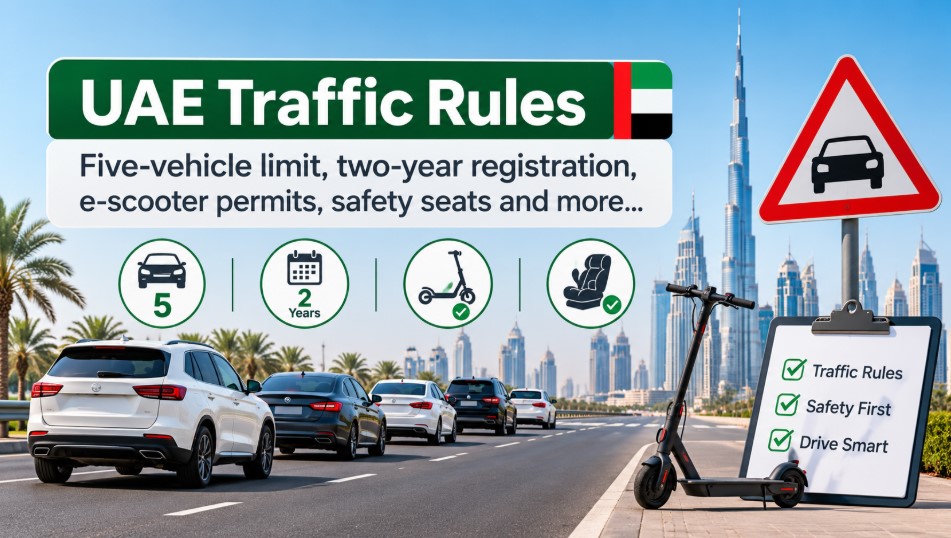
A major shake-up is coming to how vehicles are registered and regulated across the UAE. Starting January 1, 2027, a new set of rules under Cabinet Decision No. 174 of 2026 will change the way residents register cars, use electric scooters, secure child passengers, and even how long delivery drivers can stay on the road.
These changes implement Federal Decree-Law No. 14 of 2024 on traffic regulation, and they touch almost every type of road user. Whether you own multiple cars, ride an e-scooter to work, or have young children, here is exactly what is changing and what you need to do about UAE Traffic Rules 2027.
You Can Only Register Five Vehicles in Your Name
The most talked-about change is the new cap on personal vehicle ownership. From January 1, individual residents will be limited to registering a maximum of five vehicles under their name.
The first two vehicles can be registered without any additional fees. If you want to register a third, fourth, or fifth vehicle, you will need to pay an extra fee for each one. The exact amounts have not been announced yet, but the fee structure is confirmed in Article 89 of the decision.
It is worth clarifying what this means. The rule applies to registration and licensing, not to a general ban on owning more than five cars. If you already have vehicles registered beyond this limit, you should check with your local licensing authority before the deadline to understand how the transition will work.
Also tucked into Article 89 is a ban on licensing right-hand-drive vehicles for regular road use. The only exception is for exhibition purposes. If you were considering importing a right-hand-drive vehicle for daily driving, that option is now closed.
A New Two-Year Registration Option
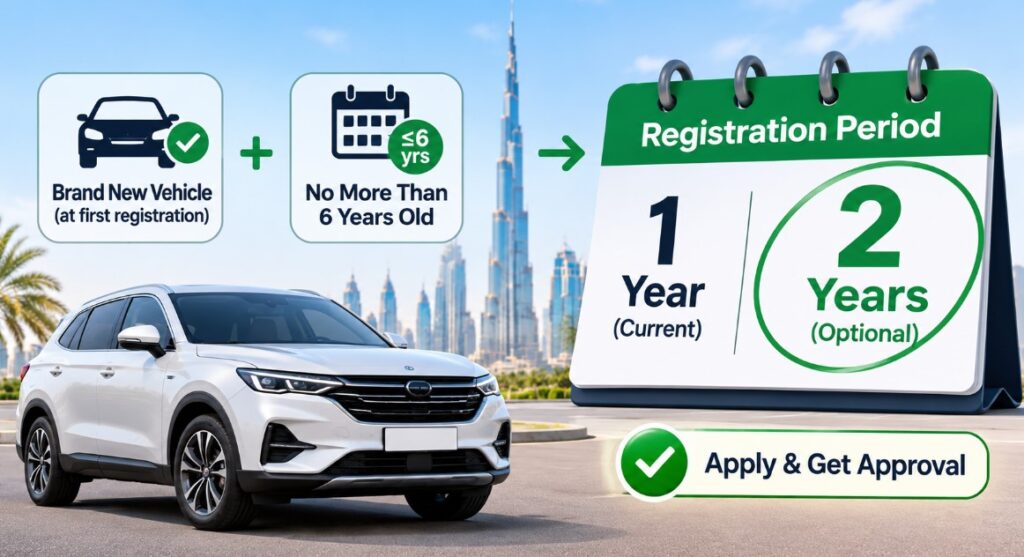
For drivers who dread the annual trip to the registration centre, there is some good news. Article 98 introduces an optional two-year registration period for eligible light vehicles.
This is not automatic. You have to apply for it, and the relevant licensing authority must approve it. To qualify, your vehicle must have been brand new when it was first registered, and it must be no more than six years old from its manufacture date.
If your car meets those criteria and the authority signs off, you can pay once and stay registered for twenty-four months instead of twelve. It is a small convenience, but for busy households managing multiple cars, it saves time and paperwork.
New Rules for E-Scooters and Electric Bikes
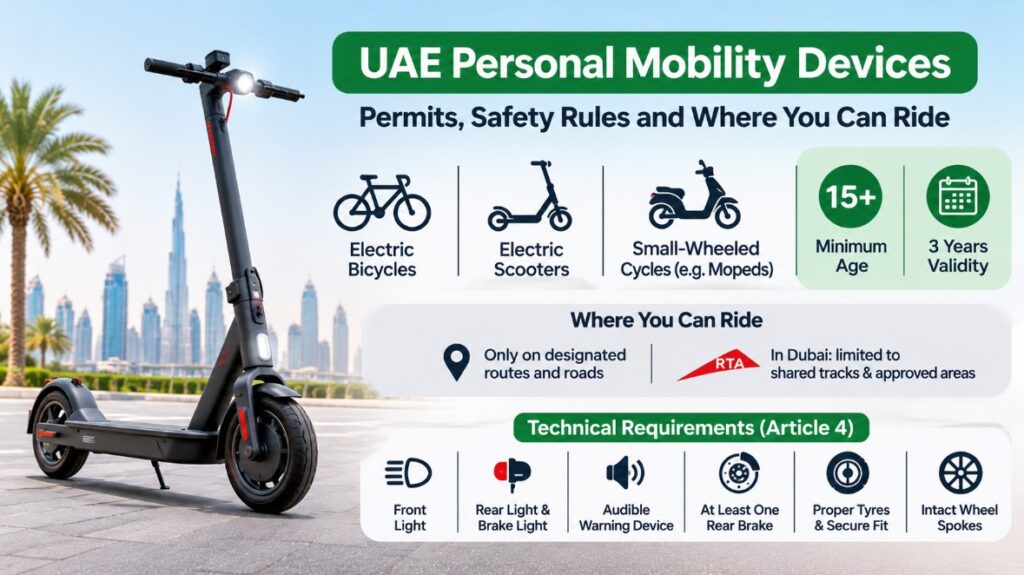
Personal mobility devices are finally getting a proper legal framework. Article 59 introduces permits for three categories: electric bicycles, electric scooters, and small-wheeled cycles including mopeds and scooters.
You must be at least fifteen years old to apply for a permit, and each permit remains valid for three years. You cannot just ride these devices anywhere. They are restricted to routes and roads specifically designated by the traffic authority in each emirate. In Dubai, for example, the RTA already limits e-scooters to shared tracks and approved areas.
The regulations also set out six broader categories of personal mobility devices, covering conventional bicycles, skateboards, and mobility aids designed for elderly people and people with determination.
If you own an e-scooter, make sure it meets the new technical standards under Article 4. Your device needs a front light for night visibility, a rear position light with a red brake light, and an audible warning device on the handlebars. It also needs at least one brake on the rear wheel, properly maintained tyres with secure fitting, and intact wheel spokes under appropriate tension. Licensing authorities can add further requirements on top of these baseline rules.
Stricter Child Car Seat Rules
Child safety in vehicles is getting clearer, and stricter. Article 11 now requires drivers to provide an appropriate safety seat for any child aged four or under.
The seat must match the child’s weight and height, comply with applicable national standards, and be installed in the rear seats. There is a narrow exception for children with medical conditions that prevent the use of a protective seat, but only if you have an official medical certificate and an attendant accompanies the child in the rear seat.
For vehicles that do not have rear seats, you can install the child safety seat in the front, but it must face backwards and the airbag must be deactivated. These are not suggestions. They are legal requirements with the full weight of federal traffic law behind them.
New Obligations for Delivery Drivers
If you work in food or parcel delivery, the new rules under Article 10 apply directly to you. Delivery drivers must now wear the prescribed uniform, carry a valid professional permit, and present it when requested. Your vehicle must also have approved systems installed.
For motorcycle delivery riders, there is a specific ban on carrying passengers behind you while you are on duty. You also cannot use a backpack to transport orders anymore. The regulations require approved delivery equipment instead, which likely means insulated boxes or bags mounted to the vehicle.
These changes are designed to improve road safety and accountability in an industry that has grown rapidly over the past few years.
Driving Time Limits and Fatigue Rules

Beyond vehicle registration, the new regulations also place a hard limit on how long you can legally drive. Motorists are now restricted to a maximum of nine hours of driving within any twenty-four-hour period.
There is also a clear prohibition on driving when fatigue or exhaustion compromises your ability to control the vehicle safely. This applies to everyday drivers as well as professional operators. If you are planning a long road trip or work behind the wheel for a living, the nine-hour ceiling is now a legal boundary, not just a recommendation.
Related : UAE eSIM Guide : How to Switch from Physical SIM to eSIM for Free
What You Should Do Before January 1
If you currently have more than two vehicles registered in your name, start planning now. Decide which cars you want to keep under your personal registration and whether any need to be transferred to a family member or a company structure. Keep an eye out for the official announcement of the additional fees for third, fourth, and fifth vehicles.
If you have a child four or under, check your car seat. Make sure it matches your child’s current weight and height and meets UAE national standards. If your car has no rear seats, verify that your front-facing setup complies with the new rear-facing and airbag rules.
If you ride an e-scooter, inspect your device against the new technical checklist. Lights, brakes, tyres, and spokes all need to be in proper working order. And if you do not have a permit yet, be ready to apply once the system goes live.
Final Thoughts
The UAE is tightening its traffic laws to match the reality of a growing, modern road network. The five-vehicle cap, the two-year registration option, and the new rules for e-scooters and delivery drivers all reflect a system that is becoming more structured and more enforceable.
None of these changes are dramatic if you are already driving safely and legally. But they do require attention. Mark January 1, 2027 on your calendar, review which of these rules apply to you, and make the adjustments before the deadline. It is always cheaper and easier to comply ahead of time than to fix a problem after a fine has been issued.