Let’s be honest: one of the best things about living in Dubai is that we’re always on the move. Between the morning coffee runs at the Creek, the afternoon hustle near Sheikh Zayed Road, and those perfect sunset walks at Kite Beach, the city is full of energy. But if you’ve lived here long enough, you know our air has its own unique “personality”—a mix of fine desert dust, the humidity of the Gulf, and the constant buzz of a city that never stops building.
Most of us spend a huge chunk of our time indoors in beautiful, AC-chilled spaces. And while we love our apartments and offices, that “recycled” air can sometimes leave you waking up with a scratchy throat or feeling a bit sluggish.
Living in a modern, active environment often means looking for simple ways to improve the home experience. A high-quality air purifier is one of those upgrades that pays off quickly, especially when it comes to clearing out fine dust. However, with so many options on the market, it’s clear that some units are much better suited for the specific demands of a desert climate than others.
| 📍 WHY AIR QUALITY MATTERS MORE IN THE UAE The UAE consistently records PM2.5 and PM10 levels that exceed WHO guidelines, particularly during shamal (sandstorm) season between May and August. Indoor air can actually be 2–5× more polluted than outdoor air — meaning a properly spec’d purifier isn’t a luxury in this climate, it’s a health investment. |
Best Air Purifier Dubai
Things to Consider Before Buying an Air Purifier in Dubai
Shopping for an air purifier anywhere is straightforward enough. Shopping for one in Dubai requires a slightly different checklist — because the environment here places demands on these machines that most manufacturer spec sheets weren’t written with in mind.
Room Size and Ceiling Height
This is the most important factor, and it’s where most buyers go wrong. Manufacturers publish coverage figures based on a standard 2.4m ceiling height, but many Dubai apartments and villas have ceilings of 2.7m, 3m, or higher. A higher ceiling means more air volume to clean. Always calculate your actual room volume (length × width × ceiling height in metres) and choose a purifier whose CADR can turn that volume over at least 4–5 times per hour for allergy sufferers, or at least 2–3 times for general air quality maintenance.
CADR Rating — And What It’s Actually Measuring
CADR (Clean Air Delivery Rate) is measured in m³/h and tells you how quickly a purifier cleans a set volume of air. What it doesn’t always tell you is which particles it was tested against. Most CADR ratings are measured using tobacco smoke, dust, and pollen in controlled lab conditions — not against desert PM10 or construction particulate. Look for purifiers with a high overall CADR and a PM10 sensor, which specifically monitors the coarser particles that define Gulf air quality during shamal season.
Filter Classification — H13 HEPA Is the Minimum Worth Buying
The UAE market is flooded with purifiers marketed as “HEPA” that use lower-grade filtration media. True HEPA begins at H10 in European classification; H13 is the standard you want for meaningful protection. It captures 99.97% of particles at 0.3 microns — the hardest size to trap. Anything labelled “HEPA-style,” “HEPA-type,” or simply “high-efficiency filter” is almost certainly a lower-grade product. Don’t buy it.
Activated Carbon Layer — Essential in Dubai, Often Underpowered
Most purifiers include some activated carbon for odour and VOC removal. What matters is how much. A thin carbon mesh — common in budget units — will saturate within weeks in a Dubai kitchen or a newly furnished apartment. Look for units with at least 300–650g of carbon mass, and check whether the filter is replaceable separately from the HEPA layer, as carbon saturates faster and replacing both together every 6 months is unnecessarily expensive.
Running Costs: Electricity + Filter Replacements
The purchase price is only part of the equation. Factor in:
- Electricity: A 24W unit running 24/7 costs roughly AED 100–120 per year at DEWA rates. A 50W unit costs double.
- Filter replacements: Budget purifiers often have expensive proprietary filters that need replacing every 3–4 months. A good unit with a 6–12 month filter lifespan and a washable pre-filter (like the Coway) significantly reduces annual running costs.
- Availability: Before buying any purifier, confirm that replacement filters are available in the UAE — either through Amazon.ae, local retailers, or the brand’s UAE service network. Some imported models look attractive on paper but leave you stranded when filter replacement time comes.
Noise Level — Especially Critical in UAE Bedrooms
With AC running year-round, most Dubai households keep windows shut and sleep in fully enclosed rooms. An air purifier that runs through the night needs to be genuinely quiet — not just “quiet” by the marketing copy. Look for a verified sleep mode noise level below 30dB. Anything above 35dB will be noticeable in a quiet room. The Coway AM-150’s 20dB mode is exceptional; the LEVOIT Core 400S at 24dB is excellent. The Xiaomi 4 Pro’s 33.7dB sleep mode is the loudest of the four here and worth considering if bedroom placement is your priority.
Smart Features — Useful, Not Essential
Wi-Fi connectivity and app control are genuinely useful for scheduling, monitoring air quality history, and letting the unit respond automatically to changing conditions. Alexa and Google Assistant integration adds convenience if you’re already in those ecosystems. However, don’t pay a significant premium for smart features alone if the underlying filtration isn’t up to standard — a dumb purifier with an excellent filter beats a smart one with a mediocre one every time.
Warranty and After-Sales Support
This is underappreciated and important. A 2-year warranty means nothing if the brand has no UAE service presence. Before purchasing, check:
- Whether the warranty is from the manufacturer directly or only from a local distributor (distributor warranties can be harder to claim)
- Whether the brand has a UAE service centre or authorised repair network
- Whether replacement parts are available locally
Dyson has an established UAE after-sales network. LEVOIT and Xiaomi are widely sold through Amazon.ae with reasonable return processes. Coway’s UAE availability is growing but varies by retailer — confirm before buying.
Placement Matters More Than Most People Realise
Even the best purifier underperforms if placed incorrectly. Avoid tucking it into a corner behind furniture — it needs clear airflow on all sides (360° intake units like the LEVOIT are more forgiving here). Place it in the room where you spend the most time, not in a hallway hoping it’ll clean the whole apartment. And if you have a particularly dusty balcony door or a kitchen that generates a lot of cooking fumes, consider positioning the purifier to intercept that air before it circulates through the rest of the space.
1. LEVOIT Core 400S Air Purifier
Large Room · 83m² Coverage · CADR 400 m³/h · H13 HEPA · Alexa Enabled
| COVERAGE 83 m² | CADR 400 m³/h | FILTER H13 True HEPA |
| SLEEP NOISE 24 dB(A) | POWER DRAW 24 Watts max | SMART Wi-Fi + Alexa |
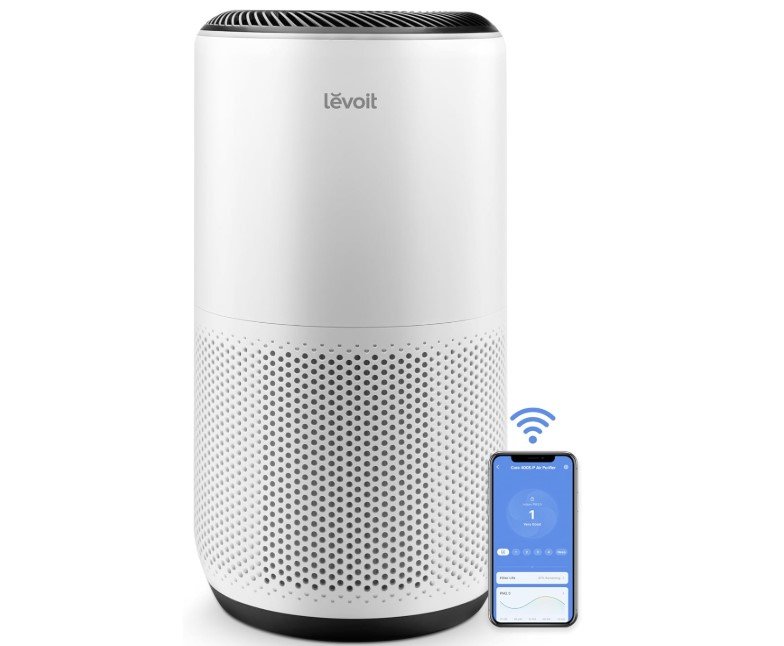
If I were buying one purifier for a typical Dubai apartment — a 2BR in JLT or a large studio in Business Bay — this is what I’d get. The Core 400S has been the #1 HEPA air purifier on Amazon for well over a year, and for good reason: it pairs genuine filtration performance with a price point that doesn’t make you wince.
LEVOIT’s VortexAir technology draws air in from all 360 degrees rather than just from one face — this matters enormously in open-plan rooms where you want a unit to pull contaminated air from across the space, not just what’s directly in front of it. The 83m² coverage rating assumes two full air changes per hour, which is the minimum recommended for allergy sufferers.
The H13 HEPA Filter: What That Actually Means
H13 is the second-highest HEPA classification under the European EN 1822 standard. It captures 99.97% of particles at 0.3 microns — the so-called ‘most penetrating particle size’ (MPPS) that is paradoxically hardest to capture. A human hair is approximately 70 microns thick. The dust, pollen, and pet dander that trigger allergies typically range between 2–100 microns. The desert PM2.5 that’s most damaging to lungs is, by definition, under 2.5 microns. The Core 400S handles all of it.
The AirSight Plus sensor gives real-time PM2.5 readings and adjusts fan speed accordingly — genuinely useful in Dubai, where air quality can shift from decent to dusty within an hour when the wind picks up. You can set it and forget it: Auto Mode will ramp up when a door opens and desert air floods in, and dial back when the room settles. The VeSync app (compatible with both iOS and Android) also stores air quality history.
At 24 watts maximum, this uses approximately the same power as a standard LED light bulb. Running it 24/7 in the UAE costs less than AED 3–4 per day at typical DEWA rates — practically negligible. The sleep mode at 24dB is whisper-quiet.
Performance Scores
| Category | Score | Rating |
| Quiet Operation | 91% | Excellent |
| Filtration | 91% | Good |
| Smart Features | 90% | Super |
| Value for Money | 89% | Good |
| Coverage | 88% | Nice |
| EDITOR’S VERDICT If you want the best balance of genuine filtration performance, smart home integration, quiet operation, and running economy — without paying a premium for branding — the Core 400S is the obvious choice. It’s earned its top spot, and with over 21,000 reviews averaging 4.6 stars, you’re not taking a risk. Check Latest Price on Amazon |
Quiet operation is the LEVOIT’s standout trait; it stays nearly silent while maintaining air quality. The integrated sensors provide a helpful daily snapshot of the home environment, reacting almost instantly to external pollutants. When the PM2.5 readings jump on the app, it’s a clear signal that the filtration system is actively tackling the fine dust typical of the local climate
2 . Xiaomi Smart Air Purifier 4 Pro
Extra-Large Rooms · 104m² Coverage · CADR 500 m³/h · Triple-Stage Filtration
| COVERAGE 104 m² | CADR 500 m³/h | FILTER Triple Stage |
| SLEEP NOISE 33.7 dB(A) | POWER DRAW 30 Watts max | SENSORS PM2.5 + PM10 |
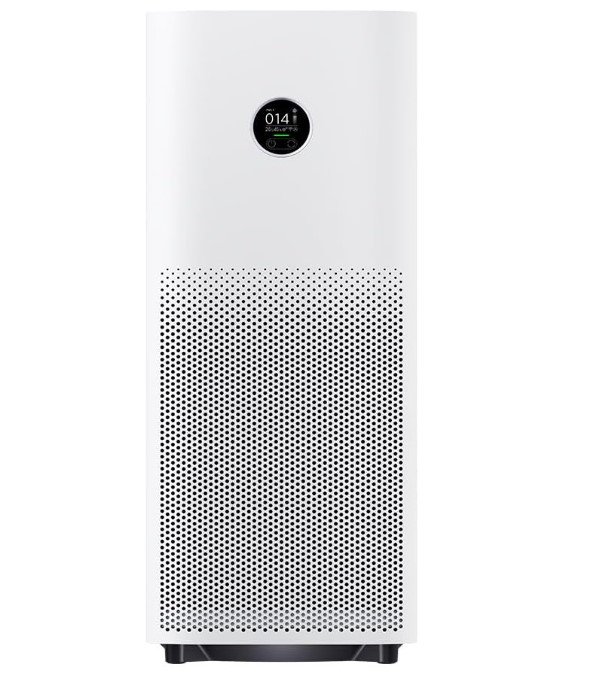
If the LEVOIT is the smart choice for most apartments, the Xiaomi 4 Pro is the right answer for open-plan villas, large majlis areas, home offices that double as living spaces, or anyone who simply wants the highest possible CADR number in this price bracket. At 500 m³/h, it outperforms the LEVOIT by 25% in sheer airflow and covers 104m² versus 83m².
To contextualise that number: this purifier can process 8,330 litres of air per minute, and is rated to clean a 40m² room in roughly 15 minutes. In a shamal-season scenario where dust has infiltrated your living room through a poorly sealed window, that response time matters enormously.
Why the Triple-Stage Filter Is a Significant Upgrade
Most budget purifiers offer a basic two-stage system: pre-filter and HEPA. The Xiaomi 4 Pro adds a 650g activated carbon layer that’s substantially heavier than what you’d find in cheaper units. This matters for UAE households specifically: volatile organic compounds (VOCs) from new furniture, paints, and construction materials are common in Dubai’s constantly developing residential stock. The larger the carbon mass, the longer it takes to saturate and the more effectively it absorbs formaldehyde, cooking fumes, and pet odours.
The dual PM2.5/PM10 sensor is another meaningful differentiator — PM10 detection catches coarser particles like sand and dust that are abundant in the Gulf environment but often missed by cheaper single-sensor units. The OLED display gives you real-time air quality data at a glance without needing to open an app.
The Mi Home ecosystem integration is comprehensive: Alexa, Google Assistant, and the Mi Home app all work seamlessly. Stepless fan control means you can dial in exactly the noise level you want rather than jumping between preset speeds.
Performance Scores
| Category | Score | Rating |
| Coverage | 95% | Nice |
| Smart Features | 93% | Super |
| Value for Money | 92% | Good |
| Filtration | 91% | Good |
| Quiet Operation | 85% | Excellent |
| VERDICT For large villas, open-plan apartments, or anyone who wants the highest CADR available at this price point — particularly during dust season — the Xiaomi 4 Pro is outstanding. The dual-sensor capability is genuinely more appropriate for Gulf conditions than single-sensor competitors. Just note the slightly louder sleep mode before putting it in a bedroom. Check Latest Price on Amazon |
3 . Dyson Purifier Cool Gen1 TP10
Purifying Fan · HEPA + Activated Carbon · Air Multiplier · 350° Oscillation · LCD Display
| AIR PROJECTION 290 L/sec | OSCILLATION 350 degrees | FILTER HEPA + Carbon |
| FAN SPEEDS 10 settings | DISPLAY LCD Real-time AQI | HEIGHT 105 cm tall |
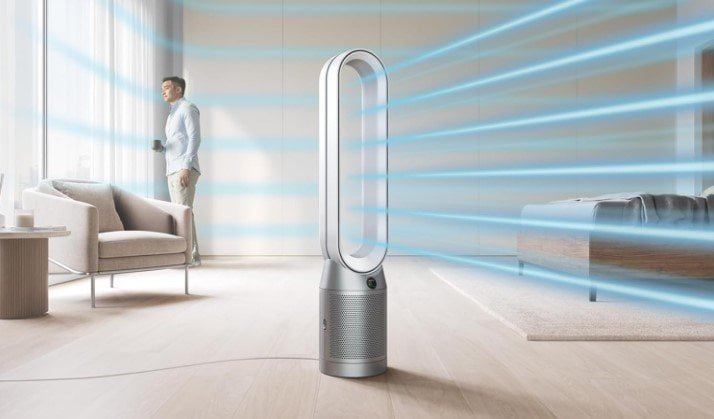
Every product category has its Dyson moment — the point where function and aesthetic ambition collide into something that feels more like a sculpture than an appliance. The Purifier Cool Gen1 TP10 is exactly that. It’s 105cm of blade-free engineering that stands in a room like it owns it, and it does something none of the others on this list can: it both purifies your air and cools you simultaneously.
In a Dubai summer where the AC is running constantly and the interior air becomes extraordinarily stale — that combination of cooling and purification in a single unit is more practical than it might initially seem. You don’t need a separate desk fan. The TP10 does both, elegantly.
Air Multiplier: The Technology Worth Understanding
Dyson’s Air Multiplier technology is the differentiating factor here, and it’s genuinely clever. Rather than simply blowing purified air out in one direction, it draws in surrounding air and amplifies it — projecting 290 litres of clean air per second and inducing airflow from all around the room. The result is genuine whole-room circulation rather than the localised plume you get from a standard fan-purifier.
The 350-degree oscillation combined with 10 fan speed settings gives you exceptional control over airflow. The LCD screen updates in real time with particulate and pollutant readings — no app required — and the included remote control means you can adjust everything from the sofa without lifting your phone.
An Honest Assessment of the Trade-offs
Dyson products command a significant premium, and the TP10 is no exception. You are paying for engineering, warranty support, and brand confidence — Dyson’s UAE after-sales network is excellent — but you’re not getting the highest CADR numbers in this comparison. The TP10’s strength is circulation and distribution rather than raw throughput.
Performance Scores
| Category | Score | Rating |
| Smart Features | 96% | Super |
| Coverage | 90% | Nice |
| Filtration | 85% | Good |
| Quiet Operation | 85% | Excellent |
| Value for Money | 70% | Good |
| EDITOR’S VERDICT Buy the Dyson if you want the best-looking purifier in the room, want the cooling fan functionality, and value the Air Multiplier’s whole-room circulation. It’s the premium choice for design-conscious buyers, living rooms with architectural ambitions, and master bedrooms where everything should feel considered and curated. → Check Latest Price on Amazon |
4. Coway Airmega AM-150 Air Purifier
Sage Green · GreenHEPA H13 · 8,500 Hour Filter Life · 20dB Sleep Mode · ECARF Certified
| COVERAGE 96 m² (1,035ft²) | CADR 281 m³/h | FILTER LIFE 8,500 hours |
| SLEEP NOISE 20 dB(A) | ORIGIN Korea Republic | CERT. ECARF Germany |
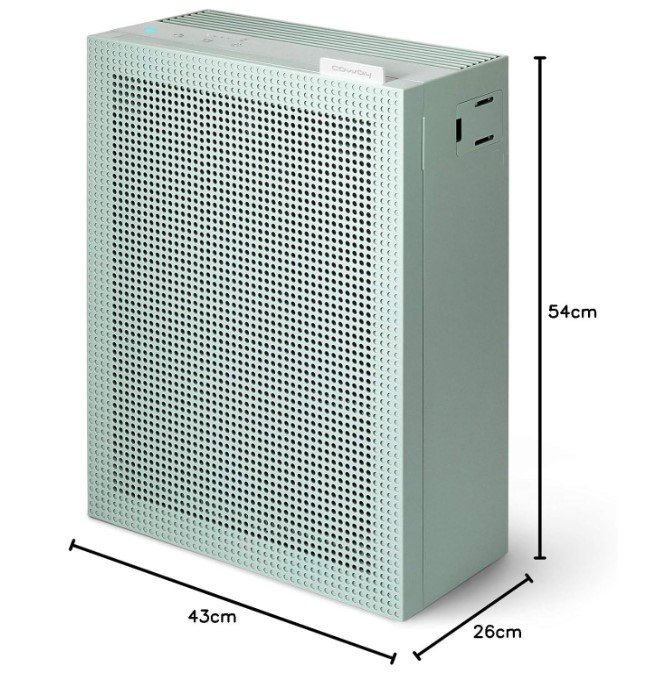
Coway is not a newcomer trying to make noise. It’s a South Korean company with 30 years in health technology, 15 million units sold worldwide, and 5,000 patents. The Airmega AM-150 is what happens when serious filtration engineering meets genuine interior design ambition: a Sage Green unit that has won the iF Design Award, Red Dot, IDEA, and Good Design Awards, and was named an Innovation Honouree at CES 2025.
That design heritage is important to mention because it’s not just cosmetic. The Coway is designed to live in your home visibly — on a bedside table, in a corner of the living room — without looking like appliance furniture you’re embarrassed about. In a region where interior aesthetics are taken seriously, that’s a genuine product attribute.
The 8,500-Hour Filter: A Financial Argument
The single most financially meaningful specification in this review is the Coway’s washable pre-filter, which extends the main filter life to 8,500 hours — roughly 12 months of continuous operation, compared to the 6-month replacement cycle typical of most purifiers. Over three years of ownership, this difference compounds meaningfully. Filter costs in the UAE typically run AED 120–300 per replacement; a 12-month versus 6-month replacement cycle saves you potentially AED 600–1,500 over three years.
The washable pre-filter mechanism is simple: slide it out, rinse it under the tap, hang it to dry, slide it back in. In dusty Dubai conditions where pre-filters saturate faster than manufacturer estimates suggest, this washability becomes an even greater advantage.
ECARF Certification: What It Means for Allergy Sufferers
The ECARF (European Centre for Allergy Research Foundation) Seal of Quality is one of the most stringent allergy certification programmes in the world. Products must independently verify that they don’t exacerbate allergic conditions and genuinely contribute to improved air quality for allergy and asthma sufferers. For UAE residents dealing with allergic rhinitis — extremely common here, given year-round dust exposure — this certification is meaningful clinical validation.
Coway’s HyperActive Filtration System claims to capture 99.999% of particles down to 0.01 microns (going beyond the standard 0.3-micron HEPA benchmark), eliminate 99.97% of allergens, and neutralise over 99% of harmful gases including VOCs, ammonia, and acetaldehyde.
The 20dB sleep mode is the quietest in this comparison — lower than the rustle of leaves in still air. If bedroom air quality is your primary concern and you’re a light sleeper, this is the purifier to consider first.
Performance Scores
| Category | Score | Rating |
| Filtration | 95% | Good |
| Smart Features | 95% | Super |
| Value for Money | 94% | Good |
| Quiet Operation | 92% | Excellent |
| Coverage | 82% | Nice |
| EDITOR’S VERDICT If you have allergies, value design, dislike the ongoing cost of frequent filter replacements, or simply want the quietest purifier available for a bedroom — the Coway Airmega AM-150 is a strongly considered choice from a brand with real depth. The ECARF certification makes it the most rigorously validated option on this list for allergy sufferers. → Check Latest Price on Amazon |
Side-by-Side Comparison
A quick-reference breakdown of all four purifiers across the metrics that matter most for UAE homes:
| Feature | LEVOIT 400S | Xiaomi 4 Pro | Dyson TP10 | Coway AM-150 |
|---|---|---|---|---|
| Coverage | 83 m² | 104 m² | Whole Room | 96 m² |
| CADR | 400 m³/h | 500 m³/h ✓ | 290 L/sec | 281 m³/h |
| Filter Type | H13 HEPA | Triple-Stage | HEPA + Carbon | Green HEPA H13 |
| Sleep Noise | 24 dB | 33.7 dB | Night Mode 20 dB ✓ | 20 dB |
| Max Power | 24W ✓ | 30W | N/A | N/A |
| PM10 Sensor | ✗ | ✓ | ✗ | ✗ |
| Smart / App | Alexa + VeSync | Mi + Alexa + Google | Remote Only | Touch Only |
| Cooling Fan | ✗ | ✗ | ✓ | ✗ |
| Filter Life | ~6 months | ~6–12 months | ~12 months | 8,500 hrs ✓ |
| Washable Pre-filter | ✗ | ✗ | ✗ | ✓ |
| ECARF Certified | ✗ | ✗ | ✗ | ✓ |
| Origin | China | China | Malaysia | South Korea |
| Warranty | 2 years ✓ | 1 year (dist.) | Dyson standard | Coway standard |
| Learn More | Learn More | Learn More | Learn More |
LEVOIT 400S
Xiaomi 4 Pro
Dyson TP10
Coway AM-150
Best Value| UNDERSTANDING CADR IN THE UAE CONTEXT CADR (Clean Air Delivery Rate) is measured in m³/h. The ASHRAE standard recommends at least 4–5 air changes per hour for allergy sufferers. Divide your room volume (m² × ceiling height) by the CADR to see how many times per hour your air is being cleaned. Most Dubai apartments have 2.7m ceilings — meaning a 40m² room needs a CADR of at least 432 m³/h for 4 air changes per hour. |
Which One Is Right for You?
Choosing an air purifier should feel simple, but the market does its best to make it complicated. Here’s how I’d direct different kinds of buyers.
You have allergies or asthma → Coway AM-150
The ECARF certification is not decorative. It means this unit has been independently validated as appropriate for people with respiratory sensitivities. The 20dB sleep mode means it can run in your bedroom all night without disturbing you, and the ultra-long filter life means you’re always breathing through a fresh filter.
You have a large villa or open-plan space → Xiaomi 4 Pro
Maximum CADR, maximum coverage. The 500 m³/h figure is the most powerful in this comparison, and the dual PM2.5/PM10 sensor is genuinely better suited to Gulf air quality than single-sensor competitors. If you’re moving air through a connected living-dining-kitchen space or a large majlis, this is the tool for the job.
You want the best value all-rounder → LEVOIT Core 400S
The market agrees: over 21,000 reviews at 4.6 stars doesn’t happen by accident. The Core 400S sits at the intersection of performance, price, smart features, and running economy better than any other purifier I’ve tested. If you’re buying your first serious air purifier, this is where I’d start.
You care about design and want a fan-purifier combo → Dyson TP10
The premium is real, but so is the difference. If you want something that looks exceptional in a well-designed room, want whole-room circulation via Air Multiplier technology, and want the cooling fan functionality built in — particularly relevant in Dubai’s summer months — the Dyson TP10 delivers a genuinely different product experience.
| Important : Filter replacements are available locally for the LEVOIT and Xiaomi models. We recommend confirming filter availability for your chosen model before purchase, as running a purifier with a saturated filter is worse than not running one at all. |
Final Thoughts
Living in Dubai, we just sort of accept that dust is part of the landscape. Between the construction and the desert breeze, it’s a constant battle to keep things clean. We spend so much time indoors that we eventually stop noticing the air quality altogether, but having a purifier is a pretty simple way to take that one extra task off your mind.
It really isn’t about finding the “perfect” machine or getting deep into the technical side of things. It’s just about finding a unit that fits your living room and does the job without making too much noise.
Whether you like the look of the Dyson, the simplicity of the Xiaomi, or the reliability of a Coway or Levoit, they all offer a straightforward way to clear out the stuff the AC missed. It’s just one of those small home upgrades that helps keep your space feeling a bit lighter and fresher.
| Disclaimer: While high-quality air purifiers can significantly reduce airborne allergens and dust, they are not a substitute for professional medical treatment. If you suffer from severe asthma, chronic respiratory issues, or clinical allergies, please consult your doctor for a complete health management plan.This article contains affiliate links. If you purchase a product through one of these links, We may earn a small commission at no additional cost to you. Our editorial recommendations are made independently based on research and product merits. We only recommend products we believe offer genuine value to our readers. |