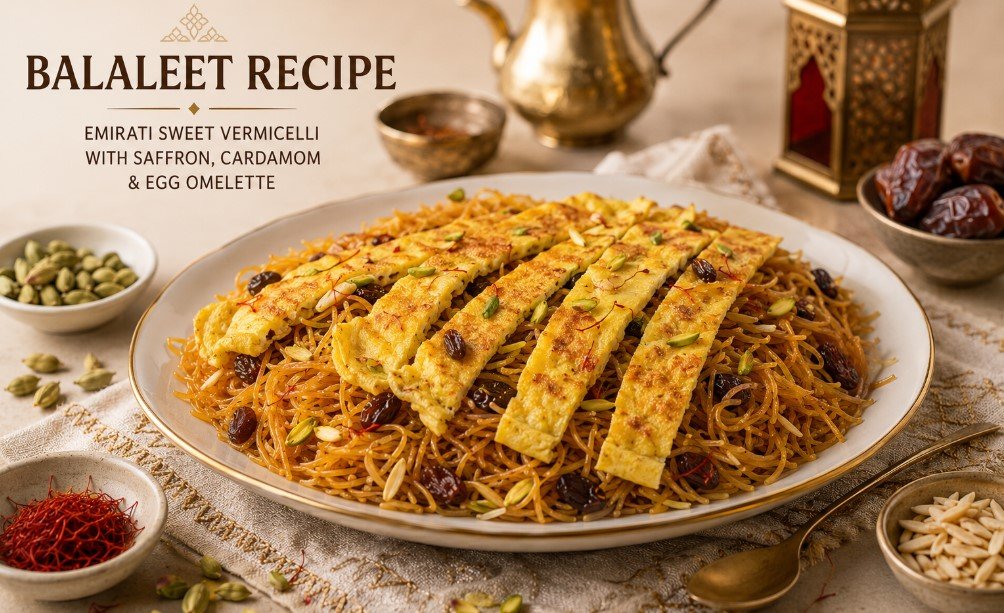
Balaleet Recipe: Where aromatic saffron and sweet cardamom vermicelli meet the perfect, delicate fold of a flawlessly thin golden omelette
| ⏱ Prep Time 10 minutes | 🔥 Cook Time 20 minutes | 🍽 Serves 4 | 📊 Difficulty Easy |
Balaleet is the dish that confuses visitors most and delights them immediately after. Sweet, saffron-golden vermicelli — flavoured with cardamom, rose water, and just enough sugar to make you think you’re eating dessert — topped with a savoury, thin egg omelette. The combination sounds wrong until you taste it, and then it sounds inevitable. This is Emirati breakfast at its most characteristic: the meeting of sweet and savoury not as a compromise, but as a deliberate, confident choice.
In Dubai, balaleet appears on Eid morning tables, at Ramadan suhoor spreads, at the first meal of the day in traditional Emirati households, and on the menus of every Emirati restaurant in the city. It is one of the few dishes that works equally well hot as a breakfast and cool as a dessert — the sweet vermicelli alone, without the egg, is an entirely acceptable way to end a meal.
| Eid Morning Tradition In many Emirati families, balaleet is the first food eaten on Eid al-Fitr morning — the celebration that ends Ramadan. The dish’s sweet, golden colour makes it festive by nature, and the relatively quick preparation means it can be ready for a family gathering without consuming the morning. It is one of the few dishes that every Emirati home cook knows by heart. |
What Makes Balaleet Distinctly Emirati
Vermicelli in sweetened form exists across the Gulf — in Saudi Arabia as sharia, in Bahrain and Kuwait in closely related forms. But the Emirati version has specific characteristics that distinguish it. The saffron is not optional or token — it is used generously enough to turn the vermicelli a deep golden colour. The rose water is present but restrained. And the omelette on top is thin, slightly crisp at the edges, and flavoured with the same saffron and cardamom as the vermicelli — it is not a generic egg topping but an integral component of the dish.
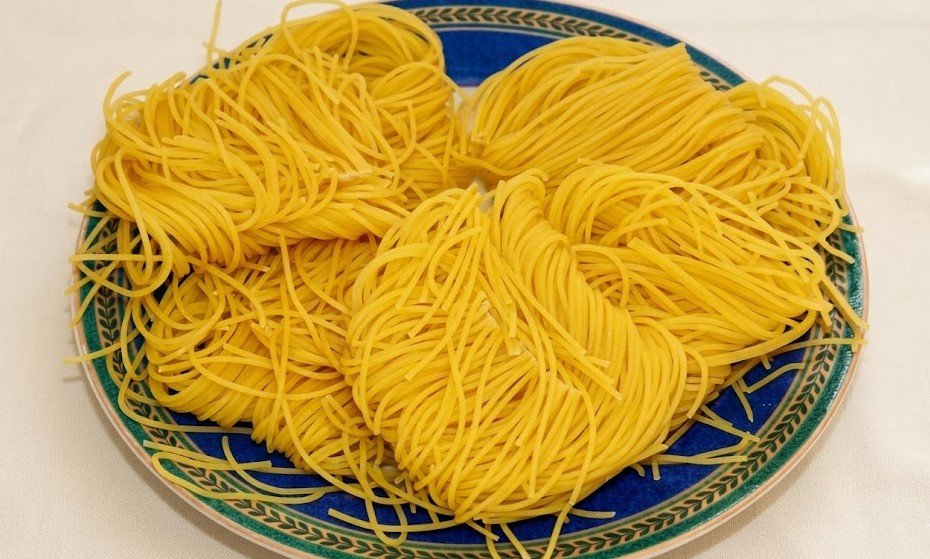
The sweet-savoury contrast is also culturally specific. Emirati cuisine has a long history of combining sweet and savoury in the same dish — a tradition that goes back to Bedouin cooking, where dates and dried fruits were mixed with meat and grain, and the line between savoury sustenance and sweet celebration was deliberately blurred. Balaleet is the most elegant expression of this tendency.
Related : Authentic Karak Chai Recipe: Dubai’s Beloved Tea Tradition (5 STEPS)
Balaleet Recipe – Ingredients
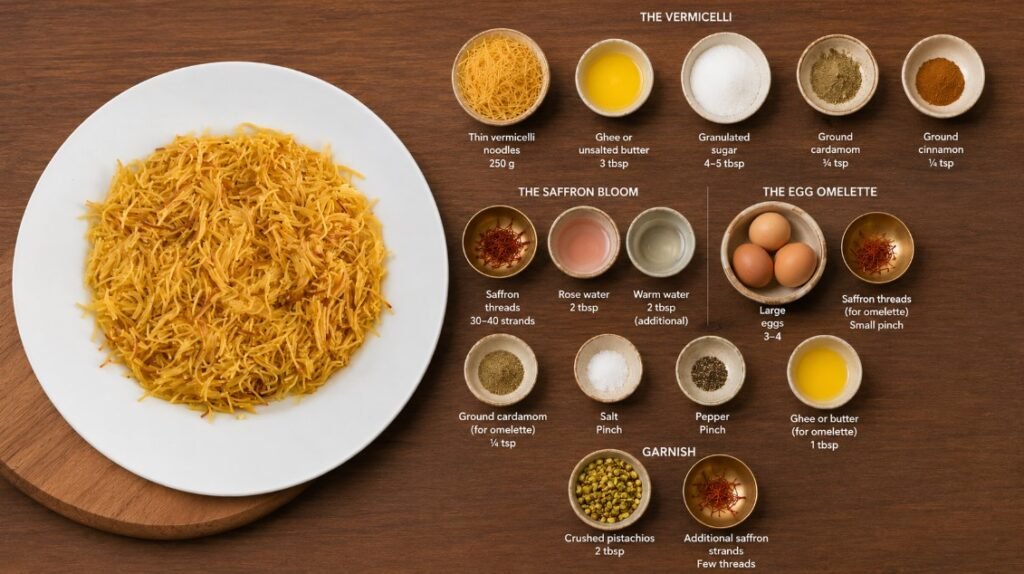
| Ingredient | Quantity | Role & Notes |
| THE VERMICELLI | ||
| Thin vermicelli noodles | 250 g | Fine, thin variety; not thick spaghettini — the texture difference matters |
| Ghee or unsalted butter | 3 tbsp | For toasting the vermicelli; ghee gives a more authentic flavour |
| Granulated sugar | 4–5 tbsp | Adjust to taste; balaleet should be noticeably sweet but not cloying |
| Ground cardamom | ¾ tsp (freshly ground) | The primary aromatic — freshly ground is significantly better than pre-ground |
| Ground cinnamon | ¼ tsp | Adds warmth; optional but traditional in many families |
| THE SAFFRON BLOOM | ||
| Saffron threads | Generous pinch (30–40 strands) | More than you think — balaleet should be golden, not pale yellow |
| Rose water | 2 tbsp | The saffron blooms in rose water, not plain water — adds floral depth |
| Warm water | 2 tbsp additional | Combined with rose water for blooming |
| THE EGG OMELETTE | ||
| Large eggs | 3–4 | Beaten with the same saffron and cardamom as the vermicelli |
| Saffron threads (for omelette) | Small pinch | Bloomed in 1 tsp warm water; adds colour and flavour to the egg |
| Ground cardamom (for omelette) | ¼ tsp | Ties the omelette flavour to the vermicelli beneath it |
| Salt and pepper | Pinch each | The only savoury seasoning in the entire dish |
| Ghee or butter | 1 tbsp | For cooking the omelette; creates the slightly crisp edge |
| GARNISH | ||
| Crushed pistachios | 2 tbsp | Traditional; adds colour and crunch against the soft vermicelli |
| Additional saffron strands | Few threads | Scattered over the finished dish for visual drama |
Balaleet Recipe Method
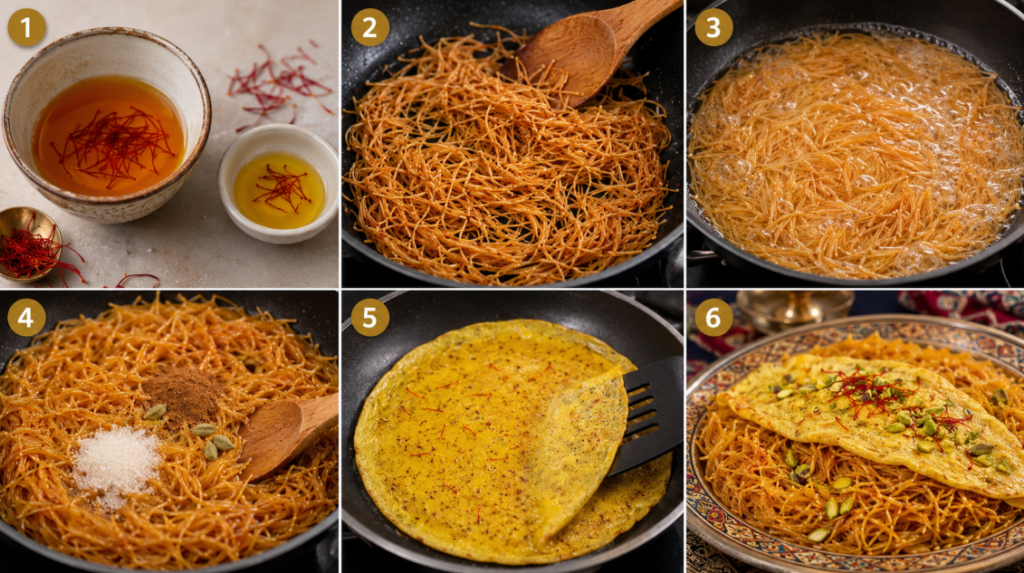
| 1 | Bloom the Saffron Combine the saffron strands for the vermicelli with the rose water and warm water in a small cup. Set aside for at least 10 minutes — the liquid should turn a deep amber-orange. This blooming step is not skippable: saffron releases its colour and aromatic compounds in liquid, and adding dry threads directly to the vermicelli produces uneven flavour and colour. Prepare a separate smaller bloom for the omelette using a pinch of saffron in 1 teaspoon warm water. |
| 2 | Toast the Vermicelli Melt 2 tablespoons of ghee in a wide, non-stick pan over medium heat. Break the vermicelli into thirds if using long noodles. Add to the pan and toast, stirring constantly, for 3–4 minutes until the noodles turn a warm golden-brown. This toasting step adds a nutty flavour and helps the noodles hold their texture during cooking rather than becoming mushy. Watch carefully — toasted vermicelli goes from golden to burnt in seconds. |
| 3 | Cook the Vermicelli Add enough boiling water to the pan to cover the noodles by 2 cm. Cook over medium-high heat, stirring occasionally, until just tender — al dente, not soft. This takes 4–6 minutes depending on the thickness of your vermicelli. Drain immediately and return to the pan. Do not overcook — the noodles will continue to soften slightly when you add the sugar and butter. If you are uncertain, test earlier rather than later. |
| 4 | Add the Sweet Spice Mixture Return the drained noodles to the pan over low heat. Add the remaining tablespoon of ghee, the sugar, ground cardamom, cinnamon, and the saffron-rose water bloom. Stir gently but thoroughly to coat every strand. Cook for 2–3 minutes, stirring, until the sugar has fully dissolved and the noodles are uniformly golden from the saffron. The mixture will look slightly wet initially; continue cooking until any excess moisture evaporates and the noodles look glossy and coated. Transfer to a wide serving plate. |
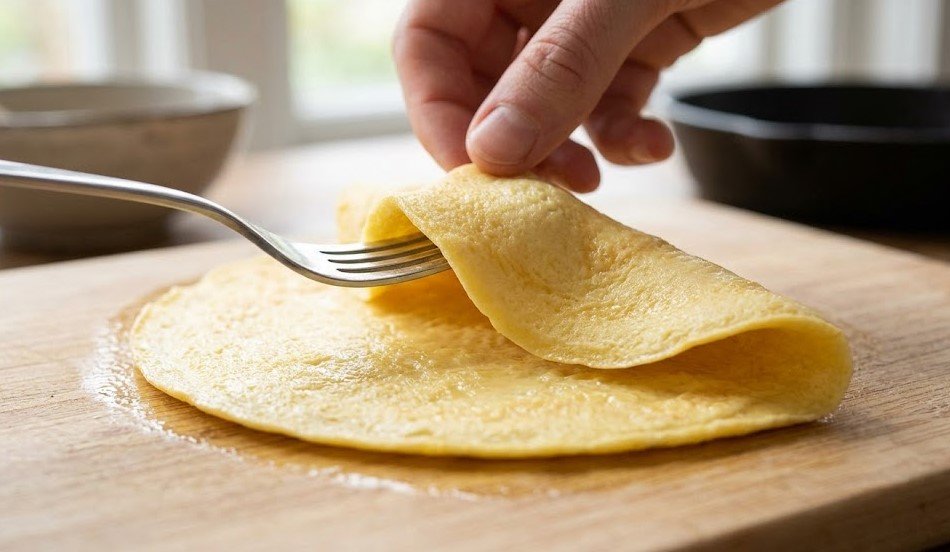
| 5 | Make the Saffron-Cardamom Omelette In a bowl, whisk the eggs with the omelette saffron bloom, the ¼ tsp cardamom, a pinch of salt and pepper. The egg mixture should be pale gold from the saffron. Heat 1 tablespoon of ghee in a clean non-stick pan over medium heat. Pour in the egg mixture and tilt the pan to spread it thin — thinner than a standard omelette, closer to a crêpe. Cook until just set on top, then flip carefully using a wide spatula. Cook the second side for 30 seconds only — it should remain pale. The omelette should be thin, slightly crisp at the edges, and golden underneath. |
| 6 | Assemble and Serve Lay the omelette over the vermicelli on the serving plate — either folded in half in the traditional style, or laid flat across the noodles. Scatter crushed pistachios over the top and add a few saffron strands for colour. Serve immediately while hot. In traditional Emirati serving, the dish is placed in the centre of the table and diners scoop portions of vermicelli with a piece of omelette together. The two components should be eaten simultaneously — never the vermicelli alone without the egg. |
Technique Tips
The Omelette Thickness
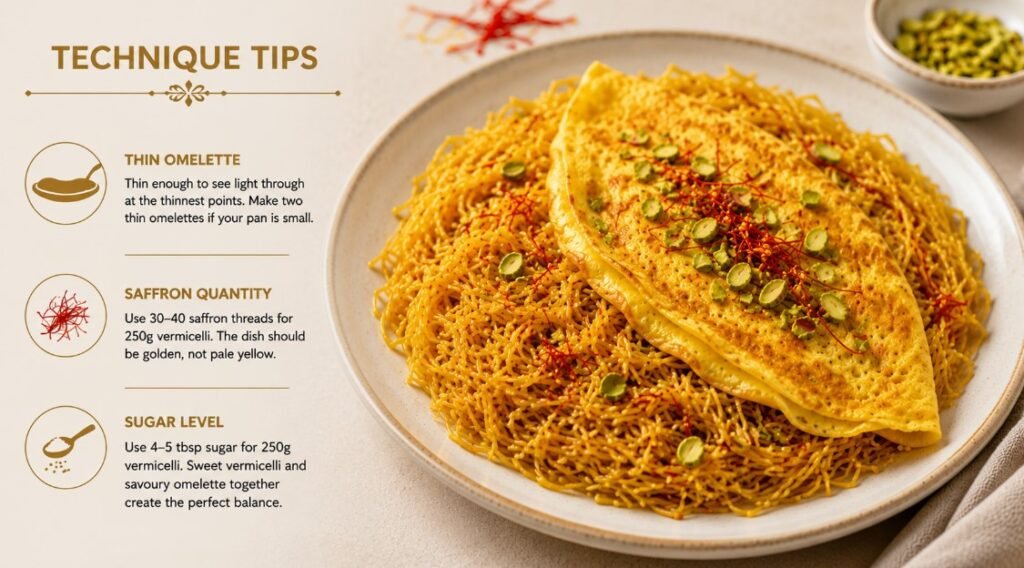
The omelette should be thin enough to fold without cracking but not so thin that it tears. The test: hold the cooked omelette up to the light — you should be able to see through it slightly at its thinnest points. A thick omelette overpowers the vermicelli and disrupts the sweet-savoury balance the dish depends on. If your pan is small, make two thin omelettes and layer them rather than making one thick one.
Saffron Quantity
Most Western recipes for balaleet are too timid with saffron. The dish should be golden — the colour of autumn leaves — not pale yellow. Use a generous pinch of 30–40 threads for 250g of vermicelli. This is not excessive; it is how the dish is made in Emirati homes. The flavour of saffron at this quantity is present but not overwhelming — it adds floral depth rather than dominating the cardamom.
Sugar Level
Balaleet should be sweet enough that you immediately register it as a sweet dish, not just a mildly sweetened one. Four to five tablespoons of sugar for 250g of noodles is the authentic range. If this sounds like a lot, remember that the savoury egg omelette on top is the counterweight — eaten together, the balance is correct. Reducing the sugar significantly changes the dish into something that is neither authentically sweet nor properly savoury.
🍜 Where to Eat Balaleet in Dubai Al Fanar Restaurant & Cafe in Festival City Mall serves balaleet as part of their traditional Emirati breakfast menu — widely considered one of the best reference versions in Dubai. Logma in City Walk offers a more contemporary presentation. Arabian Tea House in Al Fahidi Historical District serves it alongside traditional breads as part of a full Emirati breakfast spread.
Balaleet asks you to trust a combination that should not work and then proves that it does — completely and memorably. Sweet saffron noodles and a savoury cardamom egg: two things that define Emirati breakfast culture, placed on the same plate, eaten together. Make it once and you will understand why every Emirati home cook considers it part of their essential repertoire.
Related : Chicken Machboos Recipe – The 6 Step Guide to the UAE’s National Dish