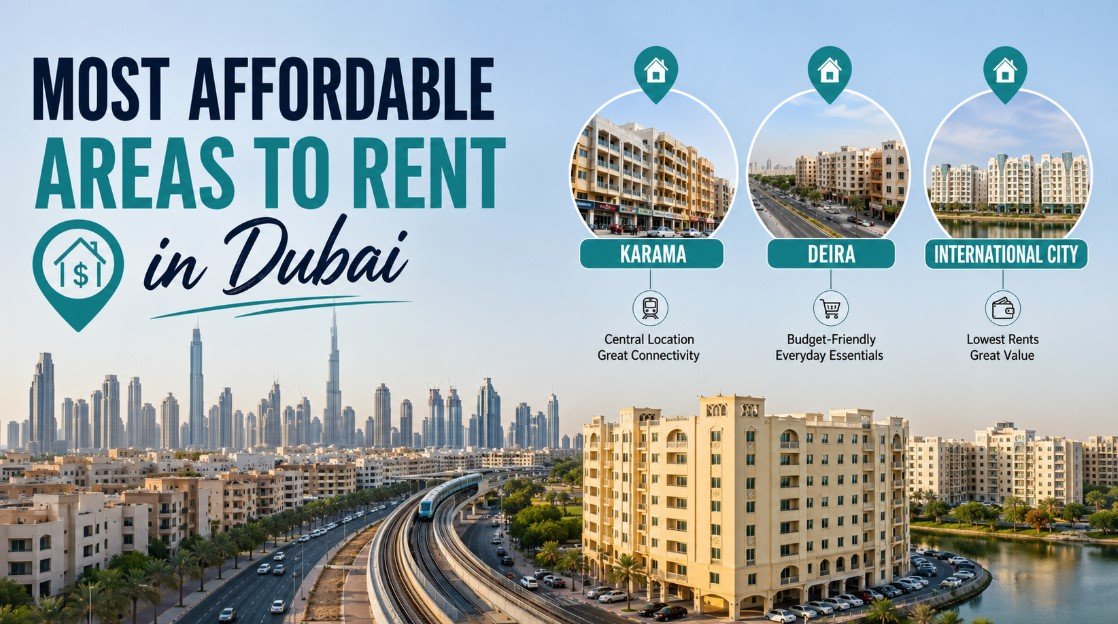
Most Affordable Areas to Rent in Dubai: With real rent figures from Property Finder and an honest look at what each area is actually like to live in.
Dubai rents have been rising for three years, but 2026 is showing signs of a pause. Data from Property Finder comparing January-February to April 2026 shows average rents across the UAE dropped around 5.4%, with analysts describing it as a more balanced market phase rather than a correction. Around 120,000 new homes are scheduled for handover across Dubai in 2026 alone — that supply pressure is one reason landlords in some areas are negotiating rather than holding firm on the asking price.
That matters for anyone looking to rent now, because it’s the first time in several years that the leverage has shifted slightly toward tenants. Especially in the areas below, where new supply has been coming to market and competition among landlords is real.
Rent figures reflect mid-2026 market data for one-bedroom apartments. Actual prices vary by building, floor, furnishing and condition — always check the DLD Smart Rental Index at smartrentalindex.ae for the benchmark on any specific building before you commit.
| The DLD Smart Rental Index, launched in January 2025, rates every residential building in Dubai from one to five stars using more than 60 factors including location, building age, security and amenities. Before renewing a lease or disputing a rent increase, check your building’s benchmark at smartrentalindex.ae — it’s the legally binding reference used by the Rental Disputes Centre. Under Decree No. 43 of 2013, landlords cannot increase rent if your current rent is within 10% of the market benchmark. Even where an increase is permitted, it is capped at 5-20% depending on how far below the benchmark your current rent sits. |
At a Glance: 2026 Rent Comparison
Dubai rents are softening slightly in 2026 as new supply comes to market — around 120,000 homes are scheduled for handover this year alone. That means more negotiating room than tenants have had in three years, especially in the areas below.
| Area | Studio (annual) | 1BR (annual) | Metro access? |
| International City | AED 25,000–35,000 | AED 46,000–55,000 | No — RTA buses only |
| Al Nahda (Dubai) | AED 30,000–38,000 | AED 55,000–65,000 | Yes — Green Line |
| Deira | AED 28,000–40,000 | AED 60,000–72,000 | Yes — Green & Red Lines |
| Dubai South | AED 28,000–36,000 | AED 60,000–70,000 | No — buses and Al Maktoum area |
| Dubai Sports City | AED 32,000–42,000 | AED 65,000–75,000 | No — RTA buses only |
| Dubai Silicon Oasis | AED 32,000–42,000 | AED 65,000–75,000 | No — RTA buses to Rashidiya |
| Karama | AED 35,000–48,000 | AED 65,000–78,000 | Yes — BurJuman (Red & Green) |
All figures are indicative annual rents based on mid-2026 listing data. Actual rents vary by building, floor, condition and whether the apartment is furnished. Unfurnished apartments are generally 15-25% cheaper than furnished equivalents in the same area.
1. International City
Cheapest 1BR rents in Dubai · Near Al Warsan, off the Al Ain Road · Best for: budget-first renters with a car
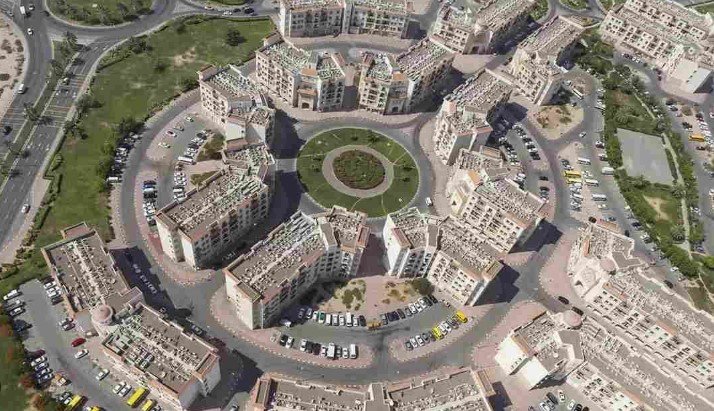
International City is Dubai’s most affordable residential community by a clear margin. One-bedroom apartments average around AED 46,000 to AED 55,000 per year — roughly half what the same footprint costs in Dubai Marina. Studios start from AED 25,000. The community is built around residential clusters themed after different countries, which gives it a distinctive look but also a genuinely self-contained feel with supermarkets, restaurants, clinics and schools all within the development.
The honest downside is transport. International City has no Metro station — RTA buses connect to the nearest Metro lines, but the journey to central Dubai is slow by transit and takes around 25 to 35 minutes by car depending on traffic. If you don’t drive, the daily commute to Downtown or Dubai Marina becomes a real consideration. The area also saw new supply arrive in 2025 and early 2026, which is part of why rents here actually dropped around 8% over the past twelve months — good news for anyone looking to move in now.
The community is popular with families and budget-conscious expats who prioritise space and cost over location. Apartments tend to be larger than equivalent-priced units elsewhere in the city. Worth considering seriously if you work from home or your workplace is on the eastern side of Dubai.
2. Al Nahda (Dubai side)
Most affordable Metro-connected option · Borders Sharjah — Dubai side near Al Qusais · Best for: budget commuters, South Asian expat community
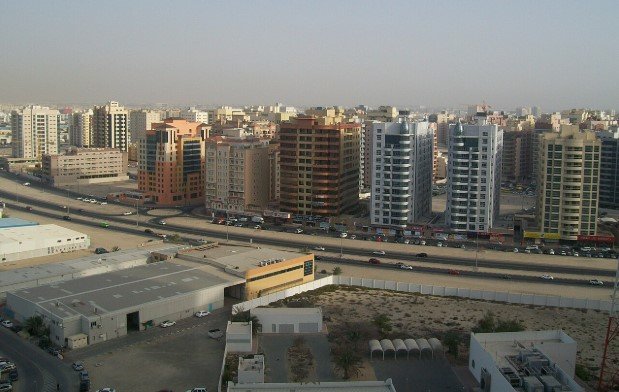
Al Nahda consistently comes out as the cheapest area for one-bedroom apartments that still have Metro access, with average annual rents around AED 55,000. One important distinction: there are two Al Nahda communities that border each other — one in Dubai and one in Sharjah. This guide covers the Dubai side, which is served by the Green Line Metro at Stadium and Al Qusais stations.
The neighbourhood has a strong South Asian community character — the restaurant scene is good, the shops are practical rather than premium, and the streets are active and well-used throughout the day. It doesn’t have the polished look of newer developments like JVC or Dubai Silicon Oasis, but it’s central, well-connected and genuinely affordable. Grocery options are solid, with LuLu, Carrefour and several local supermarkets nearby.
One thing to be aware of: Al Nahda sits right on the Dubai-Sharjah border, which means rush-hour traffic heading toward the Sharjah side of the main road can be heavy on weekday mornings. If your work is in central Dubai and you’re taking the Metro, this isn’t a problem. If you’re driving toward Sharjah, factor in extra time during peak hours.
3. Deira
Old Dubai with good Metro coverage · Creekside, near Union Metro interchange · Best for: single expats, city-centre workers, those who love local life
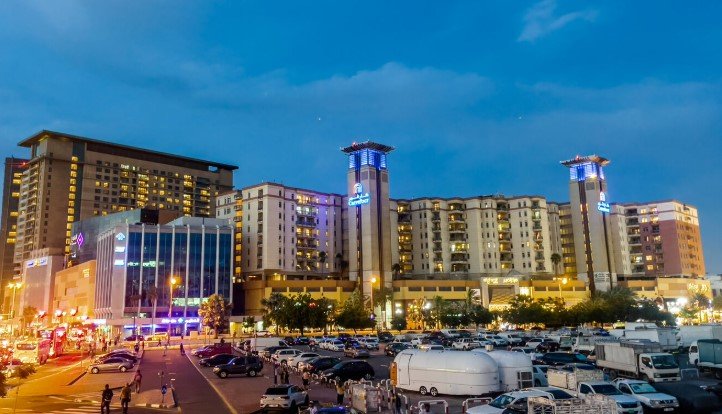
Deira is one of Dubai’s oldest commercial and residential districts, and that history shows in both its character and its prices. One-bedroom apartments average AED 60,000 to AED 72,000 per year — affordable for a neighbourhood this central. The Green and Red Line Metro interchange at Union makes the connection to both sides of the city straightforward, and the proximity to Dubai Creek, the Gold Souk, Spice Souk and the abra crossings makes it one of the most interesting parts of the city to actually live in rather than just visit.
Deira has a very different feel from New Dubai. The streets are dense, the community is multicultural in the way that reflects Dubai’s actual population rather than its brochure, and the food options — particularly South Asian, Iranian, Filipino and Arabic cuisine — are excellent and cheap. It’s not the right area if you want a gym, a pool and a quiet residential compound. It is the right area if you want to be in the middle of something real.
Building quality varies significantly in Deira. Older buildings can have maintenance issues, and not all have central AC — check whether the unit has split ACs or central cooling before signing, and what the DEWA bill history looks like in summer. Parking is limited and the streets are busy, but the Metro access makes car ownership less essential here than in most other affordable areas.
4. Dubai South
Emerging community near Al Maktoum Airport · Jebel Ali area, off Emirates Road · Best for: aviation and logistics workers, families wanting space
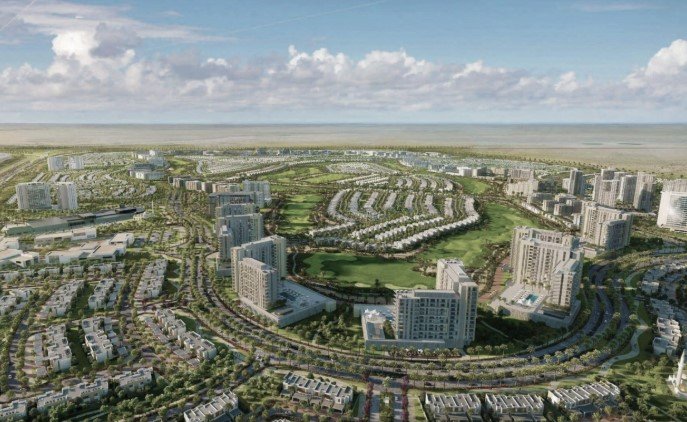
Dubai South is the planned city being built around Al Maktoum International Airport, about 40 kilometres from Downtown Dubai. Annual rents for one-bedroom apartments average around AED 60,000 to AED 70,000, and studios start from AED 28,000 — comparable to International City in price but with newer buildings and a cleaner layout. The residential district around the Expo City Dubai area has been filling in gradually since the 2020 Expo, and the infrastructure has improved meaningfully.
The main appeal here is space and newness. Apartments tend to be well-sized, buildings are modern, and the community feel is growing as more families move in. Expo City Dubai is on the doorstep — it has parks, cafes, museums and event venues that make the immediate area more liveable than most suburban developments this far from the city centre.
The honest limitation is distance. Getting to central Dubai by car during peak hours takes 40 to 60 minutes. There’s no Metro to Dubai South yet, though the Route 2020 extension reaches Expo City Dubai and Dubai South is serviced by RTA buses connecting to the Red Line at Ibn Battuta. If you drive to Jebel Ali or work in the free zone belt along Sheikh Zayed Road south, the location is actually convenient. If your workplace is in Business Bay or DIFC, the commute is a daily commitment.
5. Dubai Sports City
Residential community with sports infrastructure · Off Hessa Street and Sheikh Mohammed Bin Zayed Road · Best for: sports-oriented residents, families, car owners
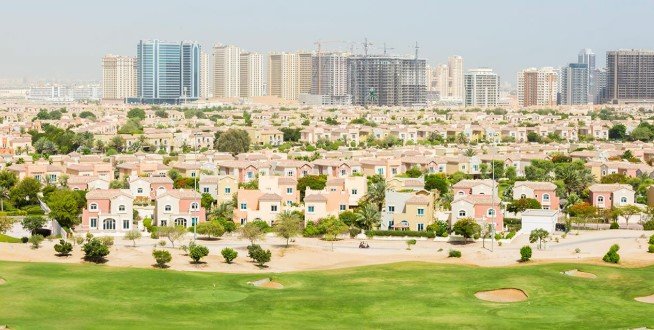
Dubai Sports City is a purpose-built residential community centred on sports facilities — the Dubai International Cricket Stadium, three football academies, a golf course and cycling tracks. One-bedroom apartments average AED 65,000 to AED 75,000 per year, with studios from around AED 32,000. The community has a suburban, car-dependent character: the facilities are good, the streets are quiet, and the layout makes walking feel practical in a way that many Dubai communities don’t.
Residents with families tend to rate it highly. There’s an international school cluster nearby, parks and open space, and the cricket stadium hosts regular domestic and occasional international matches that are accessible without driving far. The ICC Academy next door offers coaching programmes for all ages.
No Metro runs to Dubai Sports City. RTA buses connect to the broader network but a car is the practical reality for most residents. The nearest significant retail is at Cityland Mall or the cluster on Hessa Street. It’s a genuinely nice place to live if your lifestyle fits the self-contained community model — less so if you need frequent access to central Dubai.
6. Dubai Silicon Oasis
Free zone and residential community for tech professionals · Off Dubai-Al Ain Road (E66), eastern Dubai · Best for: tech workers, startups, families wanting a self-contained community
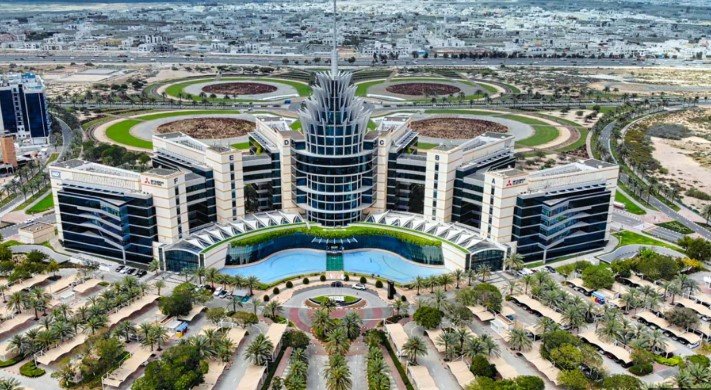
Dubai Silicon Oasis is an unusual proposition: a government-established technology free zone that doubles as a residential community, regulated by the Dubai Silicon Oasis Authority (DSOA). Over 1,000 tech companies are registered here, which means the resident population skews toward engineers, developers and tech professionals more than almost anywhere else in Dubai. One-bedroom rents average AED 65,000 to AED 75,000 annually.
The community is genuinely self-contained. Silicon Central Mall, a Carrefour, clinics, schools, a GEMS school and several parks and jogging tracks are all within the development. It has a calmer, more suburban feel than the urban density of Deira or the high-rise intensity of JLT. The Al Ain Road provides quick access to the Dubai-Sharjah border and to the main highway network.
There’s no Metro station inside DSO — RTA buses connect to Rashidiya station on the Red Line, which takes around 20 to 30 minutes. The community is popular with families and young professionals who prioritise apartment quality and community living over nightlife and central access. If you work in DSO itself or nearby, the area offers genuinely good value for modern apartments in a well-run community.
7. Karama
Central old Dubai with Metro access and a great food scene · Between Bur Dubai and Oud Metha, near BurJuman · Best for: singles and couples who want central location and community feel
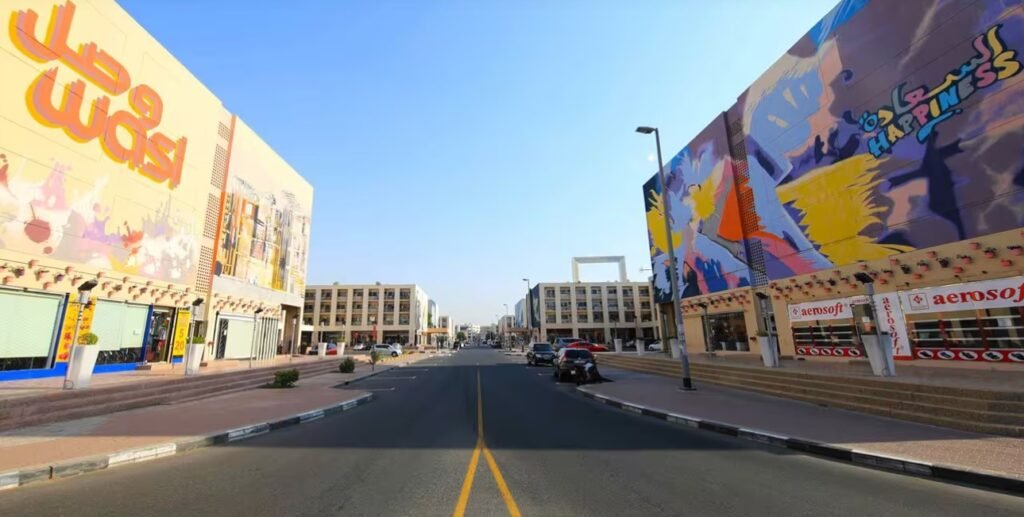
Karama sits in the middle of old Dubai — not as historic as Al Fahidi, not as dense as Deira, but genuinely central, diverse and affordable relative to its location. One-bedroom apartments average AED 65,000 to AED 78,000 per year, with the BurJuman Metro station (where the Red and Green Lines intersect) giving excellent access to both sides of the city. For the location and the transport connection, that pricing is competitive.
Karama has one of the best food scenes in Dubai for the price. The cluster of affordable Indian, Pakistani, Filipino, Sri Lankan and Arabic restaurants around Karama Centre is a proper local dining ecosystem — you can eat well here for AED 15 to 30 per person in a sit-down restaurant. The shopping strip is famous for its copy goods market (a Dubai institution in itself) and has a wide range of practical retail alongside it.
Building quality varies — Karama is an older residential area and some buildings show their age in maintenance and insulation. Central AC isn’t universal. It’s worth viewing units carefully and checking the summer DEWA bill estimate before committing. The neighbourhood feels genuinely lived-in and community-oriented in a way that a lot of newer Dubai residential developments don’t, which is either a plus or a minus depending on what you’re looking for.
Before You Sign: Check the Smart Rental Index
The Dubai Land Department’s Smart Rental Index gives every registered building in Dubai a star rating and a benchmark rent range, updated using real transaction data from Ejari registrations. It replaced the old RERA Rental Index in January 2025 and uses more than 60 factors including building age, security, facilities and location demand to calculate what a fair rent looks like for that specific building.
This matters for two situations: first, if you’re comparing whether a landlord’s asking price is reasonable before you commit; and second, at renewal, where the index is the legally binding reference that determines whether a rent increase is permitted and by how much.