
The Ultimate Step-by-Step Blueprint on How to Wash Sneakers in the Machine Without Damaging Them: Keep Your Favorite Kicks Looking Box-Fresh and Protect Your Appliance on Every Wash.
If your favourite sneakers are looking rough and you are wondering whether the washing machine can save them, you are not alone. It is one of the most searched cleaning questions out there: can you wash sneakers in the washing machine without destroying them? The answer is yes—but only if you do it right.
Here in the UAE, the challenge is a little different from elsewhere. The fine dust that settles on everything, the occasional sand that finds its way into your treads after a weekend trip, and the year-round heat and humidity all mean your trainers get dirty faster and dry slower than they would in a cooler climate. Throw in the fact that many of us wear sneakers daily—for work, for the gym, for walking the mall—and it is no surprise they end up needing a proper clean more often than we would like.
This guide covers exactly how to wash sneakers in the machine safely, which types can handle it, how to prep them properly, the best settings to use, and—crucially—how to dry them so they do not end up warped, faded, or smelling like a damp towel. We will also look at a simple tool that makes the whole process easier and keeps both your shoes and your washing machine protected.
Can You Actually Wash Sneakers in the Washing Machine?
The short answer is yes—but only certain types, and only if you follow the right steps. Machine washing is not a universal solution for every pair of shoes, and understanding the difference can save you from an expensive mistake.
Shoes That Generally Handle Machine Washing Well
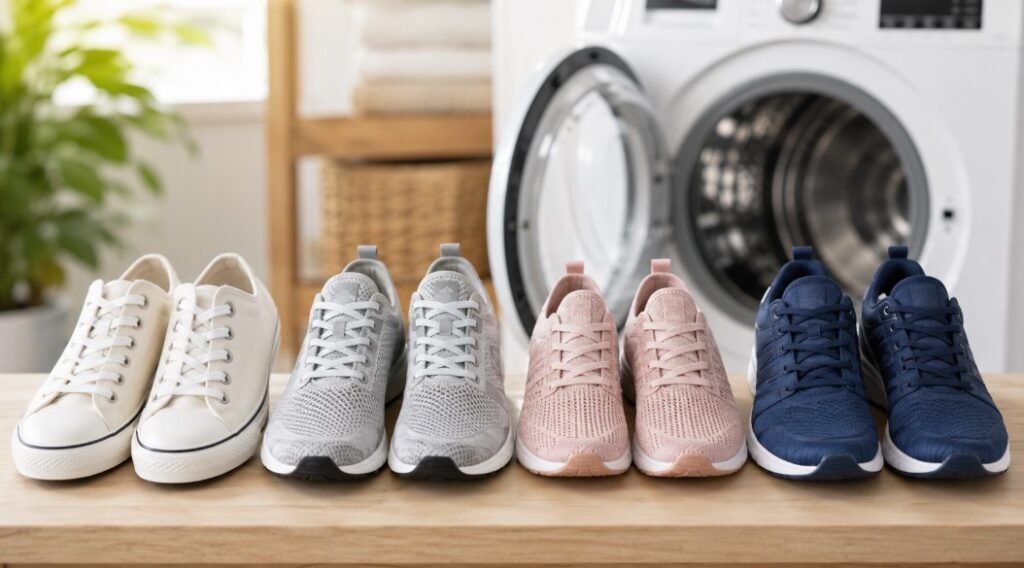
Canvas sneakers, mesh or knit running shoes with synthetic uppers, nylon and polyester trainers, and standard rubber-soled athletic shoes usually survive a gentle machine cycle without issue. These materials do not absorb excessive water and their construction can handle the mild agitation of a delicate cycle.
Shoes You Should Never Put in the Washing Machine
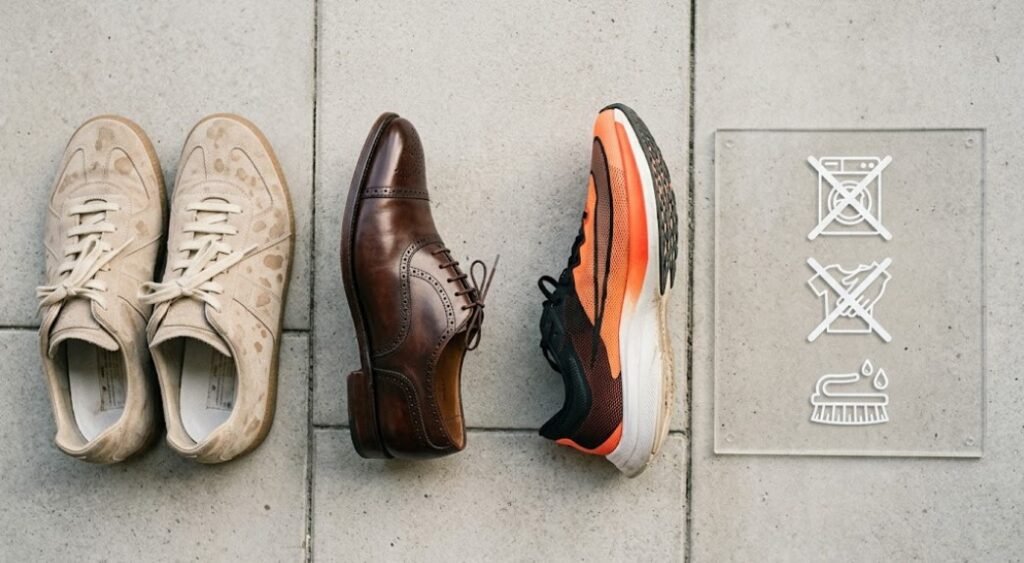
Genuine leather and suede are the biggest risks—water strips natural oils, causes staining, and ruins texture permanently. You should also avoid shoes with extensive glued embellishments, dress shoes with structured heels, visibly damaged pairs where water can seep into internal foam, and expensive performance shoes with carbon plates or specialised midsole foams that can degrade.
If you are unsure, check the care label inside the tongue or heel. Many manufacturers now include a small icon indicating whether machine washing is safe. When in doubt, hand cleaning is always the safer route for delicate materials.
Why Machine Washing Sneakers Is Especially Tricky
Before diving into the step-by-step process, it is worth understanding why sneaker care in Dubai and the wider UAE requires a slightly different mindset than in Europe or North America.
The Sand and Dust Factor
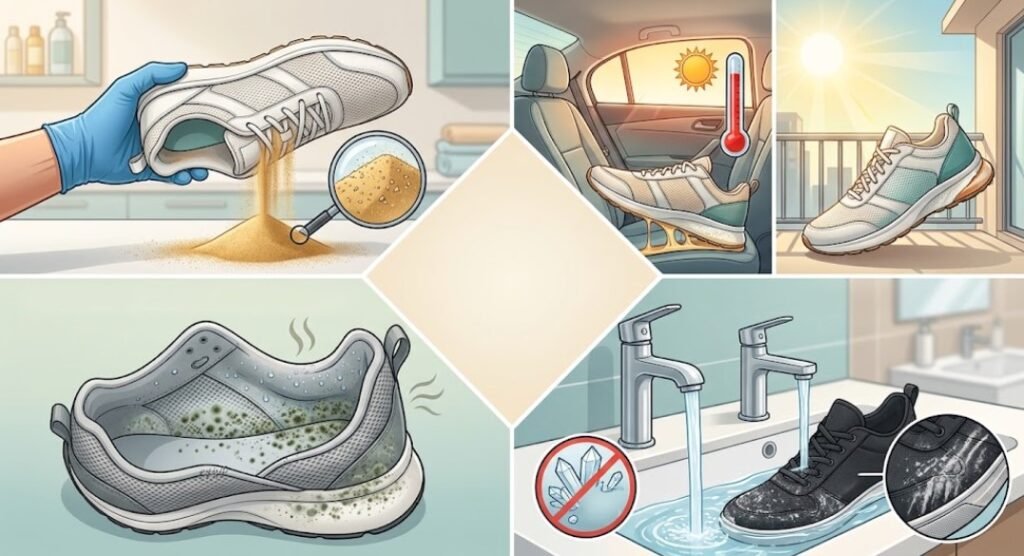
Desert sand is finer than beach sand, and it infiltrates sneakers in ways that are hard to see until you remove the insole. When that sand mixes with water in your washing machine, it can create an abrasive slurry that scuffs the inside of the drum and grinds against your shoes’ uppers. Pre-removing as much sand and grit as possible is not optional here—it is essential.
Heat and Glue Degradation
Most modern sneakers are assembled with adhesives rather than stitched soles. These glues are sensitive to heat, and Dubai’s ambient temperatures—especially if you leave shoes drying on a balcony or in a car—can soften adhesives enough to cause sole separation. This means your drying method matters just as much as your washing method.
Humidity and the Mold Problem
Despite the dry desert reputation, UAE summers bring extreme humidity, particularly in coastal cities like Dubai and Abu Dhabi. Sneakers that stay damp for too long develop mold and mildew inside the foam midsole, creating a smell that no amount of deodorising spray will fix. Proper drying is not just about convenience here—it is about preventing permanent odor damage.
Hard Water Concerns
In some areas of the UAE, tap water runs relatively hard. Over time, mineral deposits can leave white streaks on dark sneakers or affect fabric softness. Using the right detergent and avoiding excessive heat helps mitigate this.
What You Will Need Before You Start
Gathering everything beforehand makes the process smoother and prevents you from leaving sneakers half-washed while you hunt for supplies.You will need a soft-bristled brush or old toothbrush for pre-cleaning, mild liquid laundry detergent—avoid powder detergents that may not dissolve fully in cold water—baking soda and white vinegar for stain pre-treatment and odor neutralising, a couple of old towels to balance the load, newspaper or clean paper towels for drying, and a protective shoe washing bag.
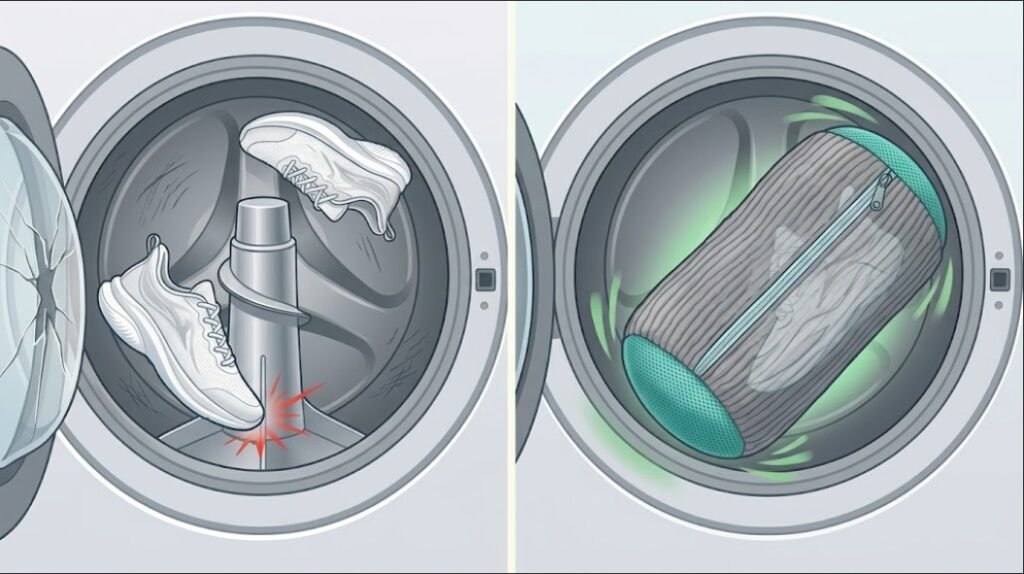
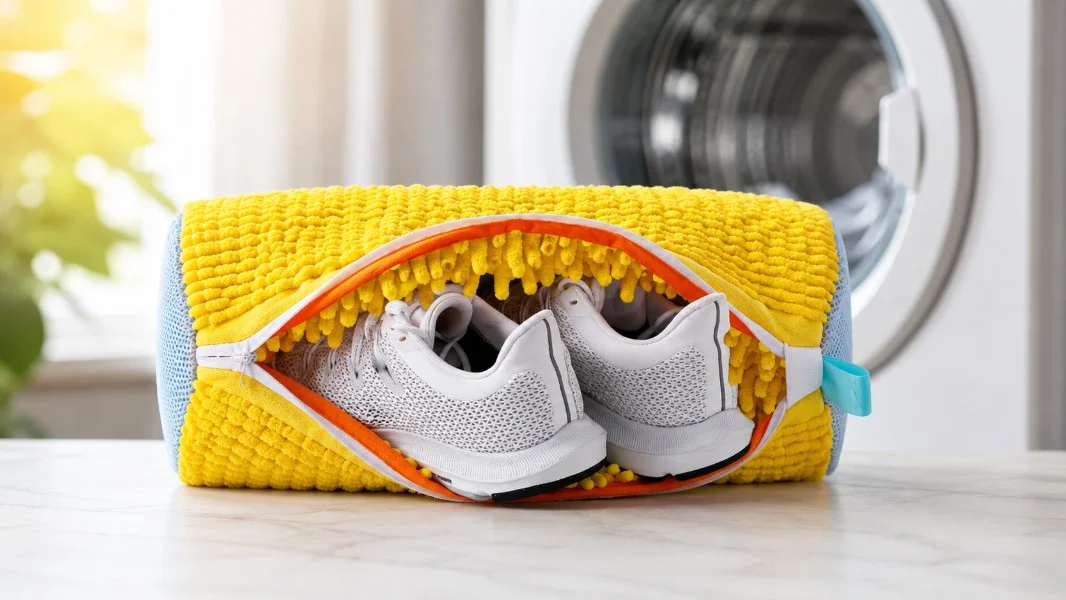
One item that genuinely changes the experience is a dedicated shoe washing bag. Throwing sneakers directly into the drum—even on a gentle cycle—means they tumble against the metal drum, the door glass, and the agitator, creating loud banging noises and potential scuff marks. A purpose-built bag acts as a cushioned barrier.
The NMQHPA Shoe Washing Machine Bag, for example, is lined with thousands of soft chenille microfiber strands that gently scrub the shoes as they move through the water, providing 360-degree cleaning action without the aggressive drum contact. It also protects your washing machine from the repeated impact of rubber soles, which is something anyone who rents an apartment in Dubai should care about.
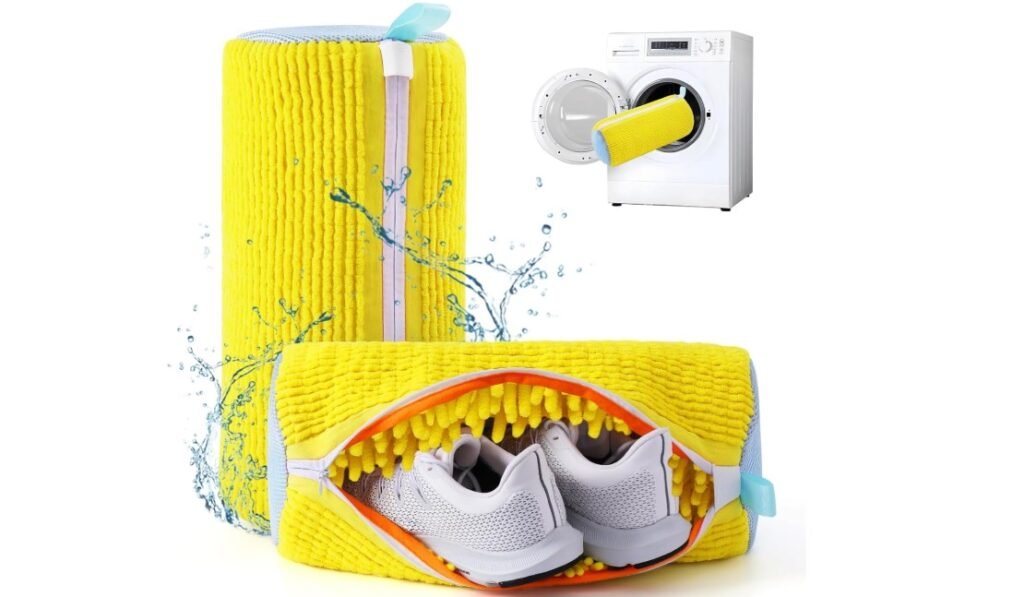
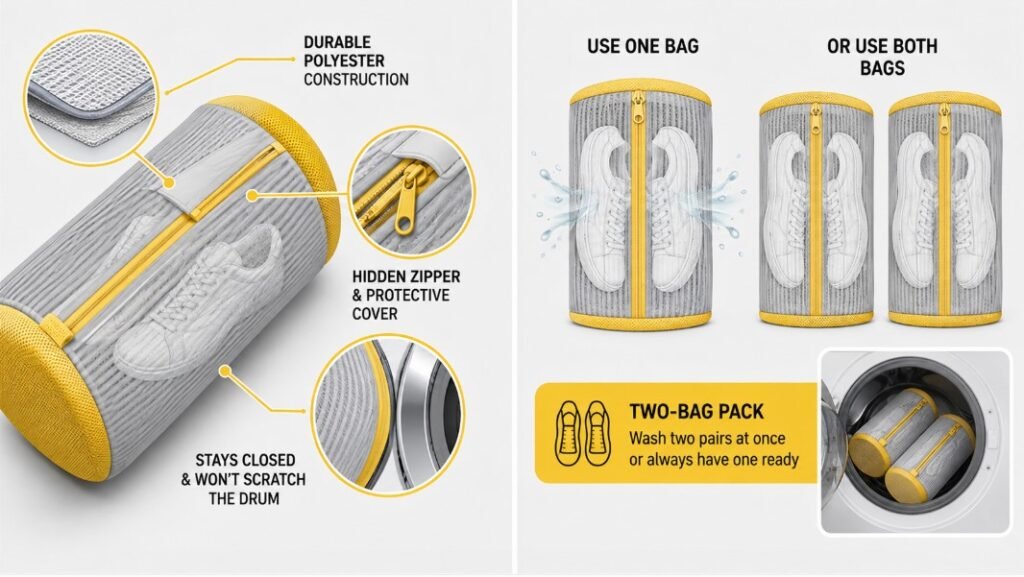
The durable polyester construction and hidden zipper with a protective cover mean it stays closed through the cycle and will not scratch the drum. For households that wash sneakers regularly, having two bags in the pack is genuinely practical—you can wash two pairs at once or always have one ready while the other dries.
If you are looking for a slightly larger single-bag option, the MOMENT Large Shoe Washing Machine Bag offers similar chenille microfiber protection with an auto-lock zipper and elastic guard, and its XL size accommodates bigger trainer styles comfortably. Both are reusable, which beats buying disposable solutions or risking damage by washing shoes unprotected.
Step-by-Step: How to Wash Sneakers in the Machine
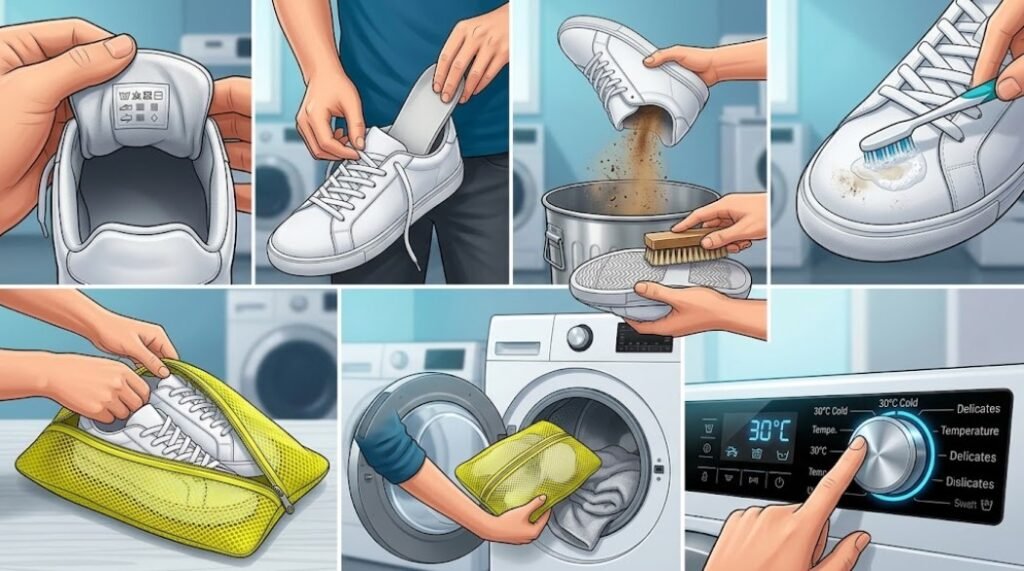
Step 1: Check the Care Label
This takes ten seconds and can save you a ruined pair. Look for the washing symbol—a tub with water inside. If it has a cross through it, stop here and clean by hand instead. Even if there is no label, use your judgment: canvas and synthetics are usually fine; leather and suede are not.
Step 2: Remove Laces and Insoles
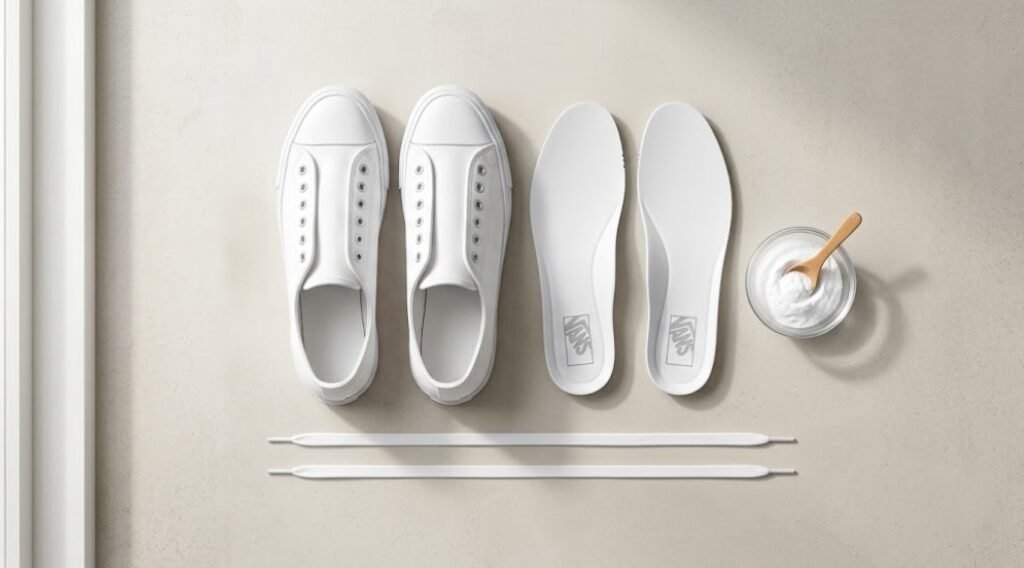
Laces tangle around the drum and agitator, and they trap dirt against the eyelets rather than letting water flow through. Remove them completely. You can wash laces separately in a small mesh bag or even inside the shoe washing bag tucked in a corner, but never leave them threaded through the shoes.
Insoles are equally important to remove. Most insoles are glued lightly at the heel and will warp or separate if soaked and spun repeatedly. Take them out, sprinkle baking soda on them to absorb odor, and let them air dry separately. If they are particularly grimy, hand wash them gently with mild soap and a sponge.
Related: 11 Cool Kitchen Gadgets That Actually Make Cooking Easier
Step 3: Remove Excess Dirt, Sand, and Debris
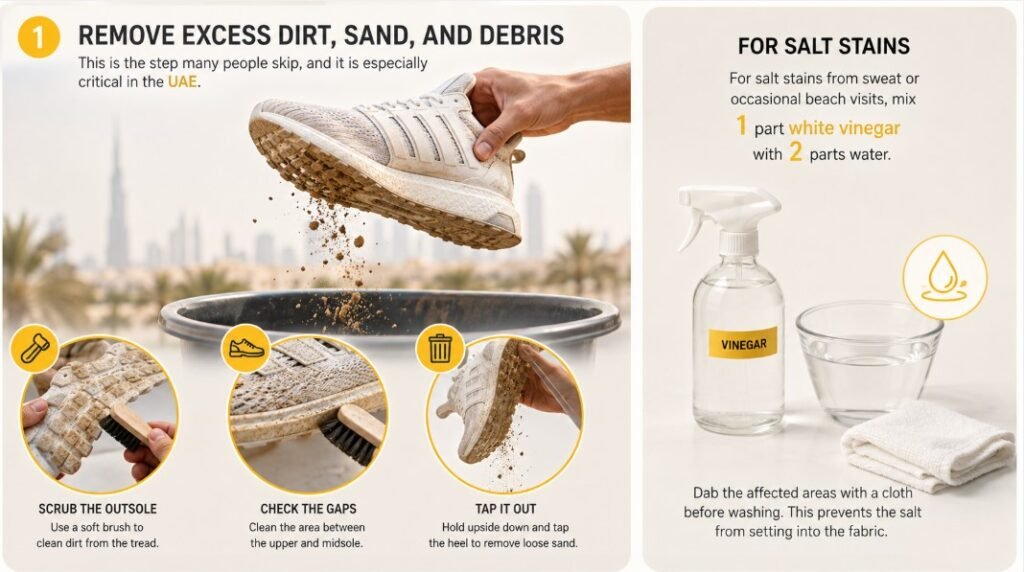
This is the step many people skip, and it is especially critical in the UAE. Hold each shoe upside down over a bin and tap the heel firmly to dislodge loose sand and dirt. Use a soft brush to scrub the outsole and remove caked mud or dust from the tread pattern. Pay attention to the gap between the upper and the midsole—sand loves to hide there.
For salt stains from sweat or occasional beach visits, mix one part white vinegar with two parts water and dab the affected areas with a cloth before washing. This prevents the salt from setting into the fabric during the wash cycle.
Step 4: Pre-Treat Stains
Apply a small amount of liquid detergent directly to visible stains—grass marks, food spills, or that mysterious dark patch on the toe box. Gently work it in with your brush and let it sit for ten to fifteen minutes. For white sneakers, a paste of baking soda and water applied to yellowed areas can help brighten them before the main wash.
Step 5: Load Into a Protective Bag
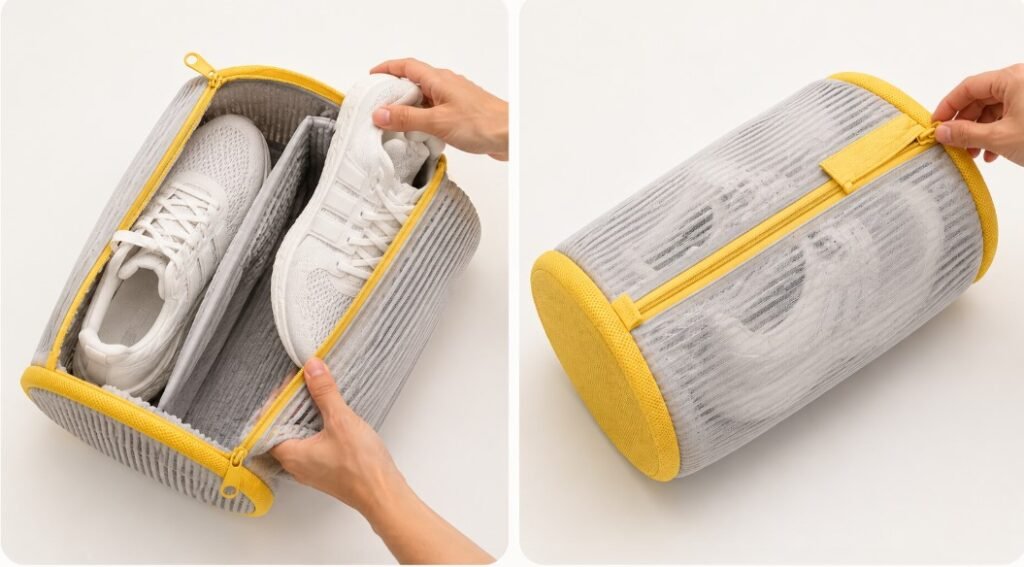
Place one shoe in each compartment of your shoe washing bag, or if using a single large bag, position them so they are not crushing each other. The chenille microfiber interior of a quality bag like the NMQHPA does more than just protect—it actively helps lift dirt from the surface of the shoe as the drum rotates. Zip the bag closed, making sure the zipper is tucked under its protective cover so it does not catch on anything inside the machine.
If you do not have a shoe bag, you can use a pillowcase tied tightly, though it will not provide the same scrubbing action or structural protection. Given how affordable dedicated bags are—and the fact that they are reusable for dozens of washes—it is worth the small investment.
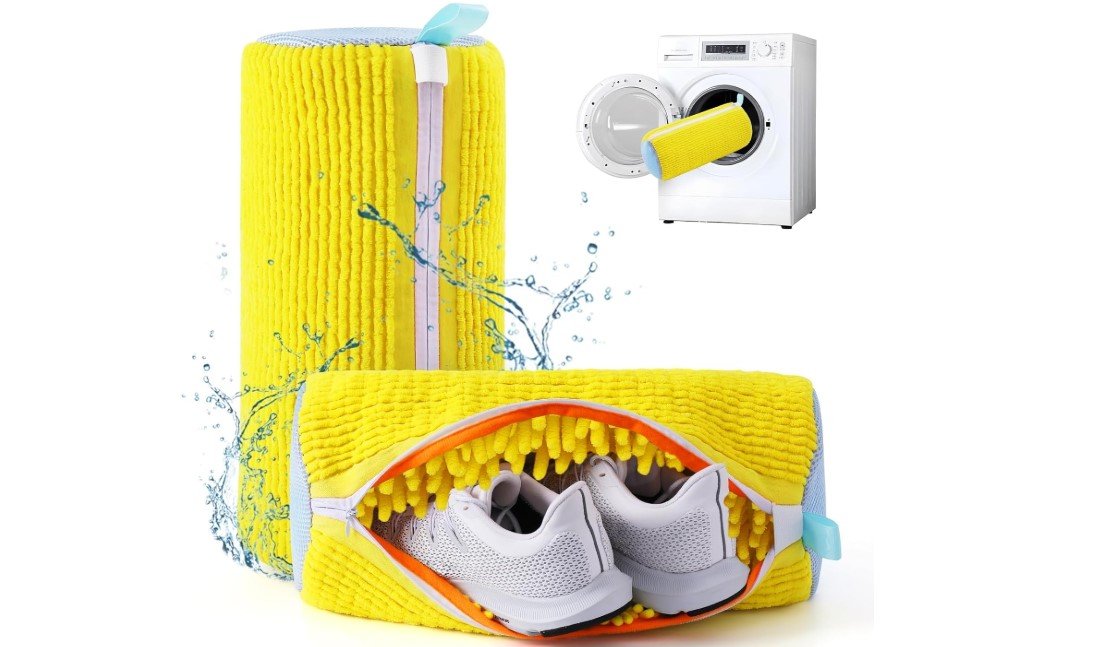
The MOMENT Large Shoe Washing Machine Bag uses 360° chenille microfiber bristles to deep clean dirt and neutralize odors while cushioning your sneakers against drum damage.
Step 6: Add Towels to Balance the Load
Washing machines hate unbalanced loads, and a single pair of sneakers bouncing around will trigger vibration sensors or, worse, damage the drum bearings over time. Add two or three old towels to the load. They cushion the shoes, absorb some of the impact, and help distribute weight evenly. Avoid washing sneakers with heavy items like jeans or blankets, which can crush lighter shoes.
Step 7: Choose the Right Settings
This is where most damage happens, so pay close attention. Use cold water only—maximum 30°C—because hot water warps rubber, weakens glue, and can shrink synthetic mesh. Select a delicate, gentle, or hand-wash cycle, and avoid normal or heavy-duty cycles entirely.
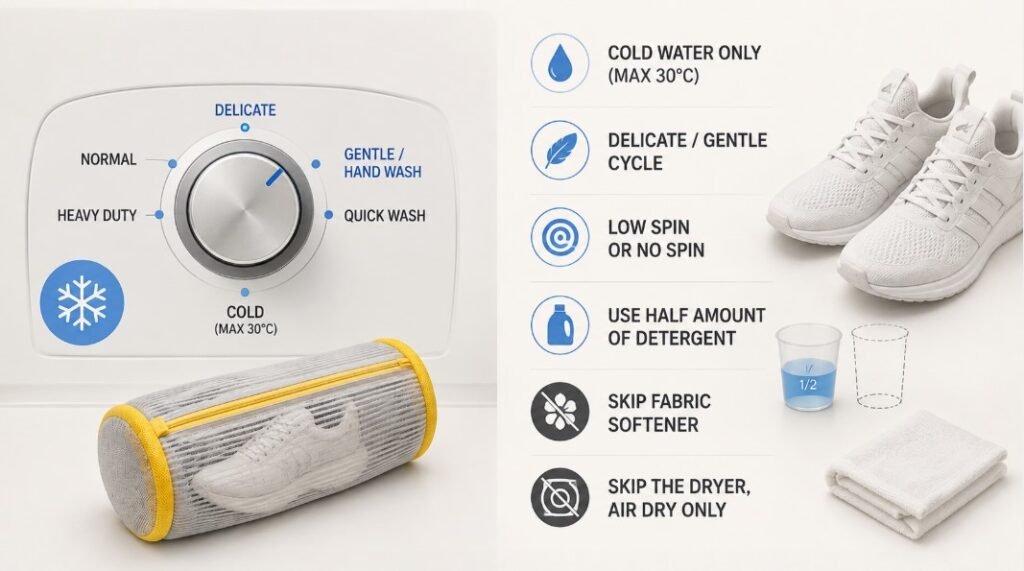
Keep spin speed on low or no spin, since high-speed spinning throws shoes against the drum with enough force to deform soft midsoles. Use half the amount of detergent you would for a normal load; too much soap leaves residue that attracts dirt and can irritate skin when you wear the shoes later. Skip fabric softener entirely, as it coats fibers and reduces breathability. And finally, skip the dryer. Even if your machine has a shoe-drying setting, air drying is safer. We will cover drying in detail below.
How to Dry Sneakers Properly in Dubai and UAE Conditions
Washing is only half the battle. In the UAE, drying sneakers incorrectly is where permanent damage happens—shrunken uppers, separated soles, and that sour smell that never quite leaves.
Why Direct Sunlight Is a Bad Idea
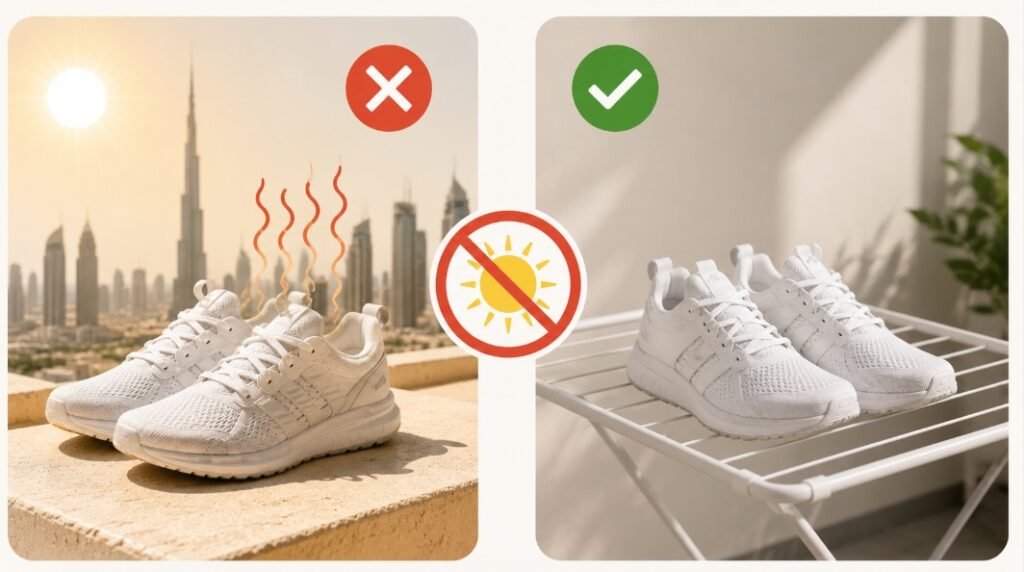
It is instinctive in sunny climates to put wet items outside. Do not do this with sneakers. Dubai’s intense UV radiation fades colours rapidly—especially reds, blues, and blacks—and the extreme surface temperatures on a balcony or window ledge can exceed 50°C ( in extreme summar), softening shoe glue to the point of failure. You might get dry shoes quickly, but you will also get a warped shape and a sole that peels away within weeks.
The Best Drying Method for UAE Homes
Start by stuffing the shoes immediately. As soon as the wash cycle ends, stuff each shoe with paper towels, newspaper, or a clean dry cloth. This absorbs internal moisture and helps the shoe hold its shape. In humid UAE summers, swap the paper every few hours—damp paper holds moisture against the shoe rather than wicking it away.
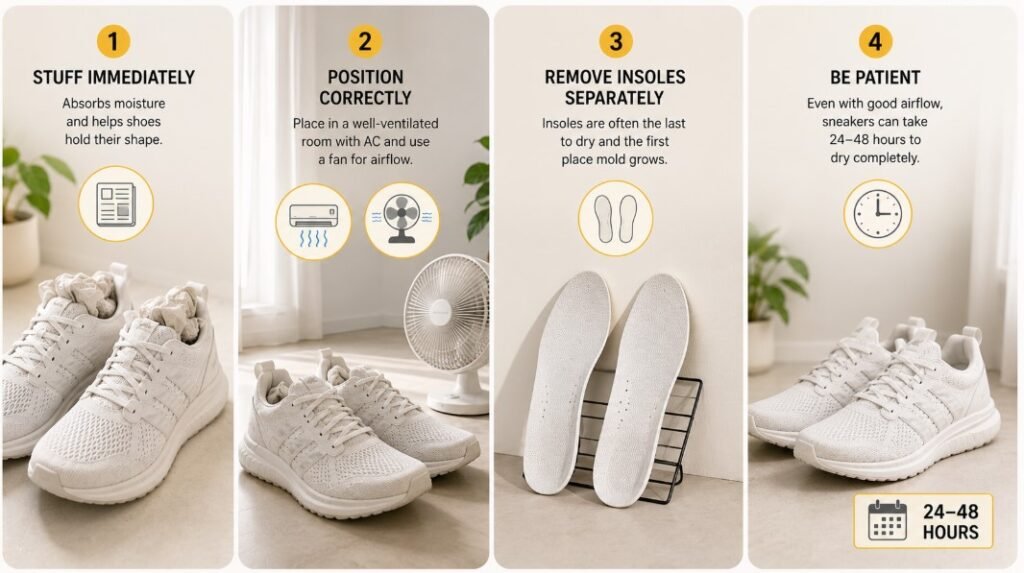
Next, position them correctly. Place shoes in a well-ventilated room with air conditioning. The AC does two things: it lowers humidity in the air, allowing moisture to evaporate from the shoe, and it maintains a stable temperature that will not damage adhesives. Position them near a fan for airflow, but not directly in front of a cold air vent if the temperature differential is extreme.
Remove insoles separately and let them dry completely outside the shoe, standing upright if possible. They are often the last thing to dry and the first place mold grows.
Finally, be patient. Even with good airflow, sneakers can take 24 to 48 hours to dry fully inside. Do not wear them until they are completely dry—partially damp shoes breed bacteria and smell terrible within hours in UAE heat.
Using Silica Gel or Rice for Extra Moisture Control
If you live in a particularly humid area like coastal Dubai or Sharjah, place a few silica gel packets inside the shoes after the initial surface drying, about six hours in. These absorb residual moisture from deep inside the foam. You can also fill a sock with uncooked rice and place it inside the shoe overnight—cheap, effective, and readily available.
Can You Use a Dryer?
Tumble drying sneakers is risky. The heat warps rubber and weakens glue, while the tumbling action can damage structure. If you are in a rush, some shoe washing bags—including the MOMENT bag—are rated for low-heat dryer use, but this should be an exception, not a habit. If you must use a dryer, place the bag inside with dry towels on low heat for no more than ten minutes, then remove and air dry the rest of the way. Never use high heat.
Common Mistakes That Ruin Sneakers in the Wash
Even with good intentions, these errors catch people out regularly. Using hot water feels like it should clean better, but it is the fastest way to shrink mesh uppers and melt shoe glue—always use cold water.
Forgetting to remove insoles means glued insoles absorb water, warp, and never sit flat again; they also trap moisture against the footbed, leading to odor. Washing leather or suede is a guaranteed way to ruin them, since water stains suede permanently and cracks leather. Using bleach on coloured shoes strips accent colours and can create yellowing over time; use oxygen-based cleaners instead.
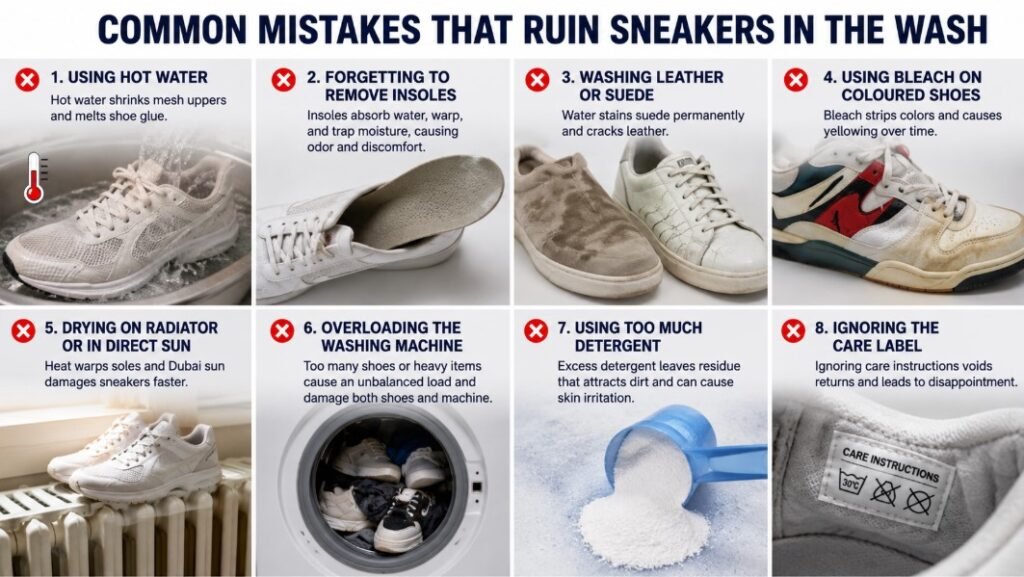
Drying on a radiator or in direct sun concentrates heat in one spot, warping the sole, and Dubai sunlight does this faster than most climates. Overloading the machine with too many shoes or heavy items creates an unbalanced load that damages your washing machine and beats up your sneakers.
Using too much detergent leaves residue that attracts new dirt and can cause skin irritation. And ignoring the care label voids any chance of returning defective shoes and often leads to disappointment.
How to Clean Sneakers That Cannot Go in the Machine
Not every pair is machine-safe. For leather, suede, nubuck, or expensive designer sneakers, hand cleaning is the only option.
Start by removing laces and insoles. Use a suede brush or soft cloth to remove surface dust. For leather, apply a small amount of leather cleaner to a microfiber cloth and wipe in circular motions—never saturate the material. For suede, use a specialised suede eraser on marks, followed by a suede brush to restore the nap.
For the midsole, a magic eraser or a paste of baking soda and water applied with a toothbrush works wonders. Wipe away residue with a damp cloth, not a soaking wet one. Stuff with paper and let air dry away from heat sources.
If your sneakers are white leather, a tiny amount of non-gel toothpaste on a toothbrush can brighten scuffed areas—just wipe it off completely afterward so it does not dry into the leather.
Frequently Asked Questions
Can you wash sneakers in the washing machine?
Yes, provided they are made from canvas, mesh, or synthetic materials and do not have leather, suede, or delicate embellishments. Always check the care label first, use cold water, a gentle cycle, and a protective bag.
How often should you wash sneakers?
In the UAE, where dust and sand are constant, washing every three to four weeks of regular wear is reasonable. If you wear them for exercise daily, every two weeks may be necessary. Do not over-wash—excessive machine washing will eventually wear down any shoe.
Will washing sneakers in the machine shrink them?
Only if you use hot water or put them in a dryer. Cold water washing and air drying will not shrink properly constructed sneakers. Heat is the enemy of shoe sizing.
Why do my sneakers smell worse after washing?
This usually means they did not dry completely inside. In the UAE’s humid climate, partial drying allows mold and bacteria to thrive in the foam midsole. Always ensure 100 percent dryness before wearing, and consider using baking soda or silica gel during the drying process.
Is it safe for the washing machine itself?
Unprotected sneakers can damage washing machines over time through repeated impact against the drum. Using a protective shoe bag and balancing the load with towels eliminates this risk. The bag absorbs impact and prevents the shoes from banging loudly against the metal interior.
Can I wash multiple pairs at once?
Yes, if your machine has the capacity and you use protective bags for each pair. Two pairs in separate bags, plus towels to balance, is usually fine for a standard 7kg machine. Do not cram them in—shoes need room to move for the water to circulate properly.
How do I get sand out of sneakers before washing?
Tap the shoes upside down over a bin, use a soft brush on the outsole tread, and if necessary, use a handheld vacuum with a crevice tool to suck sand from the interior. Removing sand before machine washing protects both your shoes and your washing machine drum from abrasion.
What detergent is best for washing sneakers?
A mild liquid laundry detergent works best. Avoid powder detergents that may not dissolve fully in cold water, and skip fabric softener entirely. For white sneakers, an oxygen-based booster can help brighten without the harshness of bleach.
Final Thoughts: Clean Sneakers, Longer Life
Machine washing sneakers is not the gamble many people think it is—provided you know which shoes can handle it, how to prepare them, and how to dry them properly afterward. For Dubai and UAE residents, the challenges are specific: sand infiltration, intense heat that damages glue, and humidity that makes thorough drying essential. Address these factors, and your sneakers will come out looking fresh without the warping, fading, or odor issues that plague poorly washed shoes.
The key investments are minimal: a mild detergent, patience with cold water and gentle cycles, and a protective bag that cleans while it protects. The NMQHPA Shoe Washing Machine Bag handles the mechanical side elegantly—the chenille microfiber interior scrubs gently, the durable polyester exterior shields your washing machine, and the hidden zipper keeps everything secure through the cycle. At under fifty dirhams for a two-pack, it pays for itself quickly if you wash sneakers more than once or twice a year. For those with larger shoes or who prefer a single XL option, the MOMENT Large Shoe Washing Machine Bag offers similar protection with a slightly different size profile.
Most importantly, resist the urge to speed-dry in Dubai’s sun or a hot dryer. The extra day of air-drying in an air-conditioned room is what separates sneakers that last two years from sneakers that fall apart in two months. Take your time, follow the steps, and your trainers will stay box-fresh far longer than you expected.
Have a specific sneaker cleaning challenge we did not cover? Drop your question below and we will help you figure it out.
Disclosure: This article contains affiliate links. If you purchase through these links, we may earn a small commission at no extra cost to you. We only recommend products we believe genuinely help solve the problems.





[…] Putting sneakers directly into a washing machine can be noisy, rough on the shoes and generally unpleasant. The shoes knock against the drum, laces can get tangled, and you’re left wondering whether there’s a better way to do something that should be fairly simple. […]