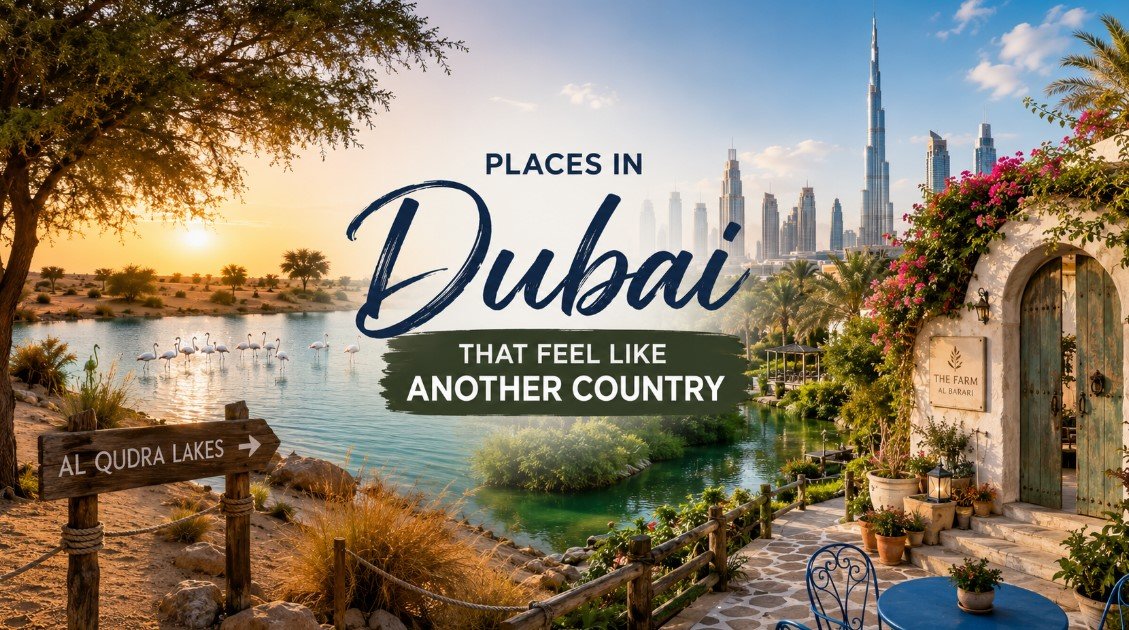
Places in Dubai That Feel Like Another Country: From a desert lake full of flamingos and black swans to a Berlin-style arts district in a warehouse — none of these are on the standard tourist map.
Most people who visit Dubai see roughly the same fifteen square kilometres: the Burj, the Mall, the Palm, a desert safari on the edge. Those things are worth seeing. But Dubai is a city of 3.5 million people from over 200 nationalities, and the parts they actually live in — the Indian streets of Bur Dubai, the Chinese trading floors of Al Awir, the artist warehouses of Al Quoz, the desert lakes south of the city — look nothing like the brochure.
The nine places below are all in or within an hour of Dubai. None require special access. Most are free or very cheap to enter. And all of them produce that specific feeling of looking around and having to remind yourself which country you’re in.
Places in Dubai That Feel Like Another Country
The World of Riverland (temporarily closed)
Feels like: Medieval France meets 1950s America — Jebel Ali, Dubai Parks and Resorts, 40 minutes from Downtown
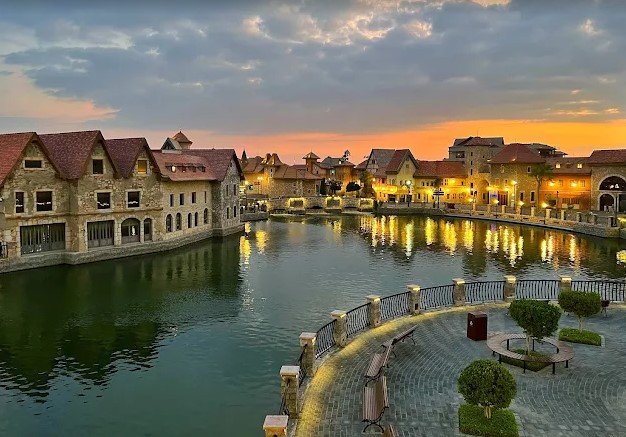
Riverland is the public walkway connecting Dubai Parks and Resorts’ theme parks, but you don’t need a theme park ticket to use it — entry to Riverland itself is free. What makes it worth mentioning here is the French Village zone specifically: cobblestone streets, a replica of a 16th-century Burgundian clock tower, stone archways, ivy-covered facades and riverside cafes that do a convincing impression of provincial France.
The Boardwalk section recreates 1950s American coastal towns with neon signage and palm trees, while India Gate channels Bollywood-era Mumbai with drummers and acrobat performances on weekends. None of it pretends to be authentic, but the French Village section in the early evening — when the river lights come on and the crowds thin — is genuinely atmospheric. Open daily from 10am, with the DPR1 bus running directly from Ibn Battuta Metro Station.
The Courtyard, Al Quoz
Feels like: A Cairene riad crossed with a sci-fi film set — Street 4B, Al Quoz Industrial Area 1
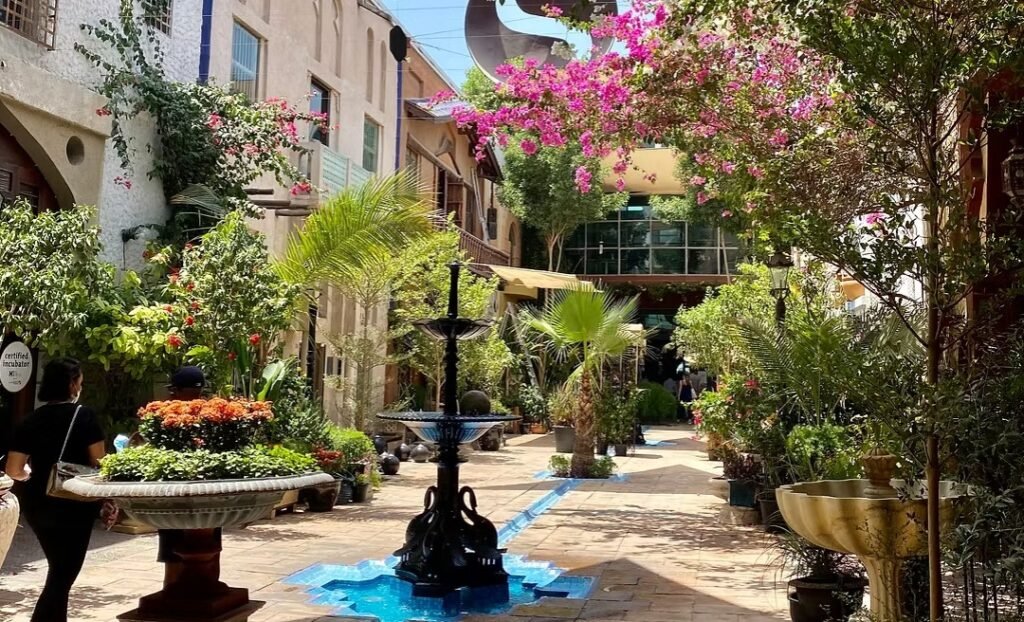
The Courtyard predates Alserkal Avenue by a decade. It was designed in 1998 by architect Dariush Zandi from salvaged materials collected over 25 years across the UAE and Gulf, and it shows — in the best possible way. Ten buildings flank a central courtyard, each façade telling a different architectural story.
The northern side draws from ancient Egyptian and Greco-Roman influences with traditional Cairene mashrabiya screens; the southern side goes somewhere closer to post-apocalyptic industrial. The whole thing is held together by stone-paved walkways, a bistro, a 70-seat theatre (The Courtyard Playhouse, the UAE’s first dedicated improv theatre), a coffee bar, boutique galleries, photography studios and artisan shops. It’s quieter and more intimate than Alserkal Avenue and considerably stranger architecturally, which is partly the point.
Free to enter; the Antique Museum next door on the same street spans 65,000 square feet of global vintage and is worth an hour of anyone’s time.
Century Village, Al Garhoud
Feels like: A pub garden in a European village — next to the Dubai Tennis Stadium, Al Garhoud
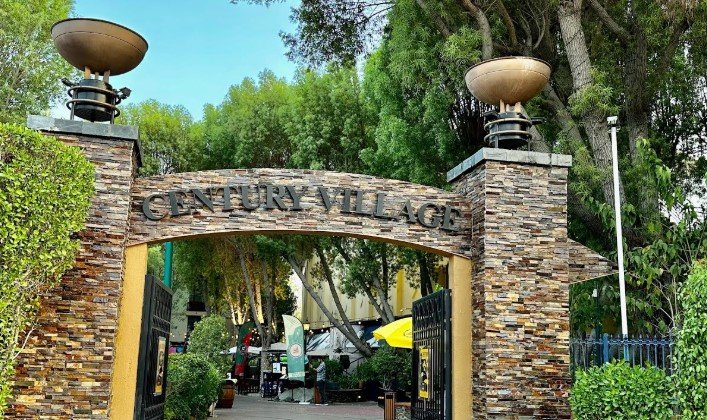
Century Village is an open-air outdoor dining and entertainment compound built around a cobblestoned courtyard, mature trees and a children’s playground. Eight or so restaurants and bars cluster around the central green — the Irish Village is the main anchor and the busiest spot by a considerable margin, particularly during the Dubai Tennis Championships when matches on the outer courts are free to watch from the terrace.
The overall feel is somewhere between a British beer garden and an outdoor European restaurant strip, especially in the cooler months when the trees are lit and the outdoor tables fill up. Live music, shisha and sports on screens keep it active well into the evening. Free to enter. Easily reached by car from the Dubai Airport area; limited public transport.
Vincitore Boulevard, Arjan.
Feels like: A side street in Rome — Arjan, Dubailand
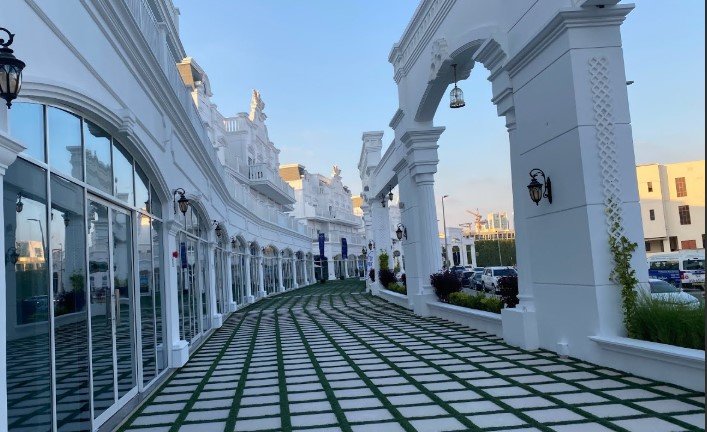
This one comes with an honest caveat: Vincitore Boulevard is a residential and mixed-use apartment building, not a publicly ticketed attraction. What brings people here is the exterior — ornate Roman-inspired stone carvings, arched windows, classical European facades and a ground-level courtyard with a wave pool that looks considerably more southern Italian than Dubailand.
The ground floor has retail outlets and restaurants including Pitfire Pizza. It’s an Instagram destination more than an experience, but the architecture is genuinely striking in a neighbourhood full of generic towers. If you’re in the area for Miracle Garden or the Butterfly Garden, it’s five minutes away and worth a walk past. The broader Arjan community has been filling in with cafes and casual dining, so the surrounding streets are increasingly worth an hour rather than just a drive-by.
Al Qudra Lakes
Feels like: The Kenyan Rift Valley, except it’s in the middle of a Dubai desert · Al Qudra Road (D63), Al Marmoom Desert Conservation Reserve — 45 minutes from Downtown
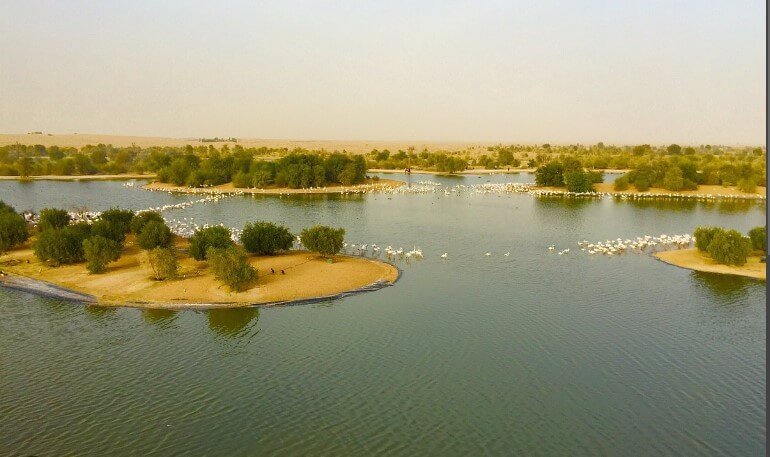
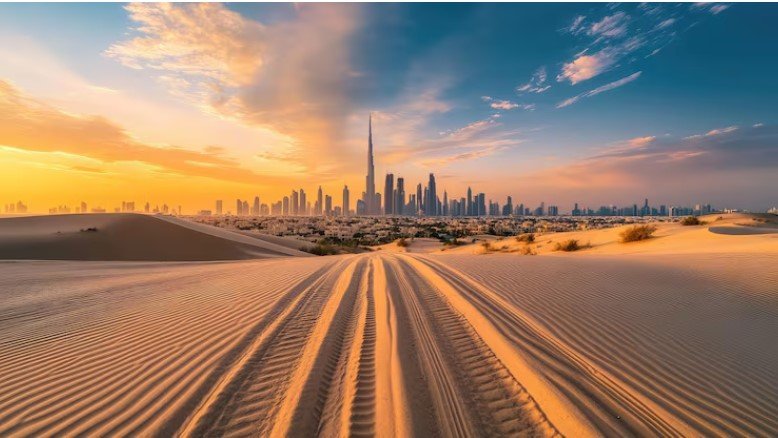
Here is a place that requires a brief suspension of disbelief. Al Qudra Lakes is a series of man-made lakes sitting in open desert, built as part of Dubai Municipality’s conservation programme to create a wetland ecosystem in one of the driest places on earth. It worked rather better than anyone expected. The lakes now host over 170 species of birds and animals — flamingos, black swans, ducks, herons, cormorants, the endangered Steppe Eagle, desert gazelles, Arabian oryx, and the occasional desert fox emerging from the dunes at dusk.
The setting is impossible to reconcile with the city forty-five minutes away. Flat water reflecting open sky. Dunes on all sides. Birds feeding in shallow margins. Complete silence except for wind and birdsong. There are no towers visible, no roads audible, no indication that you are in what is technically one of the world’s most visited cities. The Al Marmoom Desert Conservation Reserve surrounding the lakes spans over 40,000 hectares — around ten percent of Dubai’s total land area — which means the silence has real depth to it.
Flamingos appear in the largest numbers between November and March, but the lakes sustain birdlife year-round. Love Lake, about ten minutes from the main water bodies, is a pair of man-made heart-shaped lakes set into the landscape with basic facilities and a swing above the treeline. The surrounding 86-kilometre cycling track is one of the best in the UAE for early-morning desert riding. Entry is free. Overnight camping is permitted in designated zones — Dubai Municipality updated the rules in 2026 to require a short-term registration via the Dubai Now app for overnight stays. There are no restaurants at the lakes, but Last Exit Al Qudra sits nearby on the D63 for food and coffee. Car is the only realistic option to get there.
Visit Dubai guide: visitdubai.com — Al Qudra Lakes · Entry: Free
2. Mushrif Park
Feels like: An English national park or a New Zealand public forest — in east Dubai · Al Khawaneej Road (D89), near Mirdif — 30 minutes from Downtown
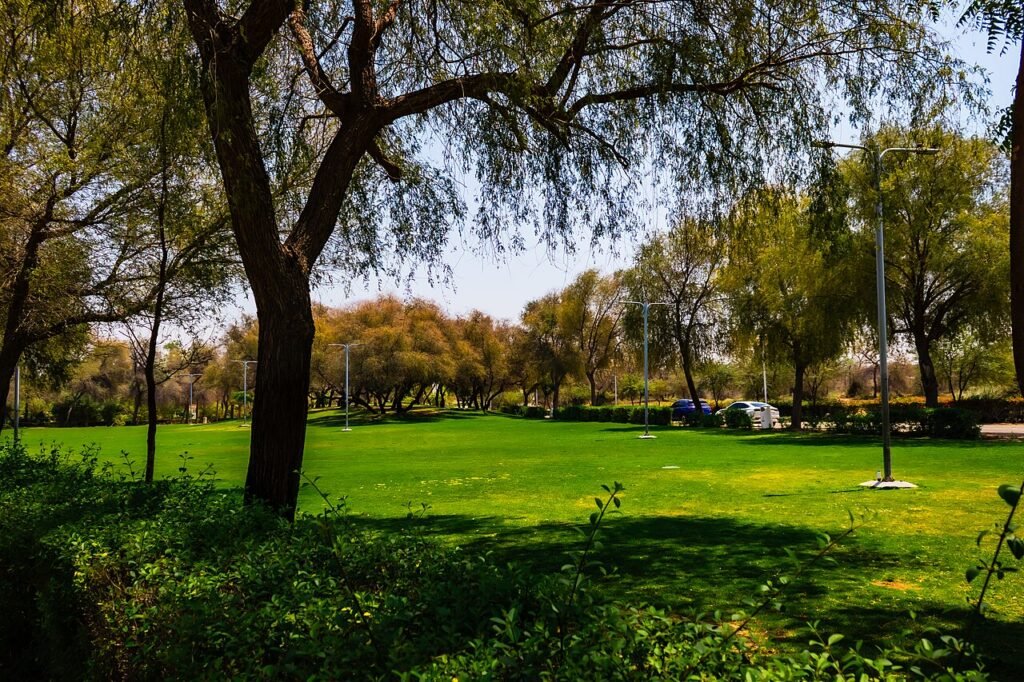
Most people who’ve lived in Dubai for years drive past the signs for Mushrif Park without stopping. That’s a mistake. What’s inside is genuinely different from every other green space in the city: a mature natural forest of over 70,000 indigenous Ghaf trees — the UAE’s national tree — covering 5.25 square kilometres of the Al Khawaneej area, with actual woodland canopy, 110 bird species, hiking trails, a cycling route and enough shade to make a summer morning comfortable.
It doesn’t look like Dubai. It doesn’t smell like Dubai. Walking the 10-kilometre trail through the Ghaf forest on a cool November morning, with migratory birds moving through the canopy and the occasional monitor lizard crossing the path, the surrounding city becomes genuinely hard to imagine. The park supports the Hoopoe, the Red-wattled Lapwing, the Indian Roller and dozens of migratory visitors that pass through during cooler months — serious birdwatchers come here with binoculars and come back repeatedly.
Mushrif also contains something that sounds almost satirically out of place and is actually wonderful: the International Village, a collection of 13 scale-model traditional houses from different countries — a German timber-frame house, a traditional Thai floating house, an English Tudor-style structure — set in the park grounds. It was built in the 1980s and has aged into something genuinely charming. The Al Thuraya Astronomy Centre, with the largest telescope in the region and a working planetarium, sits within the park as well. Entry is AED 3 per person or AED 10 per car, payable by Nol Card. The park opens at 8am and the hiking and mountain bike trails from 6am. Bus 11A from Centrepoint Metro Station stops directly at the entrance.
Park information: dm.gov.ae — Mushrif Park ·
3. Alserkal Avenue, Al Quoz
Feels like: East Berlin or East London on a Thursday evening · Street 8, Al Quoz Industrial Area 1 — 10 minutes from Downtown
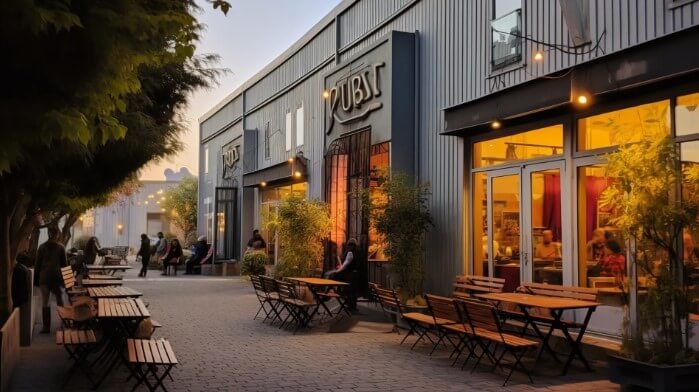
Somewhere between 2008 and now, a stretch of industrial warehouses in Al Quoz became one of the most genuinely surprising arts districts in the world. Alserkal Avenue spans 500,000 square feet and over 70 spaces: contemporary galleries running exhibitions that would fit comfortably in Berlin’s Mitte or London’s East End, an arthouse cinema — Cinema Akil, the first in the GCC — a vegan organic café, a rare bookshop, a French brasserie, a Korean home-cooking restaurant, a Japanese handroll bar, artisan chocolate makers and fitness studios doing cardio-barre in converted warehouse space.
None of it looks like Dubai. The buildings are low and industrial. The streets are walkable. There are no malls, no branded luxury, no towers in the background. On a Thursday evening — the traditional gallery opening night — the crowd is genuinely mixed in a way Dubai rarely manages: Emirati collectors, Iranian artists visiting from Tehran, European curators, South Asian art students, American gallerists. People stand outside arguing about the work and drinking Arabic coffee.
Entry is free. Most galleries open Saturday to Thursday, 10am or 11am to 7pm. Cinema Akil screens independent and world cinema throughout the week — tickets from AED 52.50. Nearest metro is Noor Bank on the Red Line followed by a five-minute taxi. Free parking inside the complex.
4. Meena Bazaar, Bur Dubai
Feels like: Old Delhi or central Mumbai · Al Fahidi Street, Bur Dubai — Al Fahidi Metro, Green Line
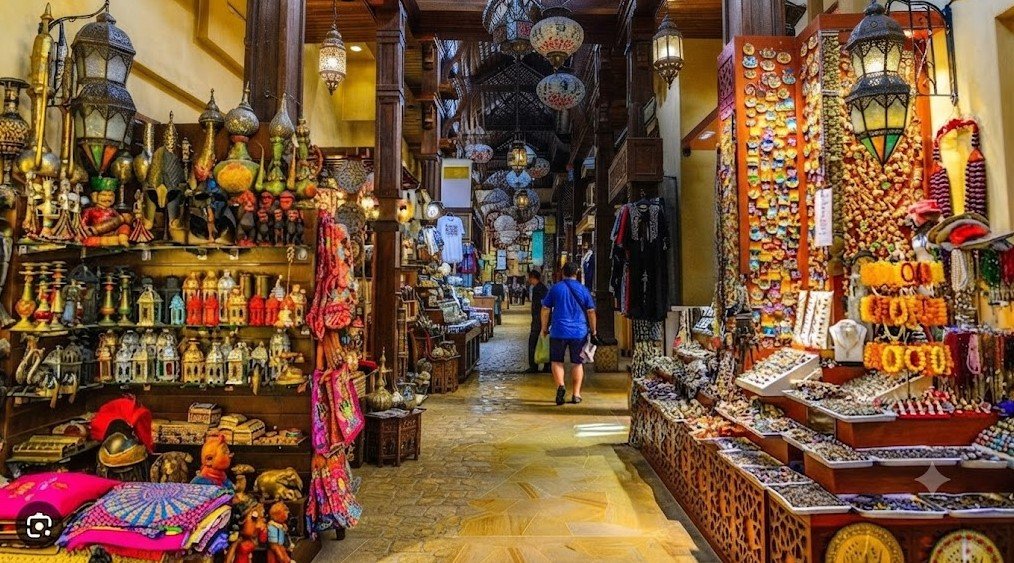
Walk off Al Fahidi Street into Meena Bazaar’s lanes and Dubai quietly steps aside. The streets narrow. The signage switches to Hindi, Urdu and Tamil. Speakers play film songs from storefronts. The smell shifts to chaat, samosas, spices and deep-fried things. A man at the corner sells chai from a small urn. Someone else is bargaining loudly in Punjabi three shops down.
Meena Bazaar has been Dubai’s Little India since the early 1970s, when it was still called Cosmos Lane. The name came later — a taxi driver who knew Delhi recognized the resemblance and the nickname stuck. Today it covers several streets around Al Fahidi with textile shops, jewellery traders, spice sellers, embroidery specialists and food stalls all stacked close together. Bargaining is not optional, it’s the transaction — you open, they counteroffer, you meet somewhere in the middle.
One honest warning: there is an organized herbal scam running near the KFC outlet in this area. A stranger approaches complimenting your hair or mentioning a weight remedy — the end of that conversation is a high-pressure shop and an inflated bill. Walk away immediately if anyone on the street starts a health conversation. The bazaar itself is perfectly safe; it’s a specific, well-documented grift that’s easy to spot once you know it exists.
Nearest metro: Al Fahidi Station, Green Line · Entry: Free · Open daily until midnight, Friday from 2pm
5. Dragon Mart, International City
Feels like: A wholesale district in Guangzhou or Shenzhen · International City Phase 1 — 25 minutes from Downtown
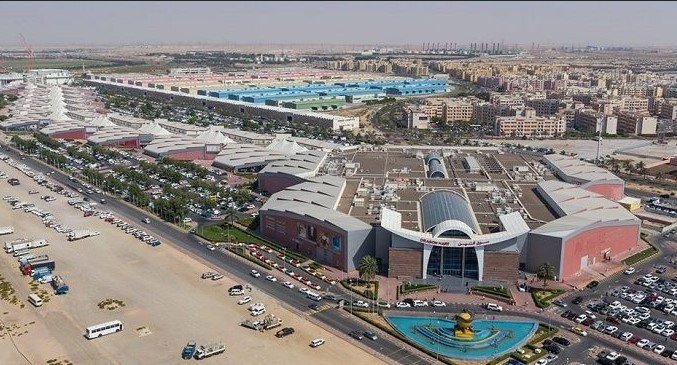
Dragon Mart is the world’s largest Chinese trading hub outside China itself. Two interconnected buildings — built in the shape of a dragon when seen from the air — house over 4,000 retail and wholesale outlets spread across roughly 153,000 square metres. Power tools, LED lighting, furniture, tiles, textiles, kitchenware, car parts, consumer electronics, printing equipment. If something can be manufactured in bulk, it’s probably here.
The transport environment is the thing that surprises most visitors. Inside, the corridors are long enough that staff use electric scooters to move between sections. The ambient sounds are Mandarin conversations, price negotiations and the noise of bulk goods changing hands. The food court runs almost entirely on Chinese cuisine — hand-pulled noodles, dumplings, stir-fries — and the menus are in Chinese first, Arabic second, English occasionally. Suppliers from across the Middle East come here to source stock; you’ll see buyers with trolleys loading samples, videocalling factories back home.
Opening hours and map: dragonmartdubai.ae · Daily 10am–10pm · Car recommended
6. Hatta
Feels like: An Omani mountain village — technically part of Dubai emirate · 75 km east of Dubai — 1 hour by car on the E44
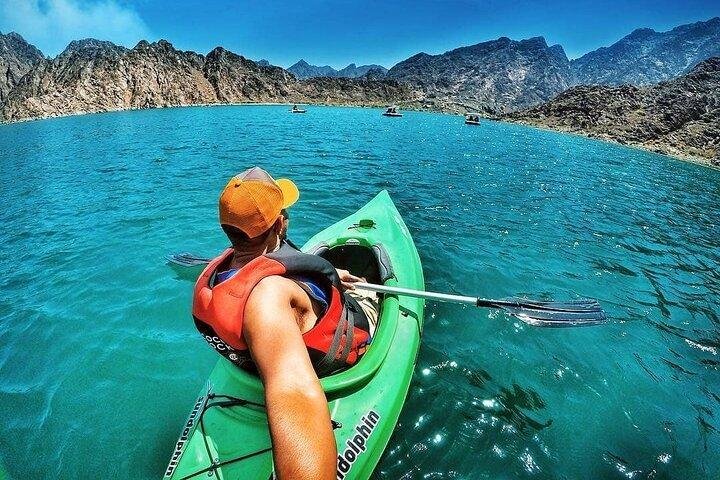
Hatta is officially part of Dubai emirate, which makes it one of the stranger geographical facts in the UAE — a mountain exclave surrounded on three sides by Oman, administered from a city that looks nothing like it. The landscape shifts about forty minutes into the E44 drive east: flat desert gives way to rocky terrain, then to the Hajar Mountains, then to a valley where the Hatta Dam sits reflecting the surrounding peaks in water that looks impossibly turquoise.
The Hatta Heritage Village is an outdoor museum of around 30 restored stone and mud-brick buildings dating from the early 18th century — watchtowers, a falaj irrigation channel, a traditional weaponry house, a mosque, residential spaces. These are the original structures of the village that existed before the modern road arrived. The mountain backdrop makes the whole setting look like a scene from a different century and a different country.
For those who want more than just looking, the dam offers kayaking, mountain biking trails cut through the surrounding hills and a cluster of eco-lodges and glamping sites for overnight stays. Temperatures here run five to ten degrees cooler than Dubai, which makes October to April the ideal window.
7. The Farm at Al Barari
Feels like: A Tuscan or Balinese garden restaurant · Al Barari, off Al Khail Road — 20 minutes from Downtown
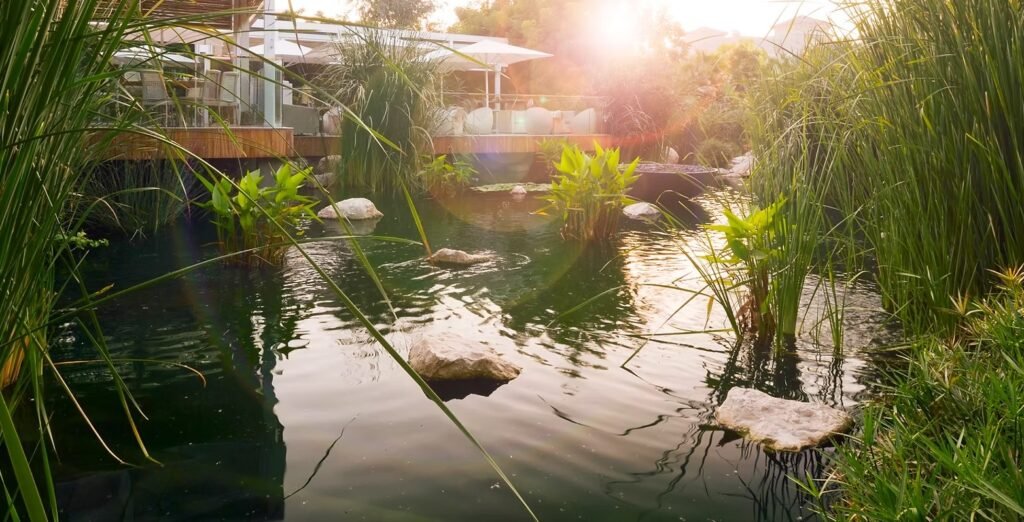
Al Barari is a residential development built around an exceptional network of waterways, botanical gardens and mature trees. Inside it, The Farm is a café-restaurant that has become one of Dubai’s genuinely best-kept secrets: a shaded outdoor space of lily ponds, wooden bridges, old trees and streams running through a garden that looks completely removed from any city.
The kitchen runs a farm-to-table menu with organic sourcing — vegetarian and vegan breakfasts, fresh juices, light lunches. Nothing here is loud or rushed. People come to sit for a long time, and the setting encourages exactly that. It’s the kind of place you find in rural Tuscany or Ubud — a restaurant built around its garden rather than the other way around. On a winter morning with the light coming through the canopy, it’s one of the most beautiful places to have breakfast in the UAE.
Open daily from around 8am through the afternoon and early evening. Easier to reach by car — parking inside Al Barari. Weekend mornings get busy, so a weekday visit gets a quieter table. Pets are welcome.
8. Ras Al Khor Wildlife Sanctuary
Feels like: A Kenyan lagoon — between Business Bay and the Creek · Ras Al Khor Road, off Al Khail Road — 15 minutes from Downtown
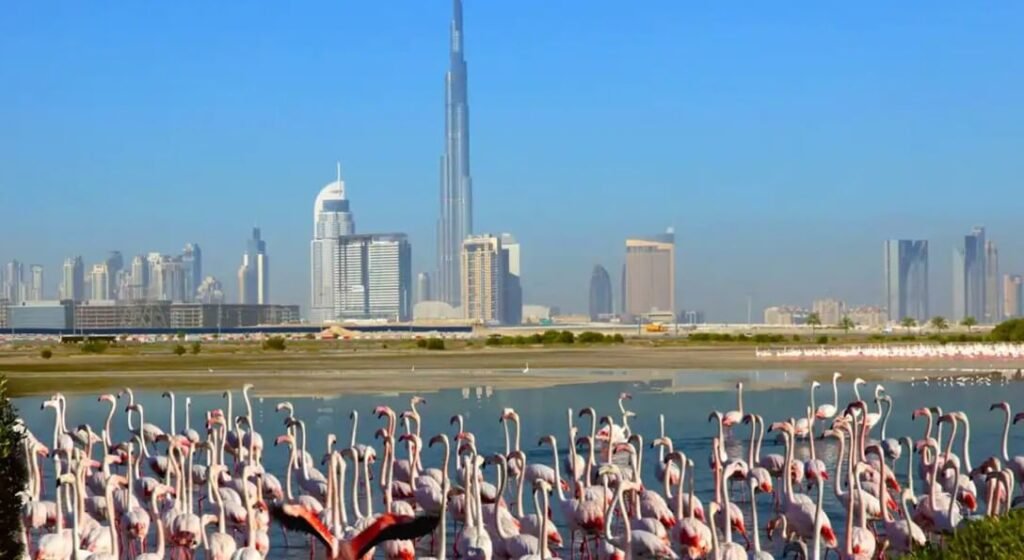
The most disorienting thing you can do in Dubai is stand at a wooden bird hide at Ras Al Khor at dawn in November and look through the viewing window. In front of you: several hundred flamingos standing in a shallow salt flat, wings catching the early light. Behind you, if you turn around: the towers of Business Bay. The cognitive gap between those two views is genuinely something.
Ras Al Khor is a 6.2-square-kilometre wetland reserve sitting inside the city boundaries, managed by Dubai Municipality and designated as a Ramsar site — an internationally recognised wetland of ecological importance. Besides the flamingos, which arrive in largest numbers from October through March, the sanctuary hosts over 450 species of wildlife including herons, egrets, osprey and migratory birds following the East Asian-East African flyway. Three bird hides along the eastern edge provide direct access.
9. XVA Art Hotel and Café, Al Fahidi
Feels like: A Moroccan riad or an Iranian caravanserai courtyard · Al Fahidi Historical Neighbourhood, Bur Dubai — Al Fahidi Metro, Green Line
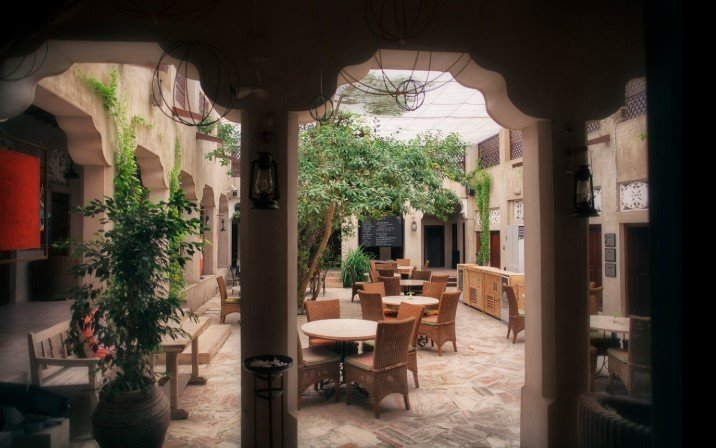
The Al Fahidi Historical Neighbourhood is well enough known. The XVA Art Hotel inside it is not. It occupies a cluster of converted windtower houses set around a central courtyard — shaded by fabric canopy panels, scented with Arabic coffee, surrounded by irregular pale stone walls with artists’ work on every surface. Mismatched wooden chairs and low tables. Complete quiet, which is rarer in Dubai than you’d expect.
Related : 19 Best Moroccan Restaurants In Dubai – An Insider’s Guide
XVA functions simultaneously as a boutique hotel (eleven rooms, each different), a contemporary art gallery focused on artists from across the Middle East and South Asia, and a café serving organic food, light meals and Arabic coffee. The café is open to non-guests every day. The gallery runs year-round with rotating exhibitions. Walking into the courtyard mid-afternoon on a weekday — after the tourist clusters in the neighbourhood have moved on — produces the particular sensation of having stumbled somewhere private. It doesn’t look like a modern city. It looks like a quiet riad in Fez or a courtyard caravanserai in Isfahan that a thoughtful collector has taken over and filled with art.
Gallery and café: xvahotel.com · Al Fahidi Metro, Green Line, 5-minute walk
How to Pair These Up
Some of these work naturally together. Meena Bazaar and XVA Café are both in Al Fahidi — you can walk between them in ten minutes and finish with an abra ride across the Creek. Ras Al Khor is fifteen minutes from the same area. Al Qudra Lakes and Mushrif Park both reward early morning visits during the cooler months, October to April, when wildlife is most active and the temperatures are manageable. Alserkal Avenue and The Farm are both south of Sheikh Zayed Road and make a good half-day combination. Dragon Mart and Hatta are separate, longer trips that earn their own day.
None of these places require booking in advance except The Farm on busy weekend mornings, and BarkPark if you’re going with a dog. For everything else, showing up is enough.