
Dubai changes July 2026 : From a new train route to expiring visas and a fresh round of summer discounts, here’s what’s actually changing in Dubai this month, sourced and fact-checked.
July in Dubai isn’t usually a quiet month, but this year it’s arriving with an unusually long list of dates that actually matter. Some of what’s changing is small, administrative housekeeping most residents won’t notice. Other parts, a new train route, a visa deadline, a travel perk about to expire, change something concrete about how people move around, fly, or run a business this month.
A few of these dates fall right at the end of June rather than technically inside July, but they shape the month enough to belong on this list regardless, particularly the visa and travel deadlines, which are the kind of thing that’s easy to miss until the fine print actually costs someone money or an extra trip to a government office.
1. Etihad Rail’s First Passenger Trains Start Running

After years of construction and freight-only operation, Etihad Rail opened its first passenger route on June 30, connecting Abu Dhabi’s Mohamed bin Zayed City station to Fujairah’s Al Hilal City station in one hour and 45 minutes. Sheikh Khaled bin Mohamed, Crown Prince of Abu Dhabi, inaugurated the Abu Dhabi station ahead of launch, and tickets for the earliest departures sold out within days of going on sale. Fares start at Dh55 for Comfort Class and Dh120 for Premium Class as part of an introductory discount.
Dubai’s own station, at Jumeirah Golf Estates, doesn’t open until September 30, alongside Al Dhaid in Sharjah. But Dubai residents don’t need to wait for that to use the service: bookings for the Abu Dhabi-Fujairah route are open now through the Etihad Rail app and website, which makes July a reasonable window to try the country’s first intercity passenger train without queuing for opening week. Onboard, the 13-train fleet offers Wi-Fi, charging points and snacks across Comfort and Premium classes, with the Mohamed bin Zayed City terminal already running retail outlets including Starbucks and WH Smith. Five more stations across Abu Dhabi’s Al Dhafra region follow on December 30, with Sharjah’s University City station completing the initial network on March 30, 2027.
2. Dubai Summer Surprises Returns for Its 29th Year

Dubai’s long-running summer festival is back from July 2 to August 30, organised by the Dubai Festivals and Retail Establishment under the theme “Make it a Dubai Summer.” This year’s edition includes its biggest prize line-up to date, with 12 residential units from Binghatti Developers worth more than Dh50 million given away through the new “Win Your Home in Dubai” campaign, alongside 35 cars, 3kg of gold and hundreds of thousands of dirhams in cash prizes.
Beyond the raffles, expect discounts of up to 90 percent across malls under the Great Dubai Summer Sale, the return of Modesh World at Dubai World Trade Centre, Summer Restaurant Week from July 13 to August 2 across more than 60 restaurants, and the Dh10 Dish promotion running through August at over 700 outlets. It’s the kind of programme that makes the summer heat easier to plan around rather than avoid entirely, particularly if you’re sticking around Dubai rather than travelling.
3. Schools Break for Summer

UAE public schools begin their summer break on July 3, once the 2025-2026 academic year ends, in line with the Ministry of Education’s calendar. Private schools in Dubai follow a slightly different schedule set by the Knowledge and Human Development Authority (KHDA), with most breaking up on July 6. Either way, the new academic year is set to begin on August 31, giving students close to a two-month break.
For parents, the practical effect shows up well before the holidays officially start: expect lighter traffic on Dubai’s main routes once schools close, and a sharp jump in demand for flights and family activities through the summer months, exactly the kind of gap Dubai Summer Surprises is designed to fill for families staying local. It’s also worth checking with your child’s specific school directly, since exact closing dates can vary by a few days between curricula and individual institutions even within the same KHDA framework, and many schools run their own paid summer camps for families who’d rather keep a routine going through July and August.
4. Dubai’s Public Sector Shifts to Flexible Summer Hours
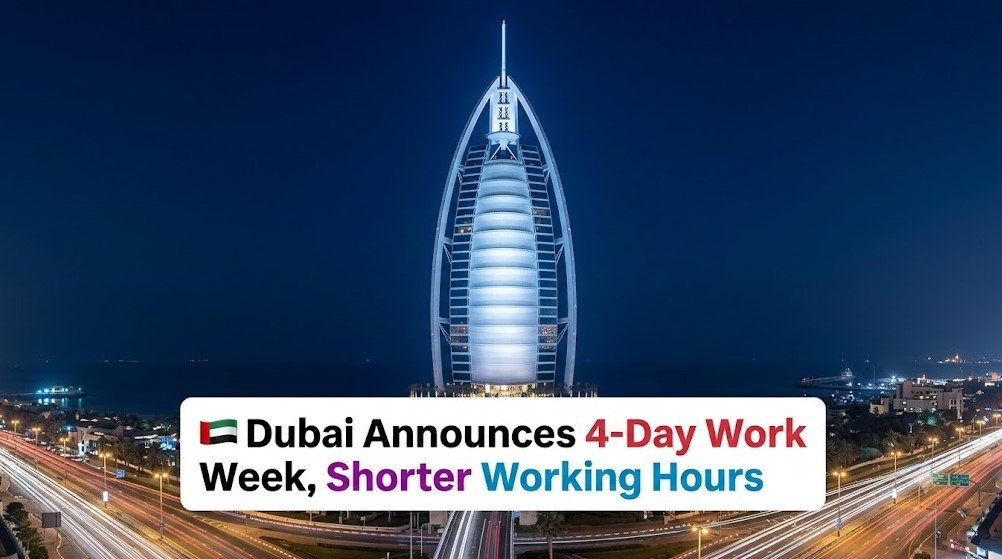
The 2026 edition of Our Flexible Summer, run by the Dubai Government Human Resources Department, began on June 29 and runs until September 10, marking the third consecutive year the scheme has applied across Dubai government entities. Employees are split into two groups: one works seven-hour days from Monday to Thursday plus four and a half hours on Friday, while the other works eight-hour days from Monday to Thursday and takes Friday off entirely, effectively a four-day week for that group.
The scheme is aimed at government staff rather than the private sector, so it won’t change anyone’s contract by default. But it’s worth knowing if you deal with government entities for paperwork or services this summer, since processing times and counter hours at some offices may shift accordingly, and it adds to a broader pattern: Sharjah already runs a permanent four-day week, and the UAE federal government has worked a four-and-a-half-day week since 2022.
5. Emirates’ Free Five-Star Hotel Stay Offer Is About to Expire

Emirates’ summer stopover promotion, offering a complimentary stay at the JW Marriott Marquis Hotel Dubai, closes its booking window on July 12. To qualify, travellers need to purchase a return Emirates ticket to or through Dubai between June 22 and July 12, with the actual travel falling between June 25 and September 30. First and Business Class passengers get two complimentary nights; Premium Economy and Economy passengers get one. The offer applies to passengers ending their journey in Dubai as well as those stopping over for more than 24 hours.
Emirates is also bringing back My Emirates Pass for the summer, which gives boarding pass holders access to more than 600 discounts at restaurants, spas and attractions across the city. If you’ve got a trip to or through Dubai already in mind for later this year, booking before July 12 is the only way to lock in the free hotel stay, since the offer can’t be claimed retroactively on existing bookings.
6. The UAE’s Visa Grace Period Closes July 9
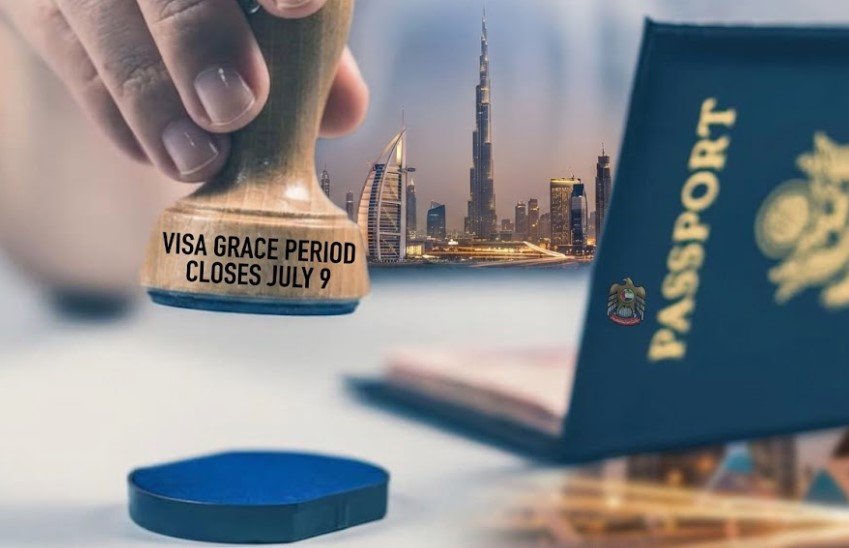
The Federal Authority for Identity, Citizenship, Customs and Port Security (ICP) has set July 9 as the deadline for a 30-day grace period that began on June 10. It’s worth being precise about who this actually covers: it isn’t a general amnesty for anyone with an expired visa. It applies specifically to people who were already exempted from overstay fines earlier in the year because airspace closures and flight suspensions, starting February 28, left them unable to leave the UAE or renew their status in time.
If that exemption applied to you, the window to either regularise your residency or employment status, or to depart the country without penalty, closes on July 9. The ICP has said no further extension is planned, and standard overstay fines resume in full for this group after the deadline. Anyone unsure whether they fall into this category should check directly through the ICP’s official channels rather than assume either way.
7. Armenia’s Temporary Visa Exemption for UAE Residents Lapses
A separate, easily confused deadline falls on July 1: Armenia’s temporary visa exemption for holders of UAE residence permits from 113 nationalities is due to expire. This isn’t the same as Armenia’s longstanding visa-free arrangement for UAE citizens, which dates back to 2017 and isn’t affected. The exemption ending on July 1 is the newer, broader one: it let non-Emirati residents of the UAE, including large communities such as Indian, Pakistani and Filipino expats, enter Armenia without a visa for stays of up to 180 days, using only their UAE residence permit.
If you’re a UAE resident planning an Armenia trip and don’t hold an Armenian passport-free nationality in your own right, it’s worth checking Armenia’s Ministry of Foreign Affairs guidance before booking anything after July 1, since the standard e-visa requirements (a small fee and a few days’ processing) would otherwise apply again. Armenia’s government has said the measure could be extended or replaced, so this is one to watch rather than treat as permanently closed.
8. Visa-on-Arrival Expands for Six More Nationalities
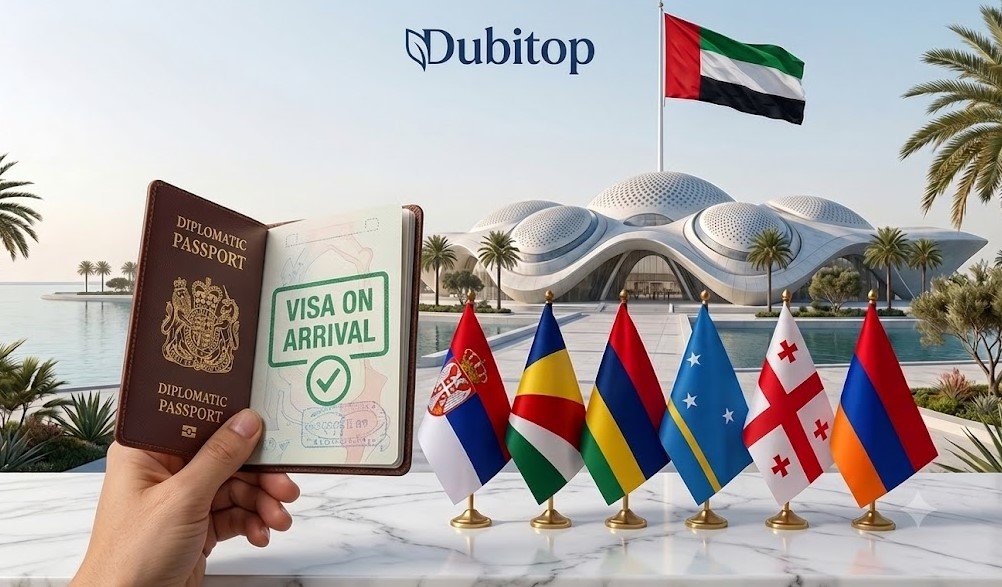
Just ahead of July, the UAE extended its visa-on-arrival programme to citizens of Indonesia, Vietnam, Thailand, the Philippines, Kenya and South Africa, effective June 25. It isn’t unconditional: eligible travellers need to hold a valid visa, residence permit or Green Card from an approved list of countries, including the US, UK, EU member states, Australia, Canada, Japan, Singapore, South Korea or New Zealand. Two options are available on arrival, a 14-day visa for Dh100 (extendable once for an additional 14 days at Dh250) or a non-extendable 60-day visa for Dh250.
For context, the UAE is home to an estimated 660,000 Filipino residents, one of the largest overseas Filipino communities anywhere, so the change is likely to be felt quickly through family visits and returning travellers this summer. It’s a genuinely new option rather than a minor tweak: previously, citizens of these six countries needed a pre-arranged visa through a sponsor, airline or travel agency regardless of what other visas they held.
9. UAE Businesses Begin the Move to E-Invoicing

On the corporate side, the Ministry of Finance’s e-invoicing pilot phase begins on July 1, opening voluntary adoption for businesses that want to start testing the new system ahead of mandatory rollout. The framework, built on the Peppol network’s five-corner model, will eventually require structured digital invoices exchanged through accredited service providers rather than the PDFs and paper records most businesses use today.
The mandatory timeline is staggered by revenue. Businesses earning Dh50 million or more annually must appoint an accredited service provider; the Ministry recently pushed that deadline back from July 31 to October 30, 2026, though full implementation for that group still goes live on January 1, 2027. Smaller businesses and government entities follow later, with mandatory compliance from July and October 2027 respectively. If you run a business in Dubai anywhere near that Dh50 million threshold, July is a reasonable point to start the impact assessment, even with the later deadline now in place.
Also Worth Knowing
A couple of smaller changes fall just outside Dubai’s borders but affect plenty of people who live or work in the emirate:
- Sharjah parking hours extend to midnight: from July 1, paid parking zones in Sharjah city, Kalba, Khorfakkan and Al Dhaid charge fees until midnight, unifying timings that previously varied between yellow and blue sign zones. Worth knowing if you commute into Sharjah or park there in the evenings.
- New passport provider for Indian expats: the Indian Embassy has named Alhind Tours and Travels LLC as the sole outsourced provider for passport, visa and consular services across the UAE from July 1, replacing BLS International and SGIVS Global. The change affects more than 3.5 million Indian nationals in the UAE, with new dedicated centres planned across all seven emirates, including Dubai.
None of these changes are huge on their own, but stacked together they’re a reasonable snapshot of where Dubai is heading this year: a transport network finally opening to passengers, a tax system going digital, and a visa landscape that keeps shifting in small but consequential ways. Worth bookmarking this one and checking back as the details firm up, particularly around the visa deadlines, since those are the items most likely to actually cost someone money if missed.
If there’s one practical takeaway across all nine items, it’s that July rewards people who check the actual official source rather than the version of the story that’s been passed around a few times. Visa rules in particular tend to get simplified into something punchier than what the ICP or a foreign ministry actually announced, and the gap between the two is usually where someone ends up overstaying a deadline or missing a booking window by mistake.
Treat the dates above as a starting point, and confirm anything time-sensitive directly with the relevant authority before it affects your plans.