Dubai is no stranger to hosting the world. From finance summits at the Dubai International Financial Centre to tech gatherings at the Museum of the Future, the emirate has built a reputation as the Middle East’s default destination for global conversations that actually matter. But come November 2026, the city is raising the bar once again.
Sheikh Hamdan bin Mohammed bin Rashid Al Maktoum, Crown Prince of Dubai, Deputy Prime Minister and Minister of Defence, has directed the Dubai Future Foundation to launch a brand-new annual flagship event. It is called Dubai Future Week, and it is designed to be exactly what its name suggests: a concentrated, high-energy platform where the people shaping tomorrow’s economies, technologies, and societies gather in one place to share ideas and forge partnerships.
The inaugural edition will run from November 18 to 21, 2026, across two of Dubai’s most iconic venues: Emirates Towers and the Museum of the Future. Organisers expect more than 10,000 participants, including investors, policymakers, entrepreneurs, technologists, futurists, scientists, and innovators from around the world. If you are even remotely interested in where the world is heading, this is the week to be in Dubai.
Dubai Future Week
What Is Dubai Future Week?
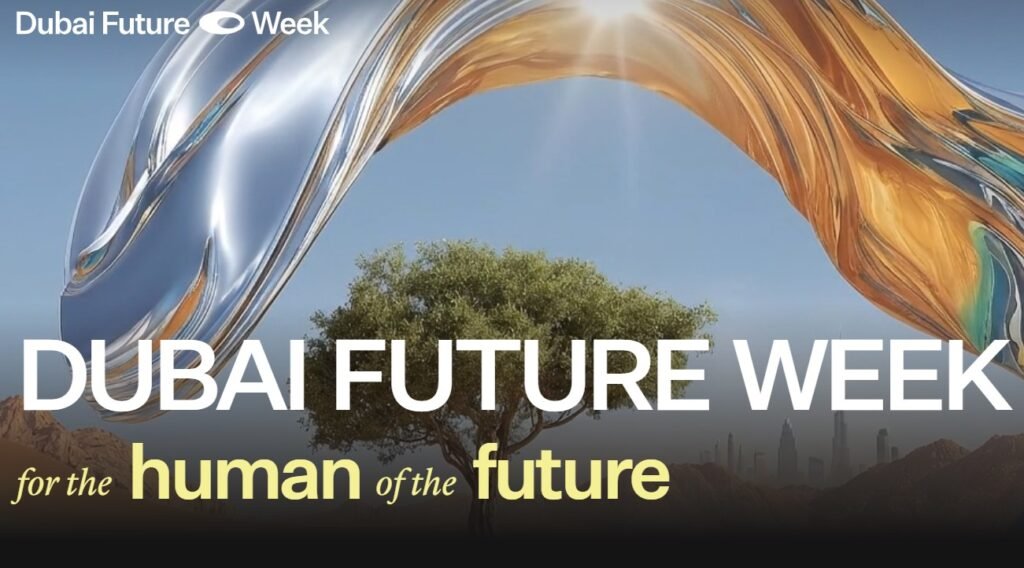
At its core, Dubai Future Week is a consolidation of several established events and initiatives that were previously hosted separately by the Dubai Future Foundation. Rather than running a scattered calendar of conferences throughout the year, the foundation is bringing them under one umbrella to create a unified, immersive experience.
The week will incorporate the Dubai Future Forum, Dubai AI Week, the AI Grandmaster competition, the Dubai Foresight Awards, and the Dubai Future Solutions exhibition, which features prototypes for humanity. It will also include TED Talks, workshops, idea pitches, international challenges, immersive experiences, and closed-door discussions that are not open to the public.
The tagline for the event is “For the Human of the Future.” That phrase is not just marketing fluff. It signals a deliberate shift in how these conversations are framed. Instead of treating artificial intelligence, robotics, or quantum computing as isolated technical subjects, the programme examines how those technologies will actually affect the way people live, work, learn, and feel. The human experience is the lens, not the afterthought.
Related: Top 10 Requirements for the UAE Digital Nomad Visa
Who Announced It and Why It Matters
Sheikh Hamdan announced the event on September 1, 2026, through his official channels. In his statement, he made it clear that this is not a one-off experiment. He wants Dubai Future Week to become an annual milestone and a defining global meeting point.
He described Dubai as a place where future visions meet the minds capable of turning them into reality. He emphasised that emerging ideas should evolve into solutions that make a tangible difference in people’s lives. The goal, he said, is to place people at the heart of the future and explore how humanity will live, think, innovate, and work in the decades ahead.
That vision aligns with Dubai’s broader trajectory. Under the leadership of His Highness Sheikh Mohammed bin Rashid Al Maktoum, Vice President and Prime Minister of the UAE and Ruler of Dubai, the emirate has spent years positioning itself as a testbed for emerging technologies and a hub for future-focused policymaking. Dubai Future Week is the next logical step in that strategy. It is a platform designed to attract not just headlines, but real investment, real partnerships, and real talent.
When and Where It Happens
The dates are set for November 18 to 21, 2026. That is four full days of programming, with events running across multiple spaces at Emirates Towers and the Museum of the Future.
Emirates Towers has long served as a business and government hub in Dubai, and it provides the formal conference infrastructure for keynote addresses, panel discussions, and closed-door roundtables. The Museum of the Future, with its reputation as one of the most visually striking buildings on the planet, offers a more experiential setting for exhibitions, immersive activations, and public-facing showcases.
Using both venues allows the organisers to cater to different audiences simultaneously. Serious investors and government officials can conduct high-level meetings at Emirates Towers, while the general public, students, and startup founders engage with hands-on demonstrations and pitch competitions at the Museum of the Future.
The Five Tracks: What Will Actually Be Discussed?
The programme is structured around five human-centred tracks. Each one is designed to bridge the gap between emerging technology and everyday life.
How We Will Live examines the future of homes, cities, mobility, and longevity. Expect conversations about climate-resilient infrastructure, net-zero buildings, nature-based urban solutions, and the redesign of public spaces. Topics like rewilding, ocean health, and ecosystem regeneration will also feature, reflecting a growing awareness that the future of urban life is inseparable from environmental sustainability.
How We Will Think focuses on intelligence, learning, and knowledge in the age of AI. This track will explore the future of education, human cognition, and decision-making. Speakers will discuss the skills future generations will need, how artificial intelligence is changing the way people access and interpret information, and why critical thinking and media literacy are becoming essential survival tools.
How We Will Innovate looks at robotics, automation, and intelligent machines. It also covers quantum computing, synthetic biology, materials science, and space technologies. But the track goes beyond pure tech. It asks who controls these innovations, who benefits from them, and how societies should govern their development.
How We Will Feel centres on healthcare, wellbeing, and human performance. Discussions will span diagnostics, longevity science, mental health, biotechnology, and the wellness economy. Food and agriculture also fall under this track, including vertical farming, lab-grown proteins, and AI-enhanced supply chains. The focus is on how these developments could affect health, quality of life, and the everyday experience of future generations.
How We Will Do Business brings together entrepreneurs, investors, and business leaders to discuss the forces transforming finance, capital, and employment. Topics include decentralised economies, responsible AI in business, startup ecosystems, evolving regulatory frameworks, and the changing relationship between risk and return. The track will examine what these shifts mean for people as employees, entrepreneurs, and consumers.
Who Will Be There?
The participant list is intentionally broad. Organisers expect more than 10,000 attendees, drawn from multiple sectors and geographies. The audience will include leading inventors, innovators, experts, investors, policymakers, entrepreneurs, and technologists.
What makes the crowd interesting is the mix. You will have government officials from the UAE and abroad sitting alongside venture capitalists, research scientists, startup founders, and corporate executives. That cross-pollination is by design. Dubai Future Week is meant to be a place where public-sector ambition meets private-sector execution, and where theoretical research collides with commercial application.
For investors, the event offers a concentrated pipeline of startups and scale-ups to evaluate. For entrepreneurs, it offers access to capital, mentorship, and potential government partnerships. For researchers and academics, it offers a platform to present findings to an audience that can actually fund their next project.
Why Dubai Is Hosting This Now
The timing is not accidental. The world is in the middle of a technological inflection point. Artificial intelligence has moved from research labs to consumer products in the span of a few years. Quantum computing is approaching commercial viability. Climate pressures are forcing cities to rethink how they are built and powered. And the global competition for talent, investment, and intellectual property is intensifying.
Dubai has spent the last decade building the physical and regulatory infrastructure to host exactly this kind of conversation. The city already runs Dubai AI Week, which in its 2025 edition attracted more than 30,000 experts and participants from over 100 countries. It already hosts the Dubai Future Forum, which has become a respected gathering for foresight professionals. By merging these events and adding new components, the Dubai Future Foundation is essentially creating a super-conference that no other city in the region can currently match.
Sheikh Hamdan explicitly framed the event as a call for international collaboration. He said the world needs a new era of cooperation that accelerates the use of technology in service of people and societies. That requires directing investment and strategies toward innovations that advance human wellbeing and enhance quality of life. In other words, Dubai is not just offering a venue. It is offering a narrative, one that places human outcomes at the centre of technological progress.
What Makes This Different from Other Tech Conferences?
Plenty of cities host innovation conferences. What sets Dubai Future Week apart is the integration of multiple event formats under one organisational umbrella and the deliberate blending of public, private, and academic participation.
Most conferences are either trade shows, where companies pitch products, or policy forums, where officials make speeches. Dubai Future Week is trying to be both, plus an exhibition space, plus a competition venue, plus a public activation. The inclusion of TED Talks gives it a mainstream cultural dimension. The AI Grandmaster competition adds a competitive, talent-spotting element. The Prototypes for Humanity exhibition ensures that visitors see physical demonstrations of emerging technology, not just PowerPoint presentations.
The closed-door discussions are another differentiator. While much of the programme will be open and publicly accessible, certain sessions will be restricted to invited participants. Those rooms are where the deals are likely to happen. Government-to-government agreements, venture capital term sheets, and strategic partnerships between multinationals and local entities often emerge from the conversations that do not make it onto the livestream.
What to Expect If You Attend
If you are planning to be in Dubai during those four days in November, expect a city that is unusually focused on the future. Hotels near Emirates Towers and the Museum of the Future will fill up quickly. Traffic patterns will shift to accommodate the influx of international visitors. And the conversation in coffee shops, co-working spaces, and business lounges will revolve around the same questions being debated on stage.
For residents, there will likely be public activations, student programmes, and exhibition spaces that do not require a conference badge. For business visitors, the value will come from the networking density. Having ten thousand decision-makers in one city at one time creates opportunities that simply do not exist when those same people are scattered across time zones and Zoom calls.
How to Get Involved
Official registration details, speaker announcements, and programme schedules have not been fully released yet. The Dubai Future Foundation is expected to roll out these details in the weeks and months leading up to November. If you are interested in attending, the best starting point is to monitor the official Dubai Future Foundation channels and the event’s dedicated website once it launches.
For companies looking to sponsor, exhibit, or pitch, there will likely be an application process for each component of the week. The AI Grandmaster competition, for example, will require separate registration from the general conference. The Dubai Foresight Awards will have its own nomination timeline. If you have a specific agenda, it pays to plan early and target the right track for your sector.
Final Thoughts
Dubai Future Week is more than a calendar entry. It is a statement of intent. By bringing together more than 10,000 global leaders, investors, and innovators in one place, Dubai is reinforcing its position as the region’s undisputed capital of future-focused thinking. The event combines scale with substance, offering everything from high-level policy debates to hands-on technology demonstrations.
For the emirate, it is a chance to showcase what years of strategic investment in infrastructure, regulation, and talent have built. For the world, it is an invitation to participate in shaping what comes next. And for anyone who believes that the future is not something that simply happens but something that can be designed, it is a reminder that Dubai intends to be in the design room, not just watching from the sidelines.
If you are serious about understanding where technology, business, and human society are heading, mark November 18 to 21 on your calendar. Dubai is not just predicting the future this time. It is building the stage where the future will be negotiated.