
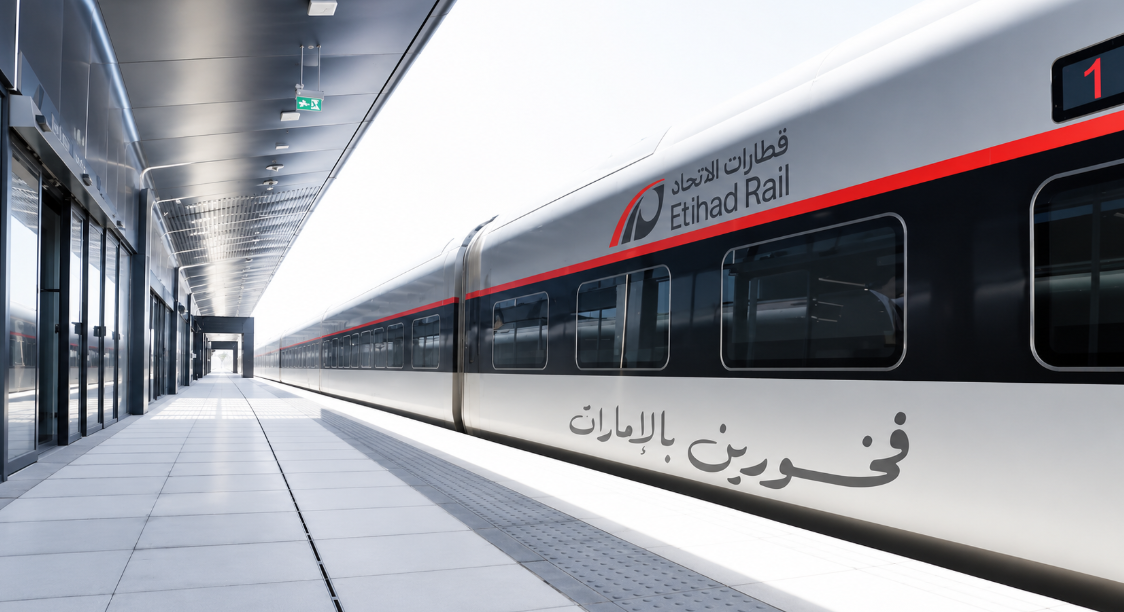
Etihad Rail Guide: Everything confirmed so far about the UAE’s first passenger rail route, the fares, the stations, and what’s worth doing once you arrive.
For most of the past decade, getting between Abu Dhabi and Fujairah has meant a steering wheel, a flask of coffee and the better part of three hours on the road through Al Ain or the mountain passes near Hatta. That changes on Tuesday, 30 June, when Etihad Rail opens its first passenger route, cutting the journey to one hour and 45 minutes and putting the UAE on a short list of Gulf countries with an operating domestic train network built for people rather than cargo.
The appetite for it has been immediate. Within two days of tickets going on sale, more than 5,000 seats had already been booked, and several early departures sold out within hours of release. That kind of demand says something about pent-up interest in an alternative to the drive, and it’s worth understanding exactly what’s opening, what it costs, and how the wider network is expected to grow, because this is only the first of several launches planned before the end of the decade.
Related : Top 10 Things About Etihad Rail That Will Change How You Travel the UAE
Etihad Rail Guide Table:
A National Project Two Decades in the Making
Etihad Rail isn’t a new operator suddenly discovering trains. The company was established in 2009 under federal law to build and run the UAE’s national rail network, and its freight side has been operating quietly since 2016, when the first stage began moving granulated sulphur from the gas fields at Shah and Habshan to the port at Ruwais.
A second, far larger stage, running 605 kilometres from the Saudi border at Ghuwaifat all the way to Fujairah on the east coast, opened in 2023 and turned Etihad Rail into a genuinely national freight backbone. By the operator’s own estimates, a single fully loaded freight train removes the equivalent of roughly 300 trucks from the road on each run.
Passenger services sit alongside that freight network as one pillar of the UAE Railway Programme, launched under the Projects of the 50 with a stated investment of AED 50 billion and a forecast economic opportunity of around AED 200 billion for the country.
The Ministry of Energy and Infrastructure acts as the regulatory and planning authority over the wider network, while Etihad Rail itself is jointly owned by the Abu Dhabi government and the UAE federal government. The programme’s long-term goal, once the passenger side is complete, is to connect 11 cities and regions running from Al Sila in the western region of Abu Dhabi through to Fujairah on the Gulf of Oman coast, with trains running at up to 200km/h.
What launches on 30 June is the first working slice of that plan: one route, two stations, and a fleet that has been years in the building.
The Abu Dhabi–Fujairah Route: What’s Actually Opening
Two stations go live on 30 June: Mohamed bin Zayed City in Abu Dhabi and Al Hilal City in Fujairah, the latter fittingly the first station completed anywhere on the network. Travel time between them is one hour and 45 minutes, replacing a drive that typically runs two and a half to three hours depending on traffic through the mountains.
Etihad Rail’s commercial leadership has been candid about why this particular route, rather than the more obviously commuter-heavy Abu Dhabi–Dubai corridor, was chosen to launch first. Adhraa Almansoori, Executive Director of Commercial at Etihad Rail Mobility, has pointed to the terrain itself: the line crosses open sand before climbing into the Hajar Mountains via a series of bridges and tunnels, making it a genuine engineering proving ground ahead of the flatter, denser corridors still to come.
It also lets the operator test what transport planners call the last-mile problem, the connections that get a passenger from the station to wherever they’re actually headed, on a route built largely for leisure travel before applying those lessons to a route built largely for commuters.
That distinction in purpose is deliberate. The Fujairah service is expected to draw weekend travellers and day-trippers from the capital and beyond, while the future Dubai route is being built with business commuters in mind.
Quick facts: Abu Dhabi–Fujairah launch
- Launch date: Tuesday, 30 June 2026 . Stations: Mohamed bin Zayed City, Abu Dhabi, to Al Hilal City, Fujairah
- Journey time: 1 hour 45 minutes
- Launch fares: Dh55
- Comfort Class, Dh120 Premium Class (50% introductory discount)
- Standard fares thereafter: Dh109 Comfort Class, Dh239 Premium Class
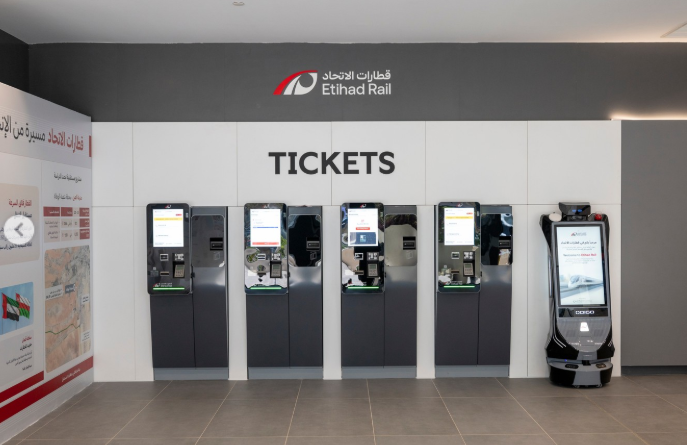
- Booking: Etihad Rail app, website, station vending machines or Contact Centre
How the Rest of the Network Will Open
The Abu Dhabi–Fujairah line is the opening chapter, not the whole book. Etihad Rail has set out a phased rollout for the remainder of the initial 11-station network:
| Date | What opens |
| 30 June 2026 | Mohamed bin Zayed City (Abu Dhabi) and Al Hilal City (Fujairah) |
| 30 September 2026 | Jumeirah Golf Estates (Dubai) and Al Dhaid (Sharjah) |
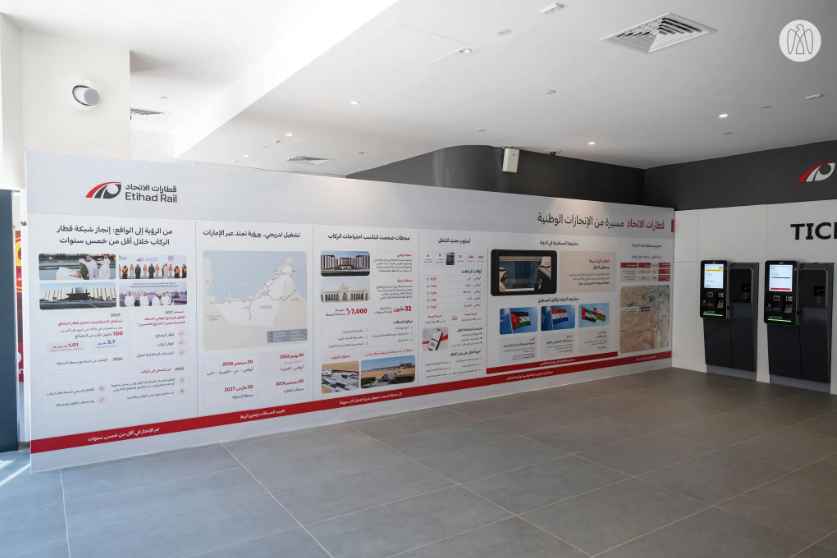
| 30 December 2026 | Al Sila, Al Dhannah, Al Mirfa, Madinat Zayed and Liwa (Al Dhafra region, Abu Dhabi) |
| 30 March 2027 | University City (Sharjah), completing the initial network |
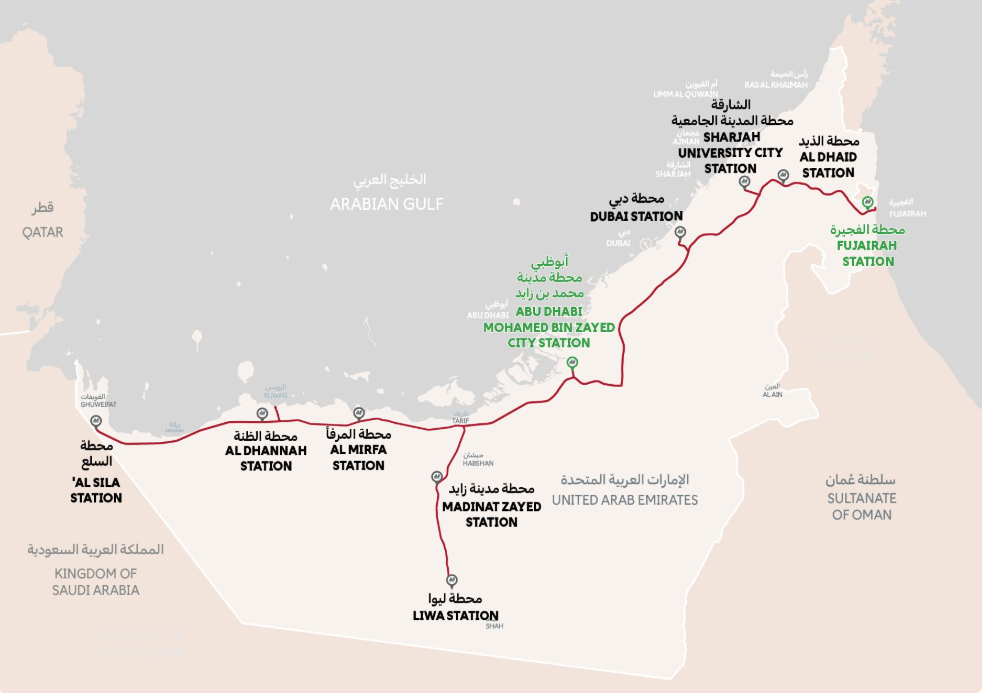
Once the full initial network is running, Etihad Rail expects to carry up to 36.5 million passengers a year (by 2030), with journey times between major hubs cut by somewhere between 30 and 40 percent compared with driving. A separate high-speed line between Abu Dhabi and Dubai, a roughly $8 billion first phase capable of 350km/h running, is already under contract for delivery by 2030 and would eventually bring that specific city-to-city trip down to about 30 minutes, well below the 57-minute journey time expected on the standard passenger line.
There’s a cross-border element in the pipeline too. Hafeet Rail, a joint venture between Etihad Rail, Oman Rail and Mubadala Investment, will eventually link Abu Dhabi to Sohar in Oman in around 1 hour 40 minutes, with a shorter Al Ain–Sohar leg taking under 50 minutes, part of a wider ambition to eventually connect the UAE by rail to its GCC neighbours.
For readers in Ras Al Khaimah and the Northern Emirates, there’s no confirmed passenger station yet, though the existing freight corridor already threads through the emirate on its way down to Fujairah. Etihad Rail has said feasibility studies are under way to evaluate extending passenger services to additional emirates beyond the initial 11 stations, so it’s a development worth watching rather than expecting in the near term.
Tickets, Fares and Travel Classes
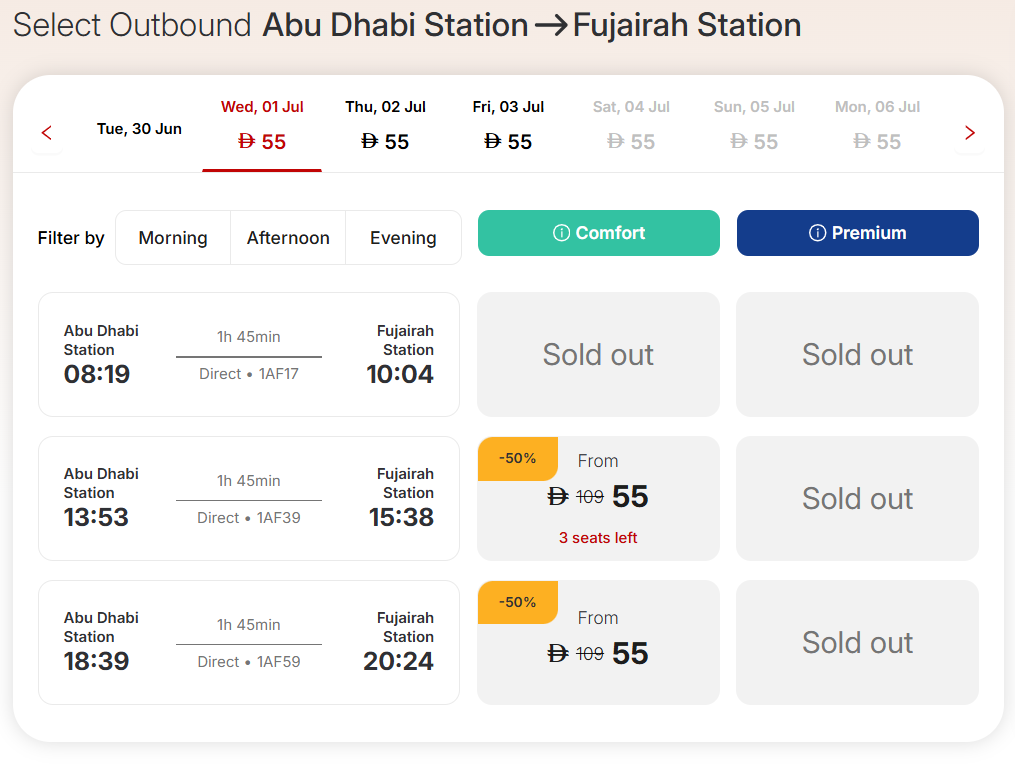
Etihad Rail runs two classes, Comfort and Premium, rather than the three-tier economy-business-first split travellers might expect from a regional flight. Comfort includes guaranteed seating, Wi-Fi, a power point at every seat and generous luggage space. Premium adds wider seats, extra legroom, reclining seats, complimentary snacks and beverages, priority boarding and, where available, access to a premium lounge.
| Class | Introductory fare | Standard fare |
| Comfort Class | Dh55 | Dh109 |
| Premium Class | Dh120 | Dh239 |
On top of the class, three fare tiers determine how much flexibility you’re buying rather than how comfortable the seat is:
- Saver — the base fare, with no changes or refunds built in
- Value — adds free seat selection and the ability to change your ticket, for an extra Dh10
- Flex — adds refund eligibility on top of seat selection and changes, for an extra Dh20
Tickets can be booked through the Etihad Rail app and website, at ticket vending machines inside the stations, or through the Contact Centre. A reservation is compulsory, since passengers cannot board without one, though subject to availability tickets remain on sale online right up to a few minutes before departure. It’s not a margin worth testing on a first trip, though; gates close two minutes before the train leaves, so arriving with that buffer in mind matters more than the technical cut-off.
A few practical notes are worth knowing before you book. Children aged 14 and over can travel unaccompanied, while younger children must travel with a responsible adult. Infants travel free on an adult’s lap, one per accompanying adult, with an additional child ticket required for any extra infant.
Bookings for groups of more than nine passengers travelling together need to go through the Contact Centre rather than the standard checkout, with confirmation typically following within seven working days and payment due at least three days ahead of travel.
Booking and Boarding: The Practical Details
The app and website do more than sell tickets. A built-in journey planner maps a trip from origin to final destination, surfacing connecting options such as taxis, e-hailing, buses and shuttle services alongside the train booking itself, and in some cases lets you add and pay for that onward leg in the same transaction. Booking as a guest is possible, though creating an account makes it easier to manage bookings, store payment details and review past journeys.
Identity matters at the gate. Passengers need valid proof of identity matching the name on the ticket, and staff may ask to see it again during the journey, so it’s worth keeping it accessible rather than buried in a bag.
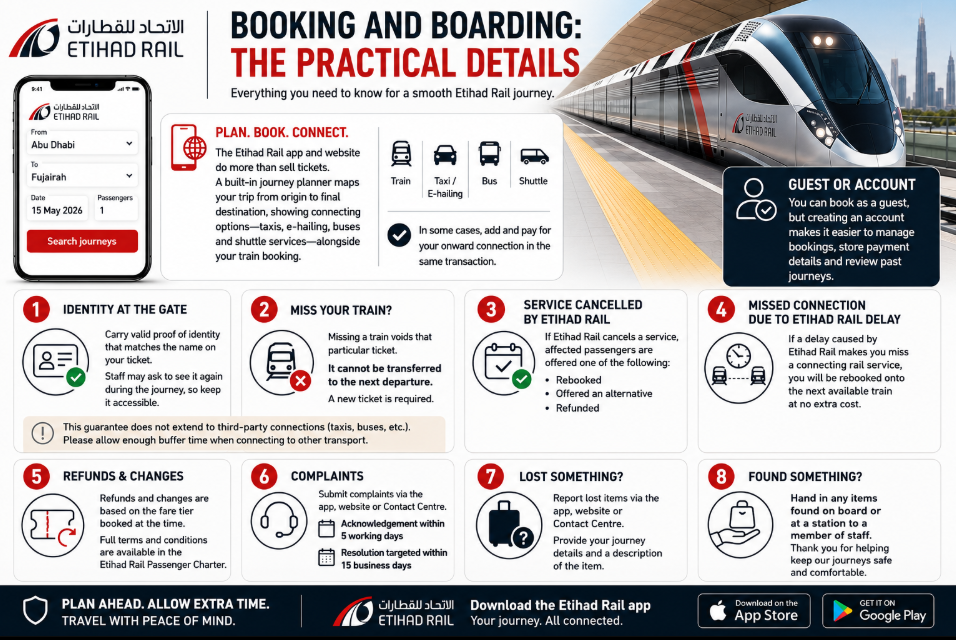
Missing a train voids that particular ticket; there’s no rolling it onto the next departure, and a new one needs to be purchased. The reverse applies if Etihad Rail cancels a service: affected passengers are rebooked, offered an alternative, or refunded. If a delay caused by Etihad Rail means a missed connecting rail service, passengers are rebooked onto the next available train at no extra cost, although that guarantee doesn’t extend to third-party connections like taxis or buses, so it’s sensible to build in some buffer time when connecting to one of those.
Refunds and changes otherwise come down to the fare tier booked at the time, with full conditions set out in Etihad Rail’s Passenger Charter. Complaints go through the app, website or Contact Centre, with acknowledgement promised within five working days and resolution targeted within fifteen business days. Lost something on board or at a station? The same channels apply: report it through the app with journey details and a description, and hand in anything found to a member of staff.
More on Here : https://www.etihadrail.ae/help
What to Expect Onboard
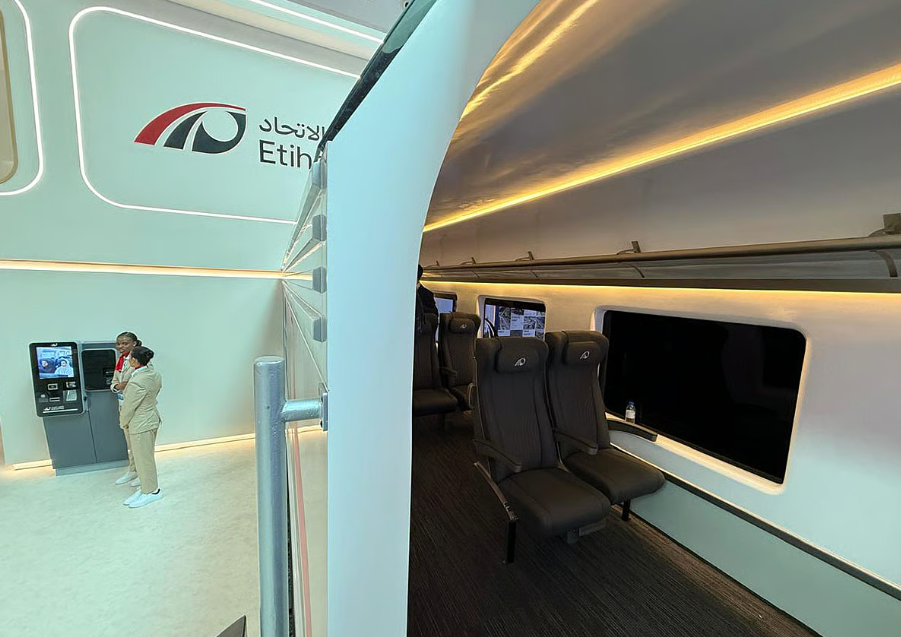
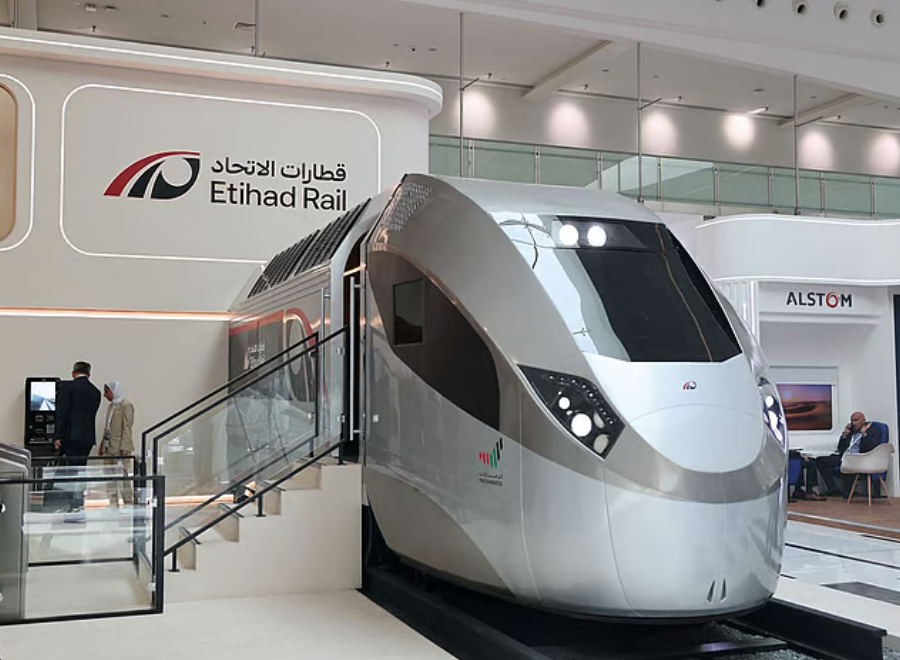
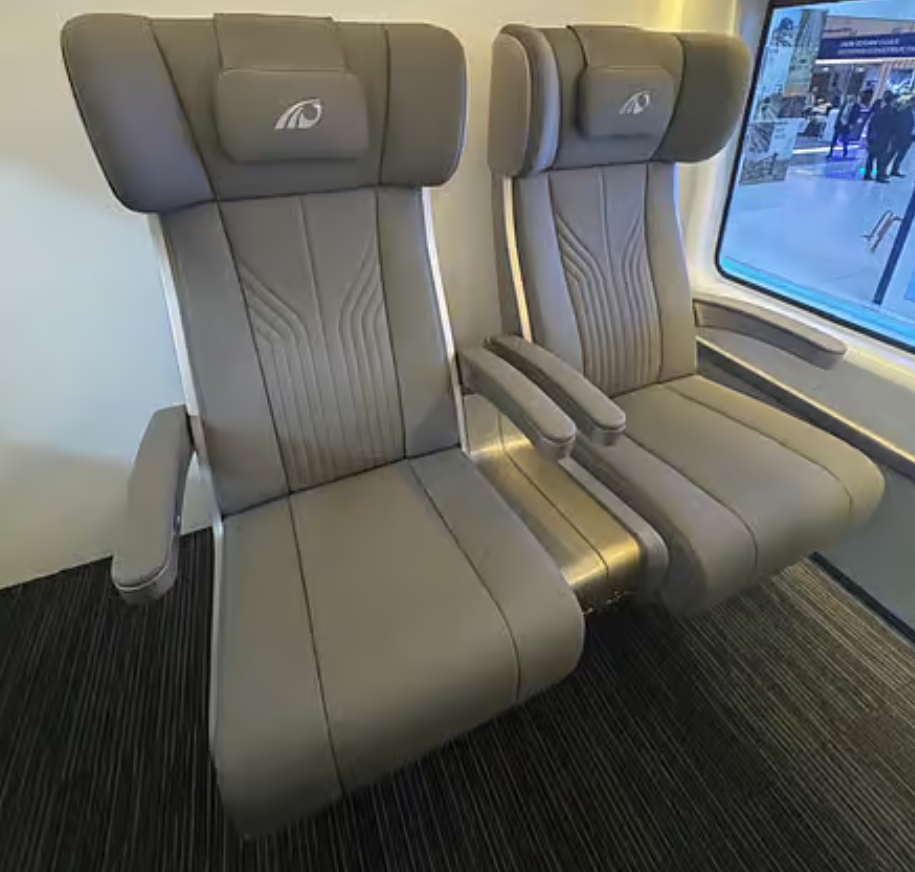
The passenger fleet runs to 13 trains, each seating around 400 people, built under a manufacturing agreement with Spain’s CAF, an established name in European rail engineering, and designed to handle both desert heat and mountain terrain at speeds of up to 200km/h.
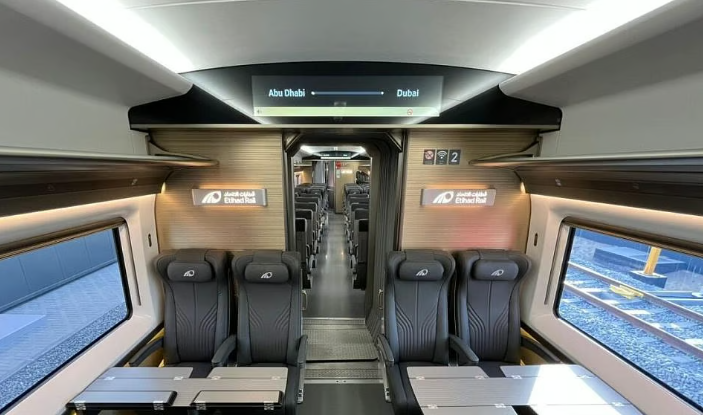
Carriages carry infotainment screens, charging points, climate control and complimentary Wi-Fi, with snacks and non-alcoholic drinks available to purchase on board; alcohol isn’t permitted, and smoking and vaping are restricted to designated areas only, where available.
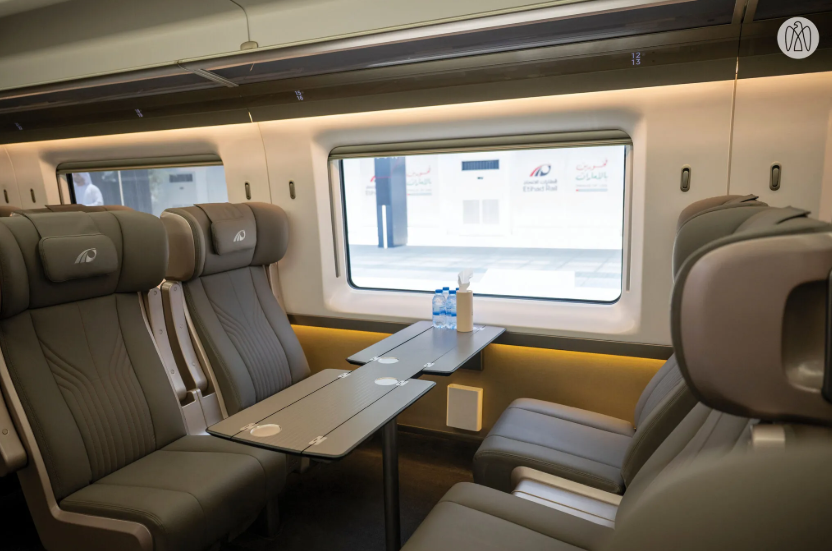
Etihad Rail brought in the Italian hospitality group Arsenale to shape the premium onboard experience, which has drawn comparisons to heritage European rail journeys. For most travellers booking Comfort or Premium, though, the day-to-day reality is closer to a well-specified intercity train than a luxury experience, with the design focus on comfort, connectivity and reliability rather than novelty.
Luggage, accessibility and family travel
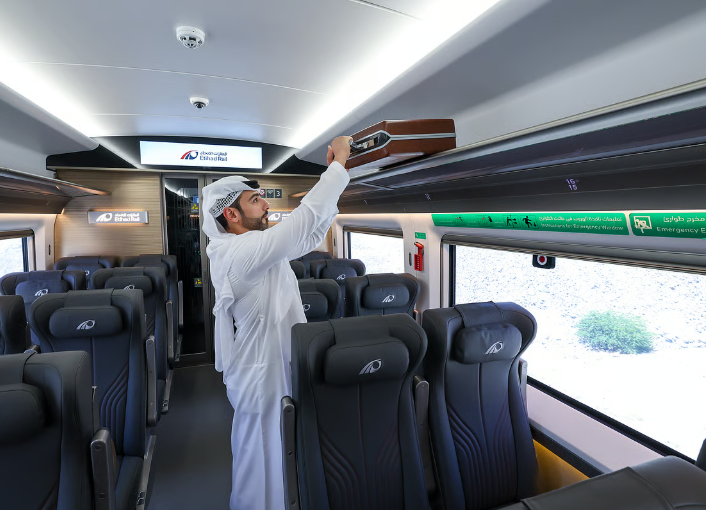
Luggage fits in designated storage areas or overhead racks, provided it doesn’t block aisles, doors or emergency exits, and passengers are expected to be able to carry and stow their own bags. Pets are allowed on board inside an approved carrier, one per passenger, though the carrier replaces the standard carry-on allowance rather than adding to it. Strollers are permitted if folded and stored clear of walkways, while e-scooters, including the electric kind, aren’t permitted under any circumstances.
Stations and trains are designed with wheelchair access and dedicated onboard spaces in mind, and passengers who need mobility support are asked to travel with their own wheelchair or aid and, where needed, a companion.
There’s no dedicated ladies-only carriage at this stage, though the operator says stations and trains are designed for a safe, comfortable experience for everyone, with staff available if assistance is needed. Mobile coverage and data work normally throughout the journey thanks to agreements with local telecom providers, and while there’s no loyalty or season ticket scheme yet, Etihad Rail has indicated further product options will follow as the network matures.
Getting To and From the Stations
A train is only as useful as the journey on either side of it, and this is where a good deal of planning has gone. The Mohamed bin Zayed City station, around 30 kilometres from central Abu Dhabi, opened to press ahead of launch as a white-panelled, naturally lit terminal built around that connectivity.
Inside, a sand-art installation called Emirates Sands marks out the planned national network using sand drawn from each of the seven emirates, while the atrium hosts retail and food outlets including WH Smith, Chicking, Shot and Starbucks, alongside ticket vending machines and a premium lounge for eligible ticket holders.
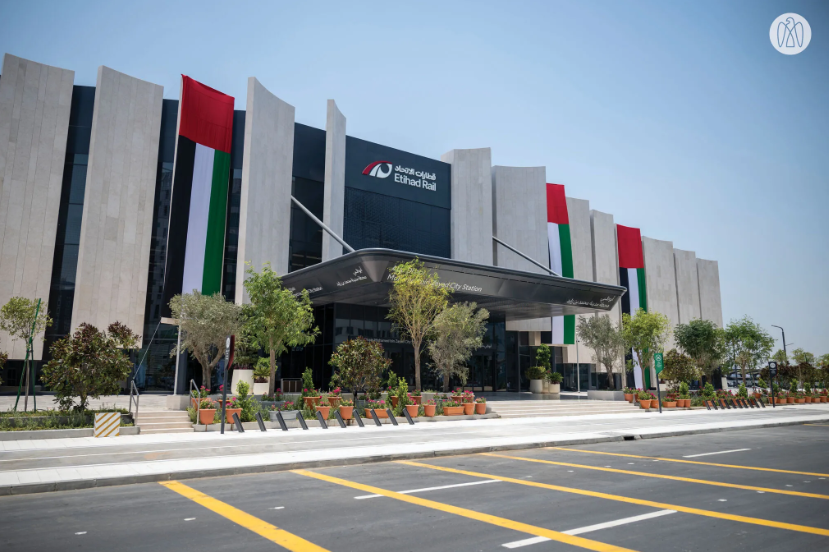
The station is integrated into Abu Dhabi’s Hafilat bus network, with dedicated bike lanes connecting through to the nearby Shabiya district and ample parking for those driving in. Etihad Rail also runs its own Dh10 shuttle service from the station to Adnoc’s headquarters on Corniche Road West, the Adnec exhibition centre, and Reem Mall, bookable through the same app and website used for train tickets.
On the Fujairah side, Al Hilal City station opens with a rental car desk from day one, alongside taxi ranks, e-hailing pickup points and bus connections, useful if the plan involves exploring beyond the immediate station area, which, given what’s nearby, it probably should. Etihad Rail has also said it’s in early discussions with tourism authorities about bundled train-and-hotel packages, and station staff are being trained to point arriving passengers toward local restaurants and activities if they’ve got a few hours to fill before the return service.
Why Fujairah Is a Smart First Trip
Etihad Rail picked the east coast for its tourism appeal as much as its engineering challenge, and Fujairah backs that up. It’s one of the more underrated emirates for UAE residents who’ve already done the obvious Dubai and Abu Dhabi circuits, with mountains, coastline, forts and genuinely good snorkelling packed into a fairly compact area once the train doors open.
On the water
Snoopy Island, just off Al Aqah Beach, is the headline marine spot, named for the shape it’s said to resemble rather than any cartoon connection, and ranked among the better snorkelling sites in the Gulf, with reef fish, turtles and the occasional white-tip reef shark in its shallows. Al Aqah Beach itself remains a long-running favourite for a relaxed beach day, with day passes available for those after sunbeds and facilities rather than just a patch of sand.
History and heritage
Al Bidya Mosque, on the scenic road between Dibba and Khorfakkan, is the oldest surviving mosque in the UAE, a small mud-and-stone structure with four distinctive domes that remains an active place of worship today. Al Bithnah Fort, dating to the 18th century, once guarded the inland routes connecting the coast to the rest of the country, while Fujairah Fort, among the oldest in the Emirates, rewards a climb to the top with views stretching over the modern city skyline below.
Mountains and trails
For anyone wanting to stretch their legs, Rainbow Valley offers a moderate-to-challenging hike through striking, multicoloured sandstone formations in the Hajar Mountains, best tackled with a guide since the trail itself isn’t marked. Wadi Abadilah is a gentler alternative, winding through agricultural land dotted with banana, mango and date palm trees, with seasonal pools appearing when conditions allow. And for those happy to simply take in the scenery, the Hajar Mountains themselves offer some of the most dramatic viewpoints in the country, a useful reminder of just how much terrain the train has crossed to get you there in under two hours.
The Bigger Picture for the UAE
It’s tempting to read all this as simply a faster way to reach the coast, but the ambitions behind it run wider. The UAE Railway Programme’s broader economic forecast puts the value of the rail network, freight and passenger combined, at around AED 200 billion in economic opportunity, while the passenger element alone is projected to generate roughly Dh91 billion ($24.7 billion) in social and economic benefit over the next 50 years. Etihad Rail’s wider National Railway Programme is also expected to create more than 9,000 jobs by 2030, spanning engineering, train operations, logistics and maintenance, with dedicated training partnerships aimed at building Emirati expertise across the sector.
There’s an environmental argument too, even if it’s a quieter part of the conversation around launch week. Shifting passenger journeys off the road and onto rail supports the UAE’s broader sustainability commitments, in much the same way the freight network has already been credited with cutting truck traffic and associated emissions on some of the busier inter-emirate corridors.



[…] month brings the launch of Etihad Rail’s passenger service in Dubai, new VAT compliance requirements for businesses, tighter truck […]