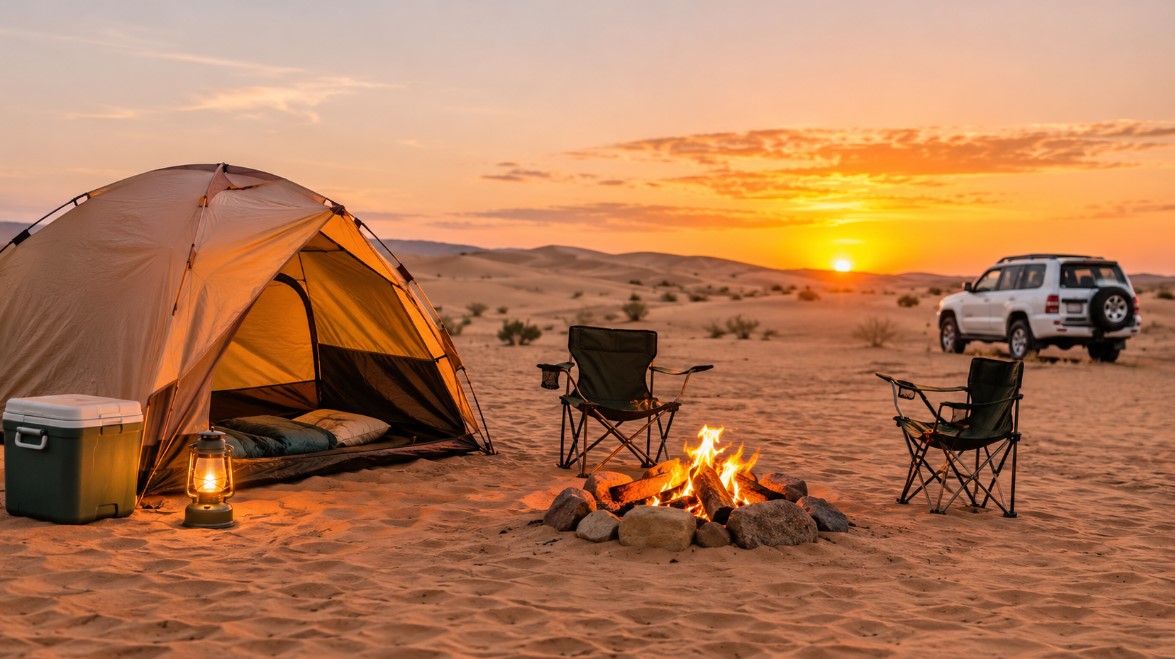
There’s a reason desert camping shows up in almost every UAE resident’s winter plans. November rolls around, the humidity finally breaks, and suddenly sleeping under a sky thick with stars feels not just possible but obvious. If it’s your first time, though, the gap between the Instagram version and the real thing is wider than you’d think — wrong spot, wrong gear, or wrong weekend, and your dream night out becomes a very long, very sandy lesson.
This guide covers what actually matters: where you can legally pitch a tent, what the rules are right now, what to pack, and the mistakes first-timers make most often.
When Is Desert Camping Season in the UAE?
The honest answer: roughly November to March, and it’s not just about comfort. Desert nights in January can drop into single digits, while an October night can still sit near 30°C — both will test the wrong gear.
By April, daytime heat makes most desert camping genuinely unpleasant even if evenings are mild. Weekday nights are far quieter than Friday and Saturday, and the window around UAE National Day and the school winter break is the busiest of the season — book organised camps early if you’re travelling then.
Where Can You Legally Camp in the UAE?
This is the part most first-timers get wrong, and it’s getting stricter. Several beloved free-camping spots are now patrolled or restricted, and fines for pitching in the wrong place are real. Here’s the current picture, emirate by emirate.
Dubai: Skip Al Qudra, Head to Hatta
The heart-shaped Love Lake photos are real — but you can’t camp there. Dubai Municipality signage bans camping, bonfires, barbecues and even dog walking around Al Qudra Lakes, which sit inside the Al Marmoom Desert Conservation Reserve. Go for the day (cycling, desert foxes, sunrise photos), pitch your tent elsewhere.
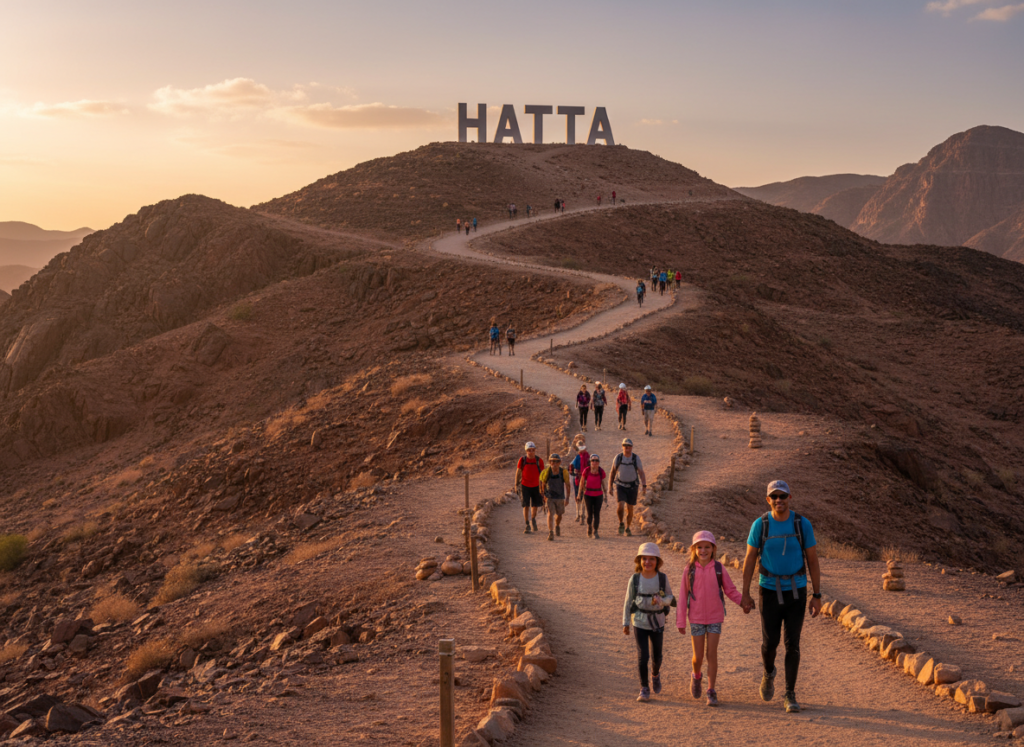
For your first trip, Hatta Wadi Hub is the easiest legal option from Dubai — about 90 minutes by road, with bring-your-own-tent pitches that include a private fire pit, barbecue area, parking and 24-hour security, bookable through Hatta Resorts.
Dubai Municipality also runs a seasonal camp at Al Ruwayyah (1 November to 30 April), but it’s for UAE nationals only, so most residents can skip it. Caravanners should note Jebel Ali Beach offers free 30-day permits instead.
Ras Al Khaimah: Cooler Nights at Jebel Jais
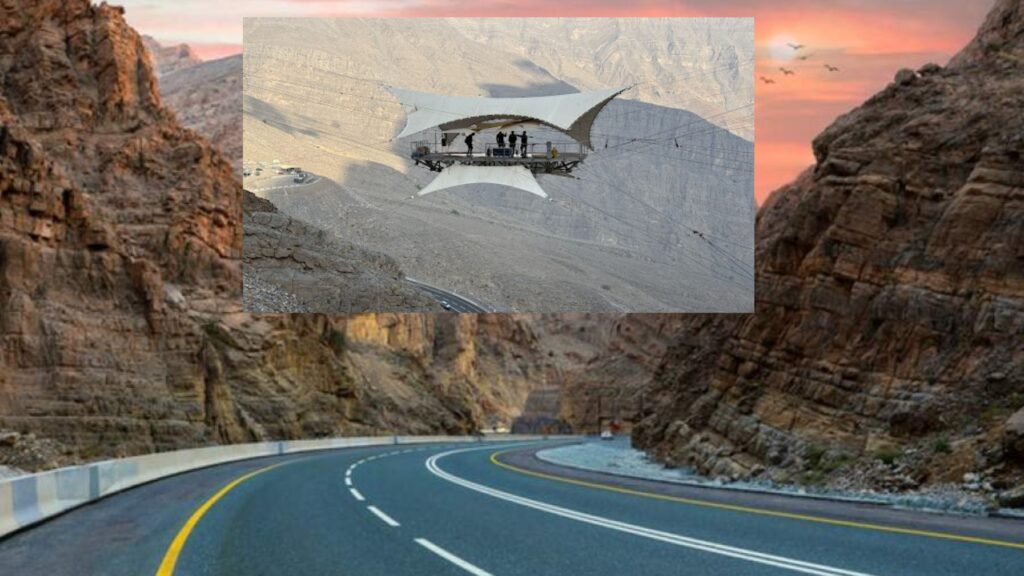
Jebel Jais, the UAE’s highest peak, runs around 10°C cooler than the coast — cold enough that winter nights near the summit can flirt with freezing. Camp 1770 at roughly 1,770 metres is the country’s highest organised campsite, while a limited number of free roadside spots are marked along the mountain road.
One caveat: the mountain closed completely after heavy rain in mid-December 2025 and only reopened in stages from late January 2026. Conditions change after every storm, so check the current status before you drive up.
For a simpler, free option, Wadi Shawka offers rocky terrain and water pools after rain — but no toilets and no phone signal. And never, ever pitch inside the wadi channel itself.
Sharjah: Fossil Rock Isn’t the Free-for-All It Used to Be
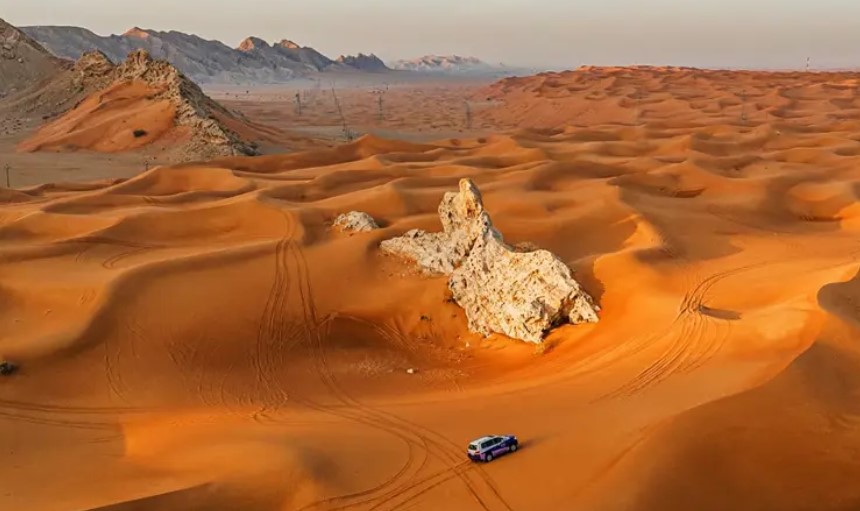
Fossil Rock near Mleiha was the UAE’s classic free camping weekend for years. Since October 2025, Sharjah Police have been patrolling Mleiha, Al Badayer and Al Faya, and camping in an unauthorised area carries an AED 2,000 fine that doubles on repeat offence, as the area is now a declared national park.
If Fossil Rock is on your list, book one of the licensed overnight camps near Mleiha instead of pitching on open ground.
Abu Dhabi: Al Wathba and the Liwa Festival
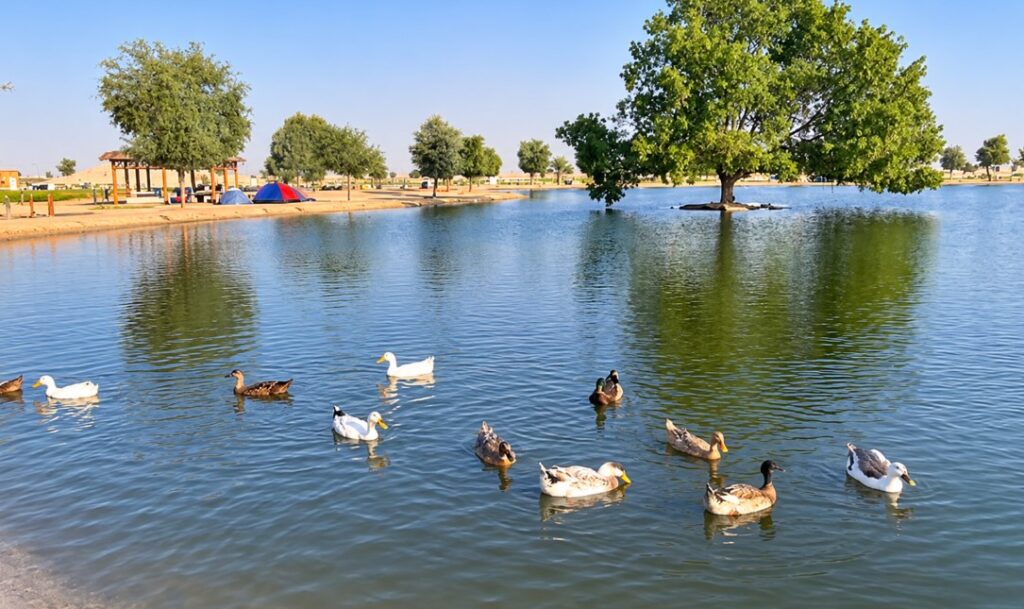
Al Wathba Lake Camp, run by the Department of Municipalities and Transport, offers free lakeside pitches with barbecue areas — a gentle, accessible first-timer option near the capital. Just don’t confuse it with the protected wetland reserve and fossil dunes next door, where camping isn’t allowed.
Further afield, Liwa and the 300-metre Moreeb Dune come alive each winter for the Liwa International Festival — confirmed for 11 December 2026 to 2 January 2027 — with camping and RV spots booked through the festival’s app. Outside festival dates, Liwa is a serious off-road drive best attempted with an organised group.
Permits, Fires and Fines: The Rules First-Timers Miss
The good news: a short weekend trip doesn’t need advance permission in most emirates. Permits only really matter for seasonal plots (Al Ruwayyah, Umm Al Quwain’s family-only sites) and the Jebel Ali Beach caravan certificate.
What does matter everywhere:
- Fire safety. Never run a barbecue inside a tent, keep lanterns at least 50cm from the fabric, buy firewood from a shop rather than roadside sellers (per Abu Dhabi’s Environment Agency guidance), and douse every fire and coal fully before sleeping or leaving.
- Take every scrap of rubbish home. Dumping or burning waste outside designated areas is an offence under Federal Law No. 12 of 2018, with fines of up to AED 30,000 for individuals.
- Never camp in a wadi or cross floodwater. Under Federal Decree-Law No. 14 of 2024, entering a flooded valley means a AED 2,000 fine, 23 black points and 60-day vehicle impoundment — before you even consider the danger.
What to Pack for Your First UAE Desert Camping Trip
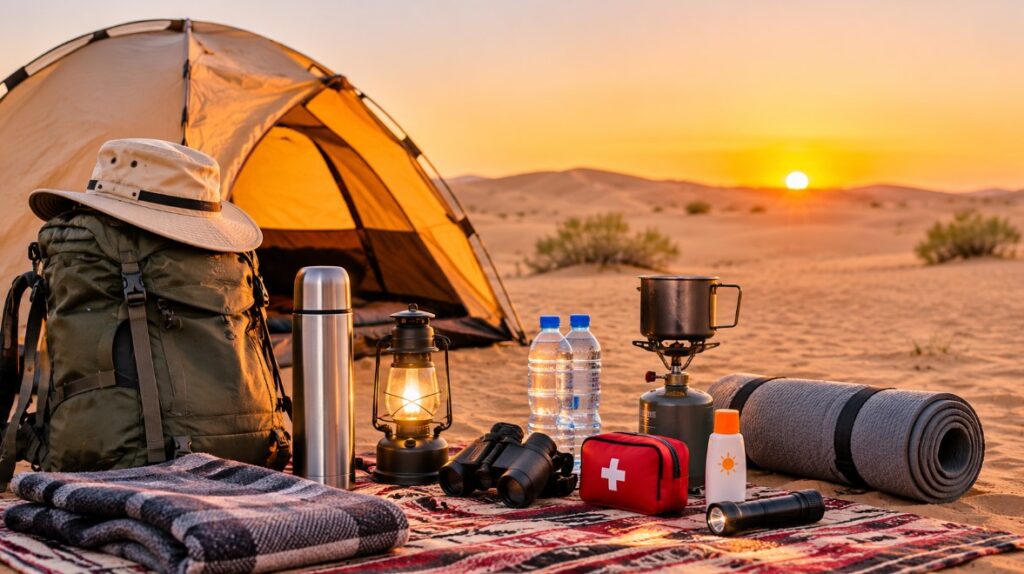
The desert punishes vague packing. Here’s what earns its place in the car.
Shelter and Sleep
- A properly rated tent — a flimsy festival tent will not survive desert wind
- A cold-rated sleeping bag (nights can hit single digits in January, even if Dubai was 28°C that afternoon)
- Warm layers — fleece, beanie, thick socks. Nobody expects to need them. Everybody does.
Camp Kitchen and Light
- More water than you think you’ll need, plus food with a margin
- A torch and a headlamp, with spare batteries
- A power bank — there’s no socket in the Empty Quarter
- Bin bags (see the AED 30,000 fine above)
Vehicle and Recovery
Most of the spots above need a 4×4, since the last stretch is usually unpaved. Carry a tow rope, a full tank and a checked spare tyre before you leave the tarmac. Check the National Centre of Meteorology’s forecast before you leave, not when the sky turns grey.
First-Timer Mistakes to Avoid
- Assuming Al Qudra is a campsite. It’s a day destination. Turn up with a tent and you’ll be politely moved on.
- Underestimating the cold. The desert drops 15–20°C after sunset. Bring the warm jacket you think is ridiculous.
- Camping alone, or without telling anyone. Phone signal is patchy in Wadi Shawka, the Hajar foothills and deep Liwa. Tell someone your plan and expected return.
- Pitching in a low channel “for shelter”. That dry riverbed is a flood path. Always camp on higher ground.
- Overlanding too far, too soon. Your first trip shouldn’t be an unguided Liwa crossing. Start with Hatta or Al Wathba, learn your gear, then go bigger.
Frequently Asked Questions
Do I need a permit to camp in the desert in the UAE?
Not for a typical weekend trip in most emirates. Seasonal plots (Al Ruwayyah, Umm Al Quwain) and the Jebel Ali caravan spot are the exceptions.
Can you camp at Al Qudra Lakes?
No — overnight camping, fires and barbecues are banned there. Visit for the day and camp at Hatta, Al Wathba or Jebel Jais instead.
When is the best time for desert camping in the UAE?
November to March. Dubai’s own Al Ruwayyah season runs 1 November to 30 April, but by April the daytime heat makes most desert camping uncomfortable.
Is wild camping still allowed at Fossil Rock?
Not freely — unauthorised camping in the Mleiha area now carries an AED 2,000 fine. Book a licensed camp there instead.
What happens if you camp in a wadi and it rains?
You risk a flash flood, plus a AED 2,000 fine, 23 black points and 60-day vehicle impoundment under federal law.
The Bottom Line
Desert camping in the UAE is one of the best-value adventures in the country — a tank of fuel, a night under more stars than you knew existed, and a sunrise over dunes you’ll remember longer than most hotel stays. Respect the rules (they’ve tightened for a reason), pack for the cold as much as the sand, and pick an easy legal spot for trip one. Hatta or Al Wathba tonight; Liwa next year.