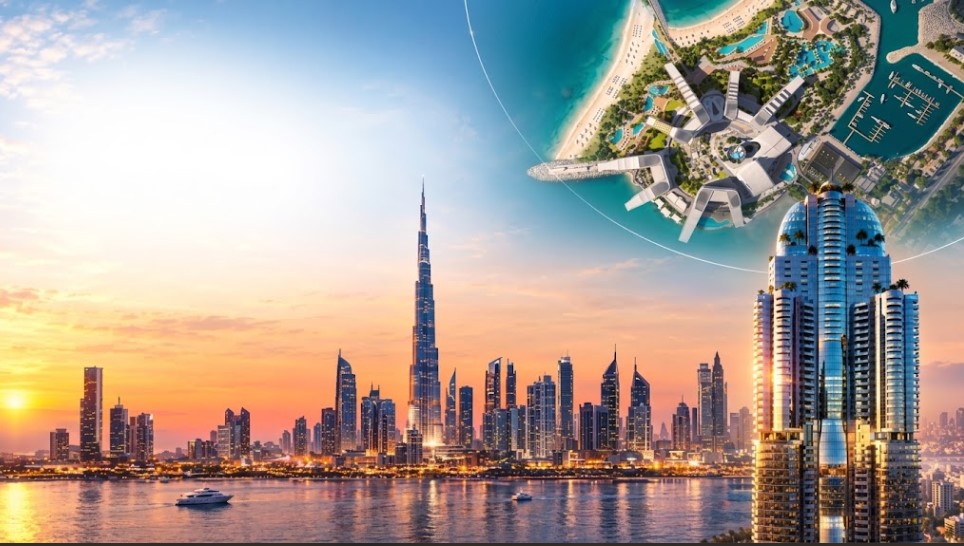
Dubai does not stand still. Just when you think the skyline is finished, another foundation is poured. Just when the metro map feels complete, a new line is announced. The emirate has spent decades turning sand into landmarks, and what is coming next might be even more ambitious than what came before.
From an airport built to handle 260 million passengers a year to an underground tunnel network designed by Elon Musk’s Boring Company, the projects currently in motion will change how people live, travel, shop, and even walk through the city. Some are opening within months. Others will not be fully complete until the 2050s. But every single one of them is already reshaping Dubai’s future.
Here are the megaprojects you need to know about.
Upcoming Dubai Megaprojects
Al Maktoum International Airport: The New Global Hub
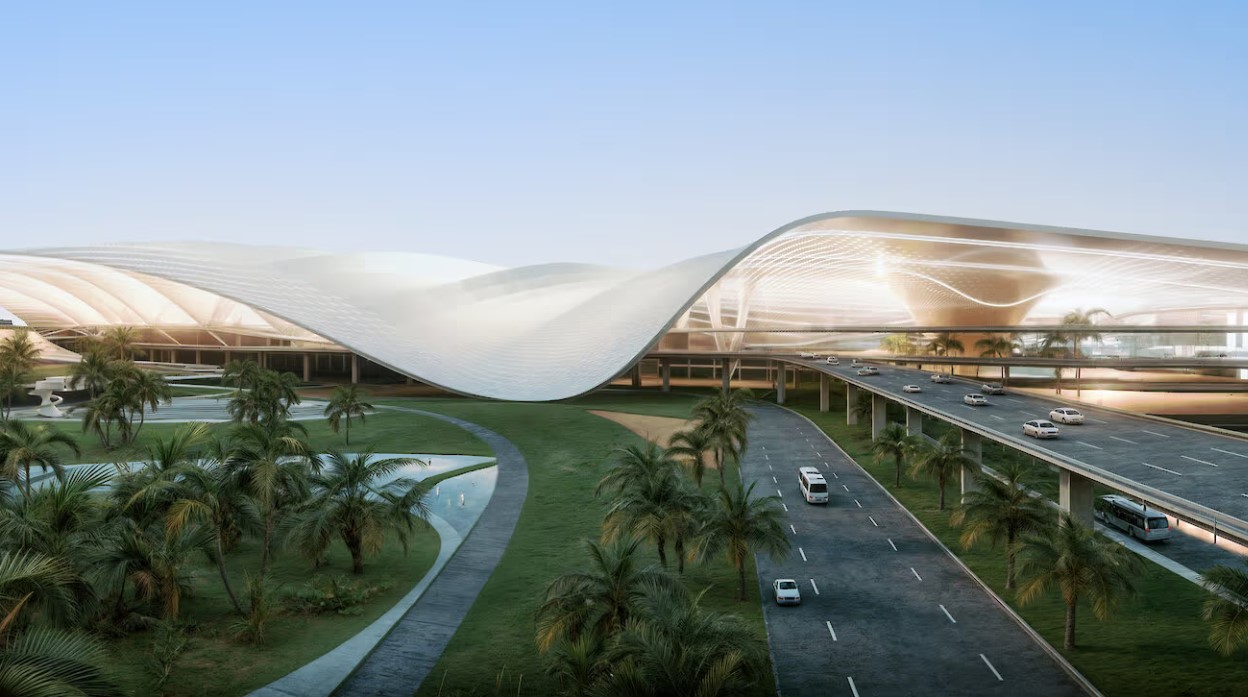
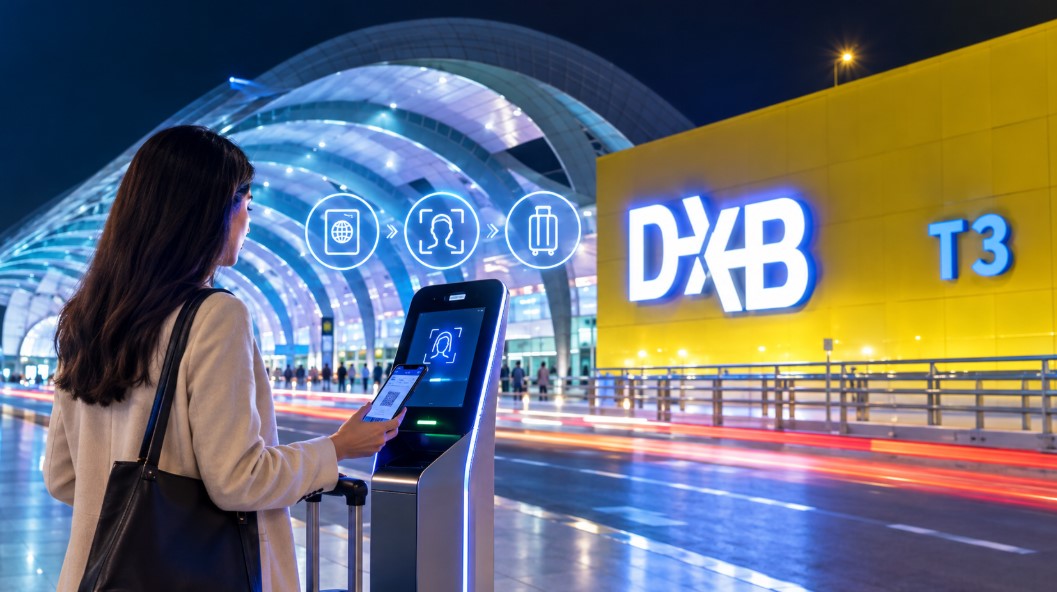
Dubai International Airport is already one of the busiest in the world, but the long-term plan is to move everything south. Al Maktoum International Airport, first opened in 2010 for cargo, is being expanded into a facility five times the size of DXB. The eventual capacity is staggering: 260 million passengers annually, more than 400 aircraft gates, five parallel runways, and five passenger terminals connected by an underground train.
Dubai South will evolve into a full aerotropolis around it, with new residential neighbourhoods, logistics hubs, and commercial districts. Emirates and flydubai are expected to relocate there in the coming years, with a full transition targeted by 2032. While the absolute completion stretches into the 2050s, the first phases are already under active construction.
Palm Jebel Ali: The Island Wakes Up
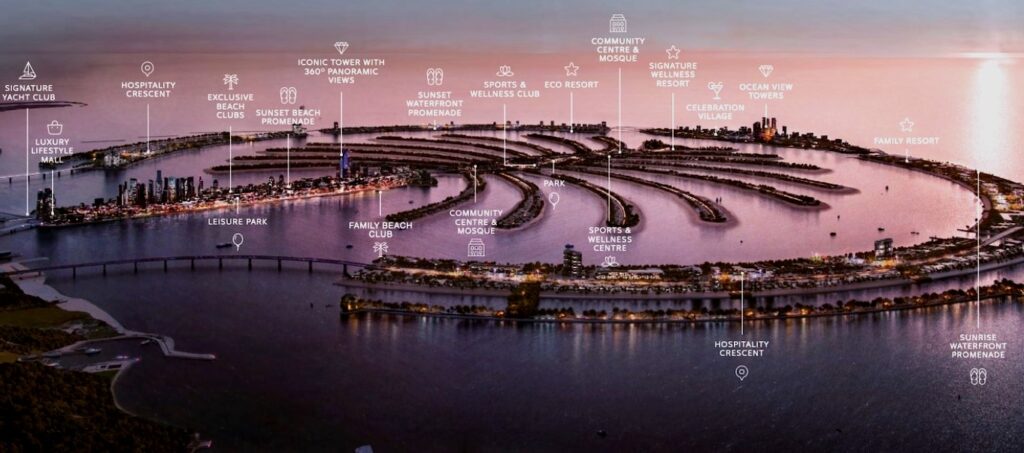
Construction on Palm Jebel Ali stalled for over fifteen years after 2008, but the project is now very much alive. Nakheel is actively building across all sixteen fronds, with the first villas scheduled for delivery from late 2026 through 2027. The scale is double that of Palm Jumeirah: seven islands, 120 kilometres of coastline, and enough beachfront for 35,000 families.
A 70,000 square foot mall is planned to open in 2027, and the overall development includes hotels, resorts, beach clubs, and a celebration village. Contracts awarded for construction and infrastructure exceed Dh13 billion, making this one of the largest real estate revivals in the region.
Dubai Metro Blue Line: Connecting the Gaps
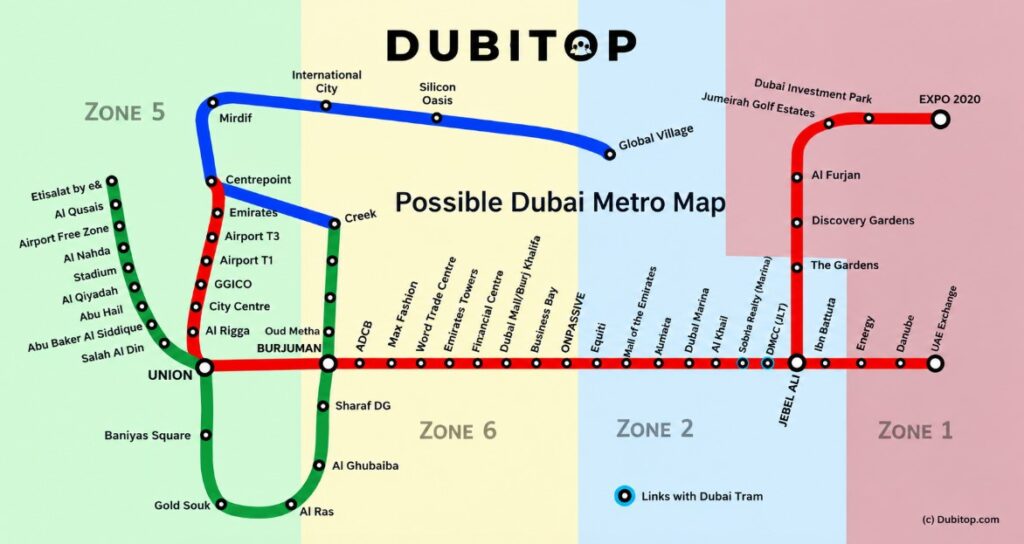
The Blue Line is the most significant metro expansion since the network first launched. Spanning 30 kilometres with fourteen stations, it will connect Dubai Creek Harbour, International City, Dubai Silicon Oasis, and Academic City to the existing network. The RTA is investing roughly Dh20.5 billion, and tunnelling began in earnest in May 2026.
By 2029, the line is expected to carry 200,000 passengers daily, rising to 320,000 by 2040. It will also provide a direct metro link to DXB for nine key areas and is projected to reduce traffic congestion by 20 percent once operational.
Dubai Loop: Underground and Unconventional
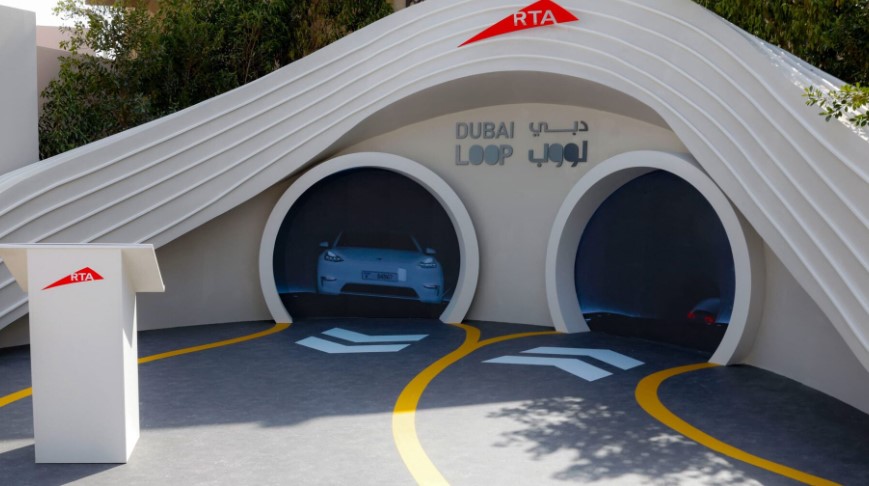
Elon Musk’s Boring Company is digging beneath Dubai. The Dubai Loop will use underground tunnels to move passengers across the city’s densest districts. The first phase connects DIFC and Dubai Mall, with the full network eventually stretching 22.2 kilometres across nineteen stations, including Dubai World Trade Centre and Business Bay.
The Dh2.5 billion project is designed to move up to 30,000 passengers per day. Work began in July 2026, and if the initial phase performs as projected, the Loop could become a template for how Dubai handles mobility in its most congested corridors.
Burj Azizi: Reaching for the Sky
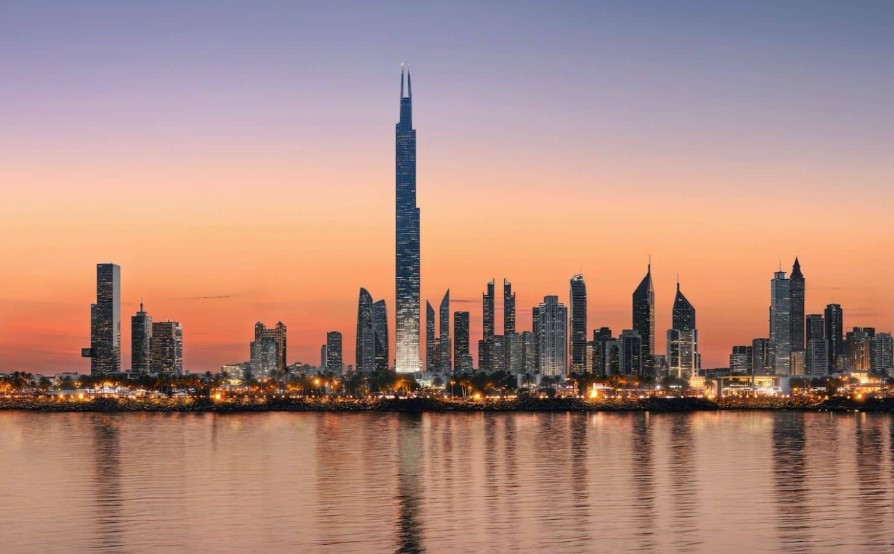
When completed around 2028, Burj Azizi will stand 725 metres tall with more than 131 storeys. Developed by Azizi Developments, the tower will house a vertical luxury mall, the world’s highest nightclub, and the world’s highest observation deck. Residential options range from one to three-bedroom apartments up to luxury penthouses.
Every twenty floors will feature shared amenities including swimming pools, gyms, spas, and cinemas. It is not just a residential building. It is a self-contained vertical neighbourhood.
Dubai Creek Tower: The Icon Returns
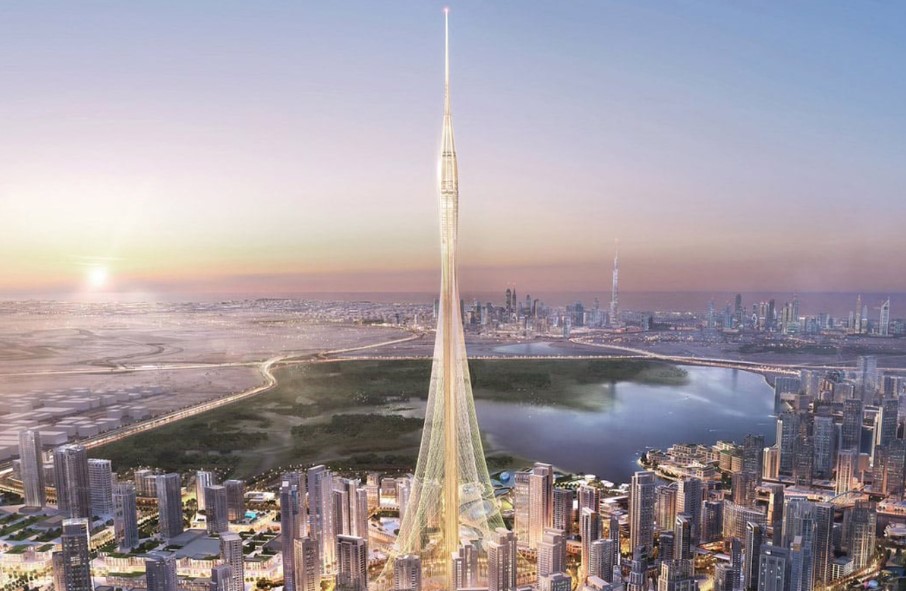
The Dubai Creek Tower was originally conceived to surpass the Burj Khalifa in height, but the project underwent a full redesign. The focus shifted from sheer altitude to architectural significance. Emaar reissued the tender in early 2026, and the tower remains the centrepiece of the Dubai Creek Harbour masterplan.
It will anchor Dubai Square, a sprawling mixed-use district, and the surrounding area will eventually be served by the new Metro Gold Line. While an exact completion date is still pending, the recent tender activity and its inclusion in the 2032 metro map confirm the project is firmly back on track.
Dubai Square: A Mall You Can Drive Through
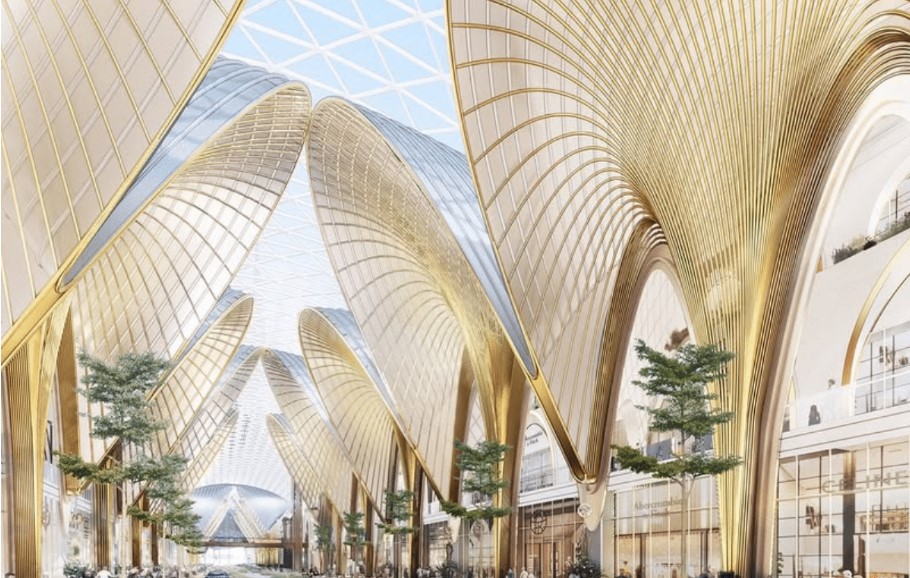
Emaar’s Dubai Square is being built as the retail and entertainment heart of Dubai Creek Harbour. Spanning 2.6 million square metres in its initial phase, it will eventually cover 7.4 million square metres. The most talked-about feature is the world’s first drive-through mall, designed so electric vehicles can literally cruise through the retail space.
The development will include 10,000 homes, over 1,500 hotel rooms, a wildlife sanctuary, and AI-enabled navigation systems. Parking will be fully air-conditioned, and the entire complex is scheduled to open around 2028 or 2029.
The Island: Vegas-Style Hospitality Without the Casino
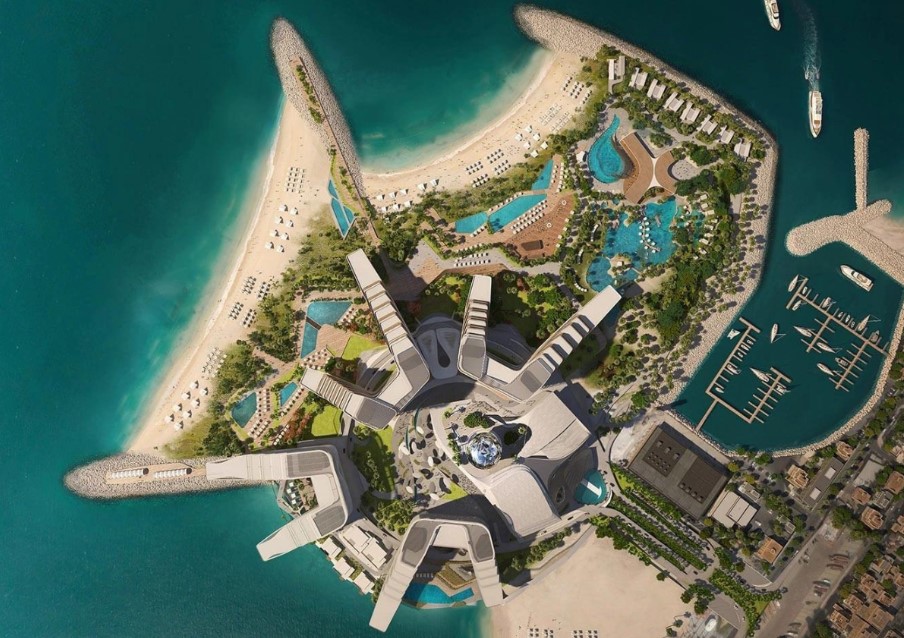
First announced in 2017, The Island is being built off the coast of Jumeirah and will feature three iconic hotel brands: MGM, Bellagio, and Aria. While it was once rumoured to host the UAE’s first casino, that distinction went to Ras Al Khaimah instead. The Dubai project will proceed as a luxury hospitality and entertainment destination.
Visitors can expect lagoons, cafes, restaurants, an extended beachfront, and a major in-house entertainment venue. An earnings call in July 2025 indicated an opening in the second half of 2028.
Dubai Islands: The New Waterfront Frontier
Separate from Palm Jebel Ali, Dubai Islands is Nakheel’s ambitious redevelopment of the Deira coastline. The project will deliver waterfront villas, apartments, and hotels across multiple phases between 2027 and 2029. It represents a major expansion of Dubai’s beachfront inventory and a significant bet on waterfront living closer to the city’s historic core.
Ghaf Woods: Forest Living in the Desert
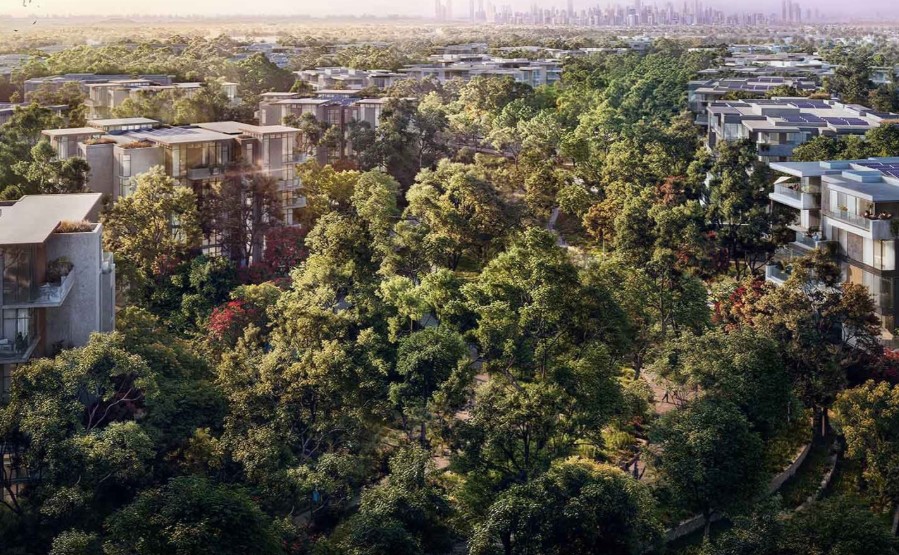
Majid Al Futtaim is planting 35,000 trees to create Dubai’s first forest-living community. Located near Global Village off Sheikh Mohamed bin Zayed Highway, Ghaf Woods will cover 738,000 square metres and roll out in eight phases through 2031.
The development includes plans for a new mall with retail, dining, and entertainment options. It is one of the more unusual projects in the pipeline because it prioritises density of greenery over density of glass towers.
Six Senses Dubai Marina: The Tallest Residential Tower
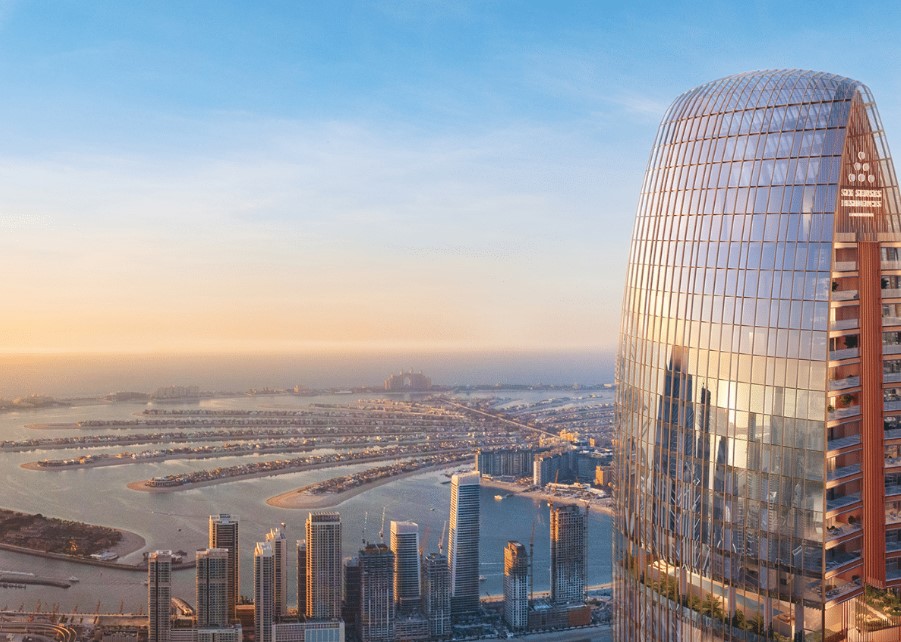
When it tops out, Six Senses Dubai Marina will be the tallest residential building on earth. The 122-floor tower by Select Group will feature 251 luxury apartments with a full wellness theme. Residents will have access to a crystal sound healing room, a 25-metre lap pool, and Sleep With Six Senses bedrooms stocked with fitness equipment and mood-enhancing sensory art.
Construction is underway, with completion expected by 2028.
Al Habtoor Tower: Living at Scale
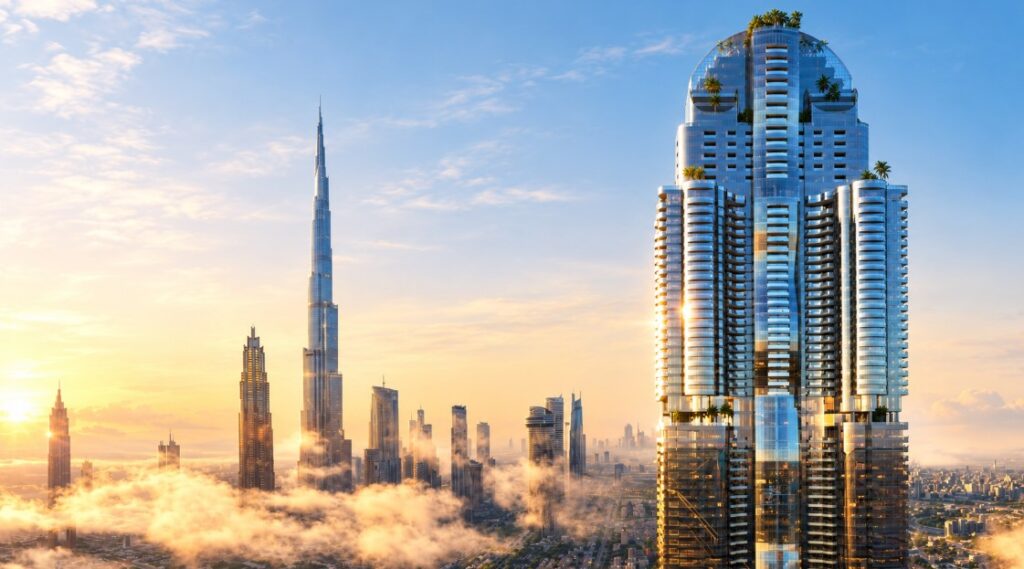
Al Habtoor Tower reached structural completion at 86 floors in April 2026 and is billed as the world’s largest residential building by unit count. Located on Sheikh Zayed Road within Al Habtoor City, the tower will deliver 1,740 residences. More than 1,300 apartments are already scheduled for phased handover, with final works now focusing on interiors, facades, and amenities.
Therme Dubai: Wellness on a Grand Scale
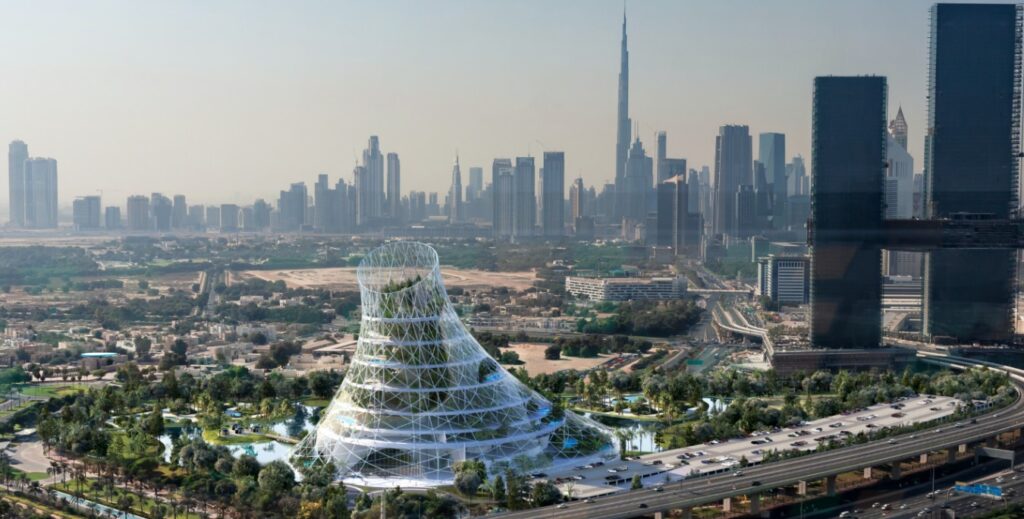
Sheikh Hamdan has described Therme Dubai as an iconic addition to the skyline. The Dh2 billion project in Zabeel Park will feature the world’s largest indoor botanical garden, three 18-metre waterfalls, and a massive interactive park. Designed to host 1.7 million visitors annually, the building will rise 100 metres across 500,000 square feet.
It is scheduled to open in 2028 and will transform one of Dubai’s largest public parks into a year-round wellness destination.
Dubai Museum of Art: Floating on the Creek
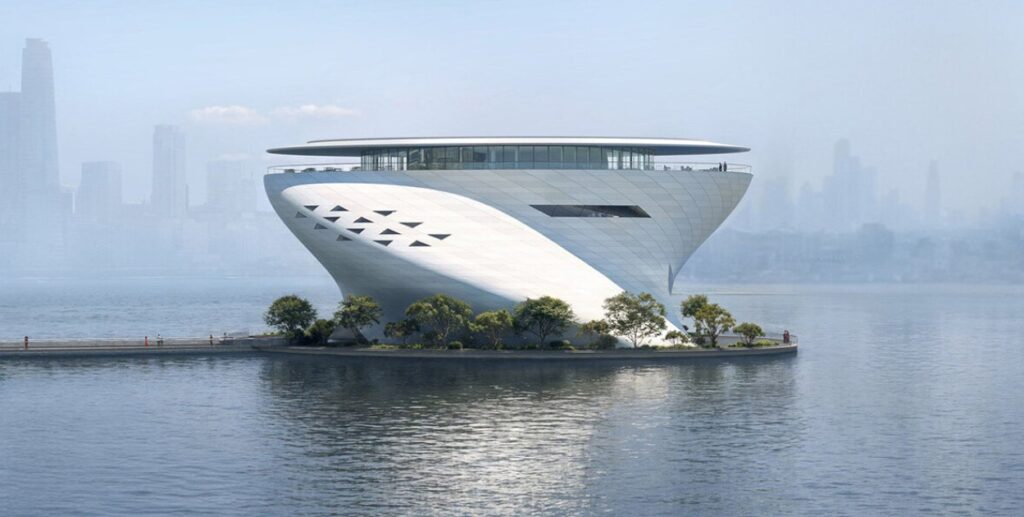
Designed by world-renowned Japanese architect Tadao Ando, the Dubai Museum of Art, or DUMA, will literally float on the waters of Dubai Creek. Unveiled in October 2025, the museum is envisioned as both an exhibition space and an architectural landmark in its own right. While a specific opening timeline has not been confirmed, the project adds a major cultural anchor to the Creek district.
Marsa Al Arab: Luxury on the Water
Developed by Meraas and Dubai Holding, Marsa Al Arab is a twin-island hospitality project located on either side of Burj Al Arab. One island is dedicated to family entertainment, while the other focuses on luxury resorts and a yacht marina. Construction is well underway, with openings expected between 2026 and 2027.
Dubai Metro Gold Line: The Underground Game-Changer
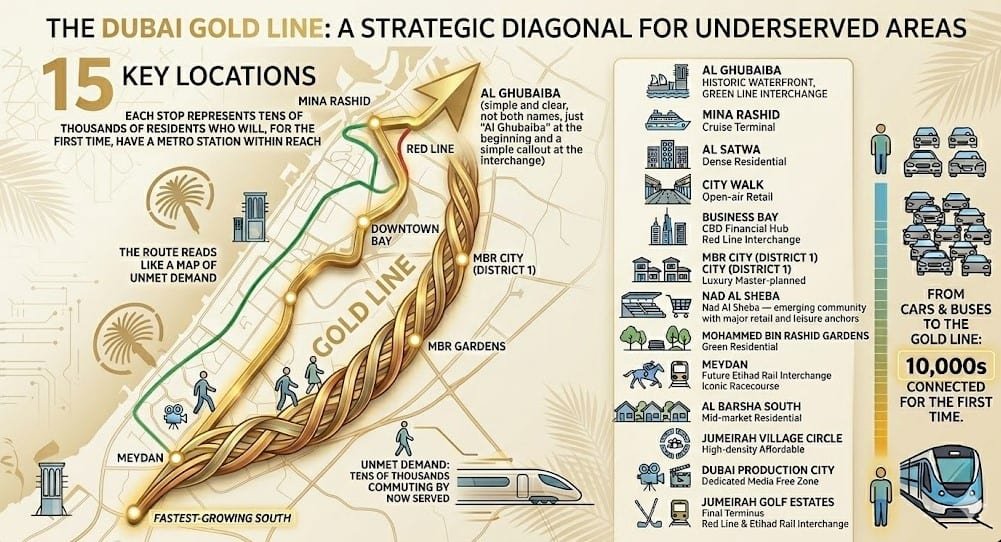
Set to open in 2032, the Gold Line will be Dubai’s first fully integrated underground metro route. Stretching 42 kilometres across eighteen stations, it will connect fifteen key areas and serve an estimated 1.5 million residents. While exact station locations are still being finalised, the RTA has published a 2032 network map confirming the line’s trajectory.
Mohammed bin Rashid Al Maktoum Solar Park: Powering the Future
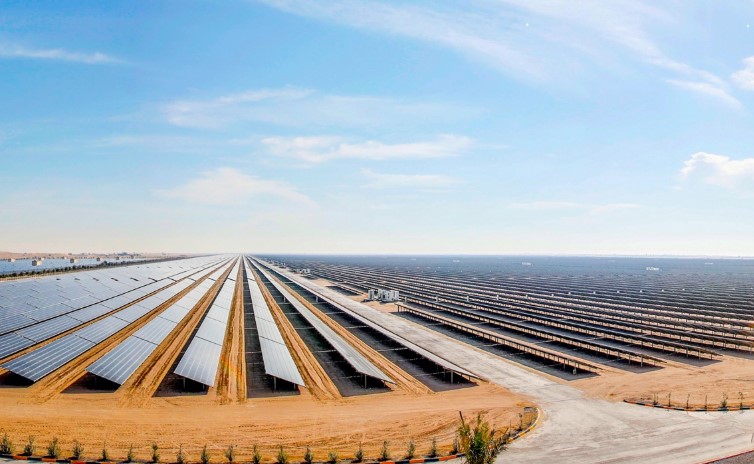
DEWA’s solar park is already one of the largest renewable energy projects on the planet, and it is still growing. The target is 5,000 megawatts of capacity by 2030. Multiple phases are active, and the park remains central to Dubai’s commitment to diversifying its energy sources. It may not be a tower or an island, but it underpins every other megaproject on this list.
Gold Street: A Street Built from Gold
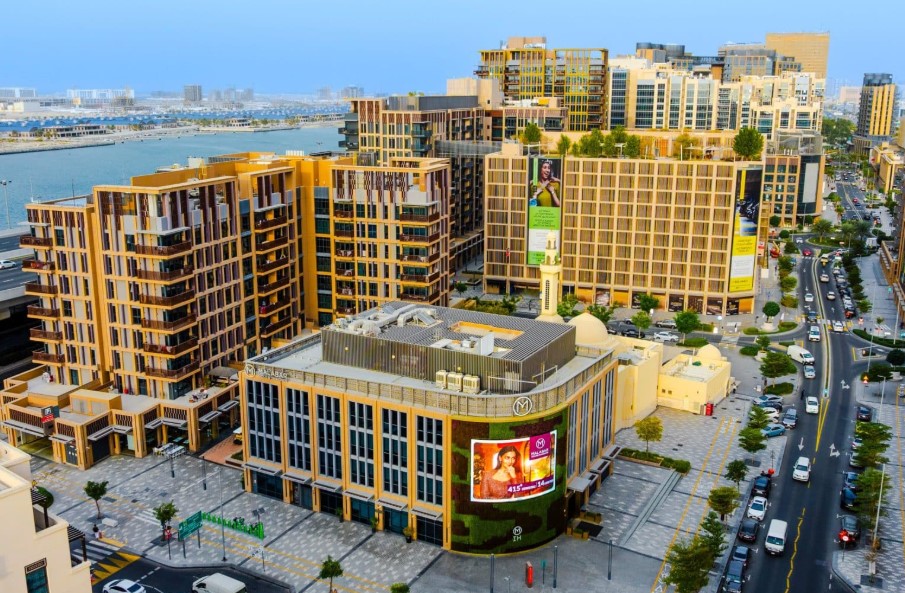
Dubai is constructing the world’s first Gold Street in the new Dubai Gold District in Deira. The street itself will be built using gold, creating a distinctive tourist attraction that reinforces the city’s historic reputation as the City of Gold. It sits alongside the existing Gold Souk and forms part of a broader strategy to cement Dubai as the global epicentre for gold and jewellery trading.
Final Thoughts
Dubai’s pipeline is not just long. It is diverse. You have airports, islands, metro lines, forest communities, floating museums, underground tunnels, and streets made of gold. Some projects will finish this decade. Others will stretch well into the 2050s. But together they represent a city that is still building, still betting big, and still refusing to accept that its best days are behind it.
If you live in Dubai, invest here, or simply visit often, these are the projects that will shape your experience of the city over the next ten years. Keep an eye on them. The skyline you see today is not the one you will see tomorrow.