How to Register a Car in Dubai, What the Mulkiya is, when inspection is mandatory, what everything costs, and exactly how to avoid a AED 500 fine — answered plainly.
The short answer: Dubai vehicle registration (Mulkiya) is renewed annually through official channels like RTA. New vehicles are exempt from technical inspection for the first 3 years from manufacture or registration, while older vehicles must pass inspection at an authorized testing center before renewal. Renewal can be completed through official digital channels or service centers, subject to insurance, inspection where required, and payment of applicable fees
Most people encounter Dubai car registration in one of three moments: picking up a brand-new car from a dealership, buying something used from a private seller, or receiving a text reminder that their Mulkiya expires next month. Each situation involves a different set of steps, and the official process is more streamlined than newcomers expect — as long as you know the order things have to happen in.
This guide walks through all three scenarios, covers what the vehicle inspection actually checks, and lays out every fee so there are no surprises at the counter.
What Is the Mulkiya, and Why Does It Matter?
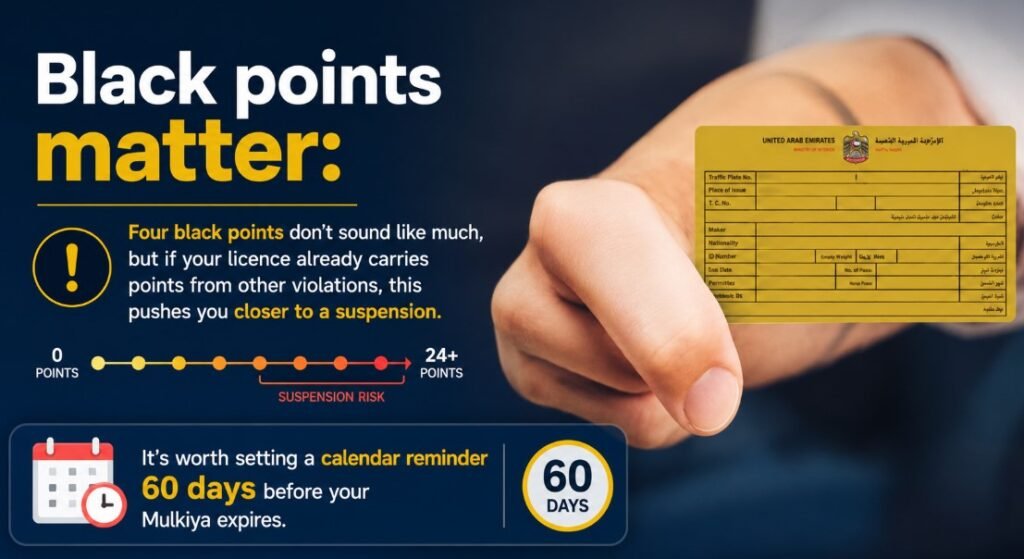
The Mulkiya is your vehicle’s registration card — the document that proves your car is legally permitted to be driven on UAE roads. Think of it as the car’s identity document. It links the vehicle to your Emirates ID, confirms your insurance is active, and establishes your formal proof of ownership.
Without a valid Mulkiya, you cannot legally drive the car, insure it, or sell it. Driving with an expired registration carries a fine of AED 500, four black points on your licence, and the possibility of vehicle impoundment for up to seven days. The RTA provides a 30-day grace period after your registration expires before fines begin. After that grace period, the late fee runs AED 500 per month.
Black points matter: Four black points don’t sound like much, but if your licence already carries points from other violations, this pushes you closer to a suspension. It’s worth setting a calendar reminder 60 days before your Mulkiya expires.
Scenario 1: Registering a Brand-New Car
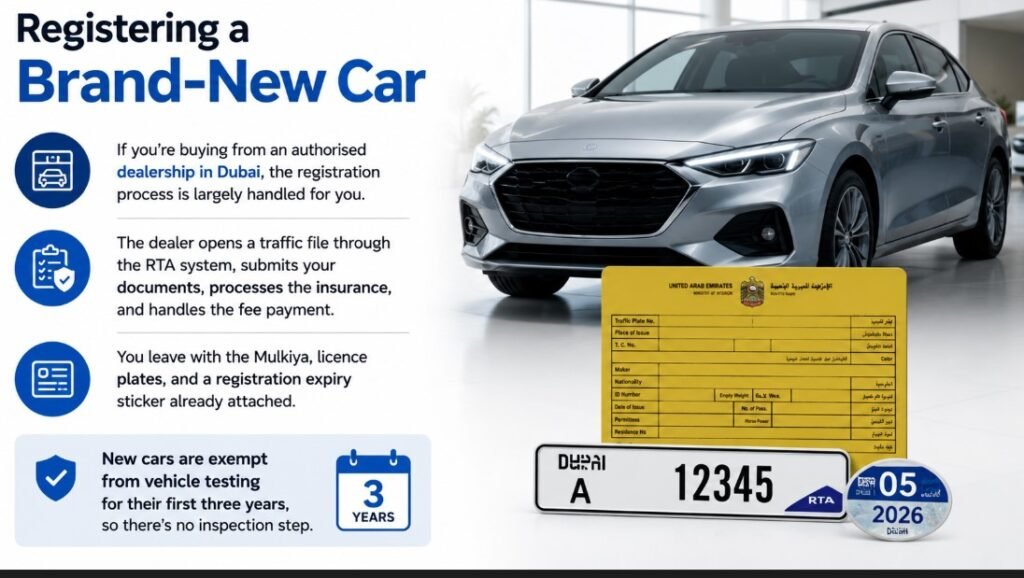
If you’re buying from an authorised dealership in Dubai, the registration process is largely handled for you. The dealer opens a traffic file through the RTA system, submits your documents, processes the insurance, and handles the fee payment. You leave with the Mulkiya, licence plates, and a registration expiry sticker already attached.
New cars are exempt from vehicle testing for their first three years, so there’s no inspection step. The fee for new car registration via a dealership is AED 400 (pls verify fees with relevant authoroties)
What you still need to provide
- Emirates ID (valid, not expired)
- Valid UAE driving licence
- Proof of insurance — the dealer will often arrange this through a partner insurer, but you can bring your own policy
- Passport copy (required for some vehicle categories or in cases of discrepancy)
If you’re buying through a bank loan, the bank is listed as a lienholder on the Mulkiya until the loan is paid off. This is standard and does not prevent you from driving the car.
Scenario 2: Buying a Used Car from a Private Seller
This is where most people get tripped up. When you buy a used car privately, the legal responsibility for registration transfer falls on you as the buyer. The seller’s Mulkiya doesn’t automatically transfer to your name; you have to complete the process through RTA channels within a specific window.
Step 1 — Check the car’s history before anything else
Before signing anything, get the vehicle’s chassis number (also called the VIN — a 17-digit code on the dashboard or on the back of the Mulkiya). You can run a history check via the UAE Ministry of Interior’s vehicle inquiry service to surface any outstanding fines, accidents, or ownership disputes.
Step 2 — Pass the vehicle inspection
If the car is more than three years old, you need a roadworthiness test at an RTA-approved centre before ownership can be transferred. The main authorised centres in Dubai are Tasjeel, Shamil, and Wasel. Inspection costs around AED 150–200 depending on the vehicle type ( pls check updated charges with official authoroties).
If a car fails inspection, you usually have around 30 days to fix the issues and return for a re-test. Common failures include tyres, brakes, and illegal window tint, with tint generally allowed only up to 50% on the side and rear windows.
Step 3 — Complete the ownership transfer
Both buyer and seller need to be present, or the seller can authorise a representative via a notarised power of attorney. The transfer can be done at an RTA Customer Happiness Centre or at the testing centre itself after inspection.
The seller submits the existing Mulkiya and hands over the plates. The buyer pays the transfer fee (AED 350–400) plus a AED 50 selling agreement fee. The buyer then receives a notification and can choose to keep the existing plate number or request a new one.
Timeline note: The seller must hand over the plates to an RTA centre within two weeks of the sale agreement being signed. If the seller delays, the registration remains in their name and they remain liable for any fines the car accrues. Get this paperwork done quickly.
Related : Buying a Used Car in the UAE: The Real Checklist Beyond a Test Drive
Scenario 3: Annual Renewal (the One You Do Every Year)
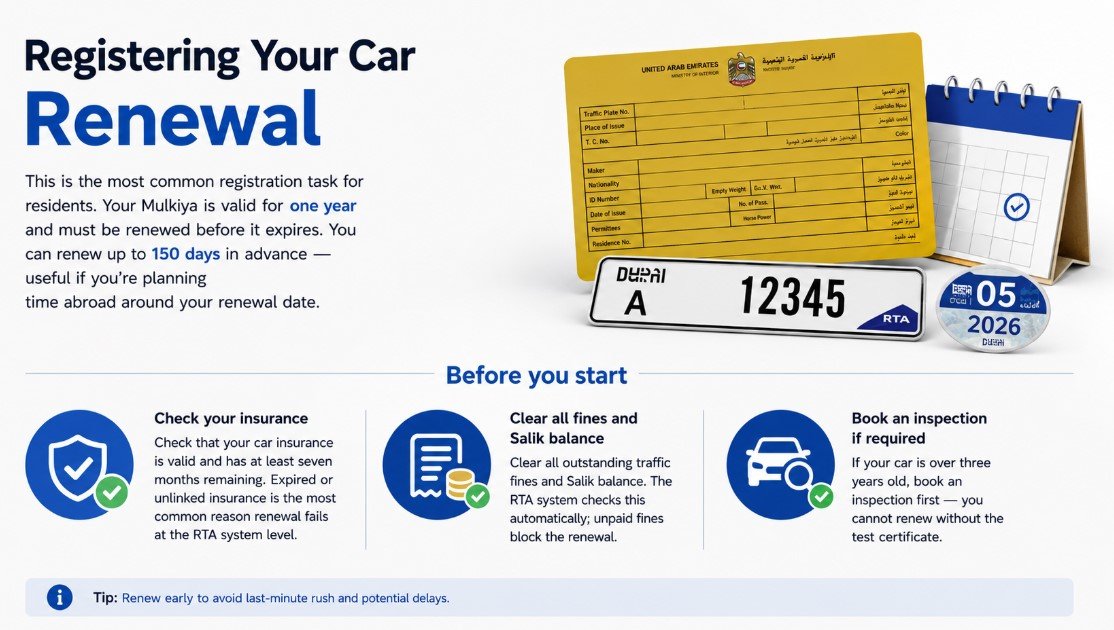
This is the most common registration task for residents. Your Mulkiya is valid for one year and must be renewed before it expires. You can renew up to 150 days in advance — useful if you’re planning time abroad around your renewal date.
Before you start
- Check that your car insurance is valid and has at least seven months remaining. Expired or unlinked insurance is the most common reason renewal fails at the RTA system level.
- Clear all outstanding traffic fines and Salik balance. The RTA system checks this automatically; unpaid fines block the renewal.
- If your car is over three years old, book an inspection first — you cannot renew without the test certificate.
Renewal online (the fastest route)
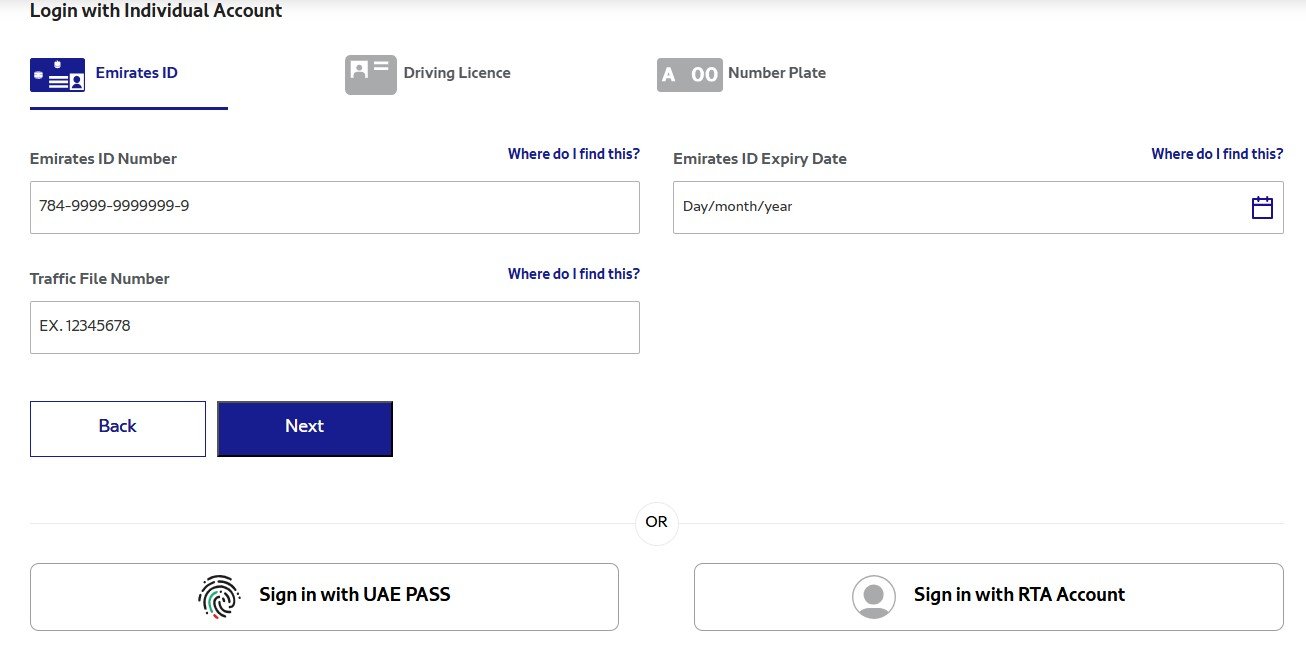
The Dubai Drive app, Dubai Now app, and the RTA website all support full online renewal. The process takes 10–15 minutes if your insurance is active and synced with the RTA system. You’ll receive a digital Mulkiya immediately, with the option to have a physical card couriered to your address for an additional AED 20–25
- Log in via the Dubai Drive app or rta.ae using your UAE Pass or RTA credentials
- Select your vehicle and upload your Emirates ID and valid insurance certificate if not already linked
- Pay the renewal fee (AED 350–500 for private cars, plus the fixed AED 30 surcharge)
- Receive your digital Mulkiya instantly, and choose delivery or collect from an RTA service point
Renewal via Tasjeel, Shamil, or other testing centres
If your car needs a physical inspection, you’ll do the renewal at the testing centre itself — they handle the RTA paperwork and fee payment in one visit. Book an appointment in advance via the RTA app; walk-ins are accepted at some centres but can mean a long wait.
After passing the inspection: clear any fines, pay the renewal fee at the counter, and walk out with your updated Mulkiya and the new sticker for your plate.
Renewal in person at an RTA Customer Happiness Centre
If you’ve run into a problem online — a system block, a corporate vehicle with unusual documentation, or a dispute on the file — in-person is the right channel. Bring your Emirates ID, driving licence, insurance certificate, and inspection certificate (if applicable). Staff at the Customer Happiness Centres are authorised to resolve most file issues on the spot.
The Vehicle Inspection: What Gets Checked
Any car more than three years old must pass a roadworthiness test before it can be registered or renewed. The inspection is not onerous if your car is in reasonable mechanical condition; it takes around 20–30 minutes at the centre. Here is what inspectors check:
| Item Checked | What Inspectors Look For |
| Tyres | Tread depth, cracks, bulges, manufacturing date |
| Brakes | Front and rear brake performance test |
| Steering & Suspension | Looseness in wheel, condition of suspension |
| Chassis & Body | Major structural damage or significant rust |
| Lights & Signals | All headlights, brake lights, and indicators |
| Exhaust & Emissions | Fumes within legal environmental limits |
| Window Tint | Max 50% on side and rear windows (RTA rule) |
The window tint rule catches people out regularly. The legal limit is 50% on side and rear windows. Anything darker than that requires removal or replacement before you’ll pass. If you’re buying a used car with very dark tint, factor this in before purchase.
If you fail: You have seven days to fix the issues and return for a free re-inspection at the same centre. Common fixes are tyre replacement, brake pad changes, or tint removal — most can be done the same day at workshops near the centres. After seven days, a new appointment and new fee apply.
Complete Fee Breakdown
Fees are set by the RTA and are consistent across registration channels. The AED 30 knowledge and innovation surcharge (AED 20 + AED 10) is added to every transaction regardless of what other fees apply.
| Item | Approx. Cost | Notes |
| New car registration (via dealer) | AED 400 | Dealer handles in most cases |
| Annual renewal — private car | AED 350–500 | Depends on vehicle class/weight |
| Vehicle inspection (Tasjeel/Shamil) | AED 150–200 | Only cars over 3 years old |
| Knowledge & Innovation surcharge | AED 30 (fixed) | AED 20 + AED 10, always added |
| Ownership transfer fee | AED 350–400 | Buyer’s responsibility |
| Selling agreement fee | AED 50 | Buyer pays at signing |
| Late renewal fine | AED 500/month | After 30-day grace period |
| Standard number plate | AED 35–50 | Premium plates vary widely |
| Mulkiya home delivery | AED 30–50 | Optional courier service |
Figures current as of June 2026. Verify at rta.ae before any transaction as fees are subject to revision.
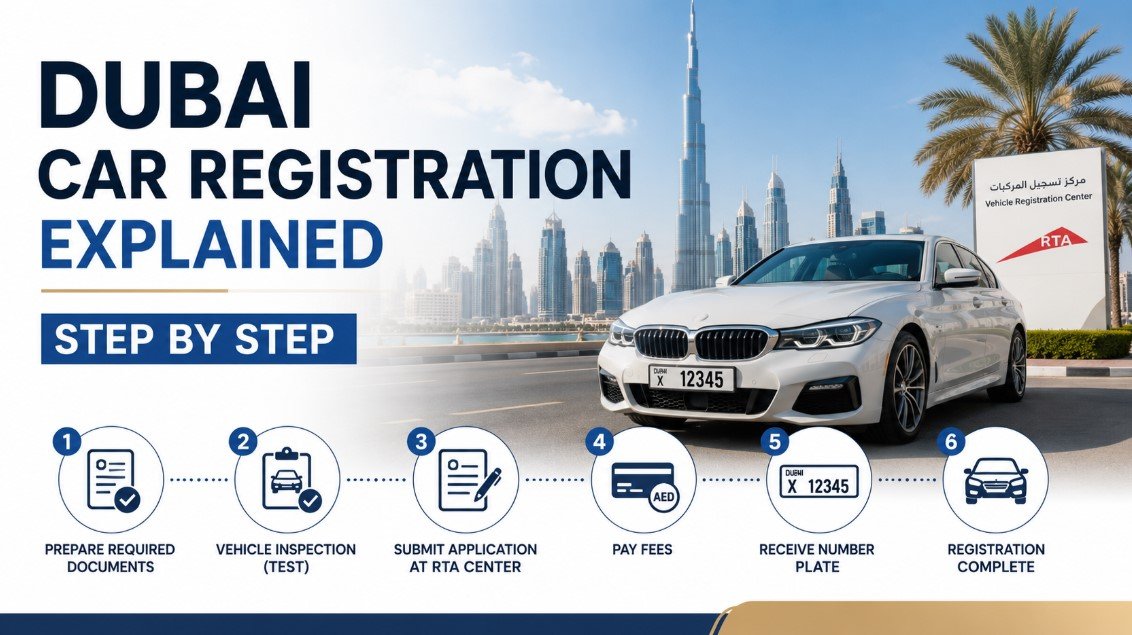
Registration steps : Get the car inspected at an authorised testing centre, unless it was made in the last three years. Make sure the inspection passes. Buy insurance from an authorised insurer. Pay any fines. Submit the registration application through an approved channel. Pay the registration fees. Collect the Mulkiya and the plate numbers, if needed.
Common Questions ( FAQ )
Can I drive while waiting for my new Mulkiya after a transfer?
No. Once the sale is completed and the seller has surrendered the plates, you technically cannot drive the car until the registration is in your name with new plates issued. In practice, the transfer process can often be completed the same day at a testing centre. Plan accordingly.
What happens if I miss the 30-day grace period?
Fines of AED 500 per month begin accumulating. If you are stopped while driving an unregistered vehicle, you face a separate AED 500 fine plus four black points, and the car may be impounded for up to seven days. The monthly fines cap at AED 500, but the impoundment and black points are additional and non-capped. Renew as soon as possible; there is no benefit to waiting.
Does the Mulkiya need to be in the car at all times?
The digital version (in the Dubai Drive app) is legally accepted. You do not need to carry the physical card, though it is worth keeping it somewhere accessible. A photo on your phone of the Mulkiya is generally not accepted — use the official app version. If you ever plan to drive the car outside the UAE (like road-tripping to Oman), you must carry the physical Mulkiya card. Foreign border control and traffic authorities will require the hard copy.
Can I register a car in Dubai if I live in another emirate?
Each emirate has its own registration authority — the RTA manages Dubai specifically. If you live in RAK, Sharjah, or Abu Dhabi, your car is registered with that emirate’s transport authority, not the RTA. However, if your car is already registered in Dubai and you move, you can choose to keep the Dubai registration and renew annually without issue.
What if my insurance expires before my Mulkiya?
Insurance must be valid to renew registration. The RTA system checks this automatically. If your policy is expiring close to your renewal date, renew the insurance first — many insurers allow early renewal without penalty. Several insurance companies in the UAE also offer a combined renewal service that handles both simultaneously.
How far in advance can I renew my registration?
Up to 150 days before the expiry date. The new Mulkiya will be dated from the day after the current one expires, so you don’t lose any of your registration period by renewing early.
Five Things That Make Renewal Easier
- Link your insurance digitally. Major insurers in the UAE now sync your policy directly with the RTA system. If this is set up correctly, you’ll never need to manually upload a certificate.
- Book inspection appointments in advance. Tasjeel centres near Al Quoz and Deira are busy; weekend slots fill quickly. The RTA app shows real-time availability and lets you book same-day in quieter periods.
- Clear fines before, not during. You can pay fines via the Dubai Police app or through the RTA portal. Clearing them the day before renewal avoids any sync delay between systems.
- Choose courier delivery for the physical card. It costs AED 30–50 and saves a trip to collect. The digital Mulkiya is valid the moment you complete payment, so you’re not waiting for the physical version to drive legally.
- Set a 60-day reminder. Not 30. If your car needs inspection, booking, passing, and renewal can take a week in a worst case. A 60-day window gives you room to deal with an unexpected failure without getting close to the fine period.
The Bottom Line
Dubai car registration is genuinely one of the more functional government processes in the UAE. The online renewal route, when your documents are in order, takes around 15 minutes. The inspection system is predictable and the fees are consistent. The situations that cause problems are almost always the same: unlinked insurance, uncleared fines, or leaving renewal until after the grace period has closed.
New to Dubai and registering a car for the first time? Let the dealership handle the initial registration. Buying used? Do the ownership transfer the same day as the inspection. Already a resident? Renew online, 30–60 days early, and save the physical card somewhere you’ll find it next year.
Information correct as of June 2026. RTA fees and procedures are subject to change; always verify at rta.ae before any registration transaction.
Related : 10 Smart Ways to Use Your Emirates ID in Everyday UAE Life