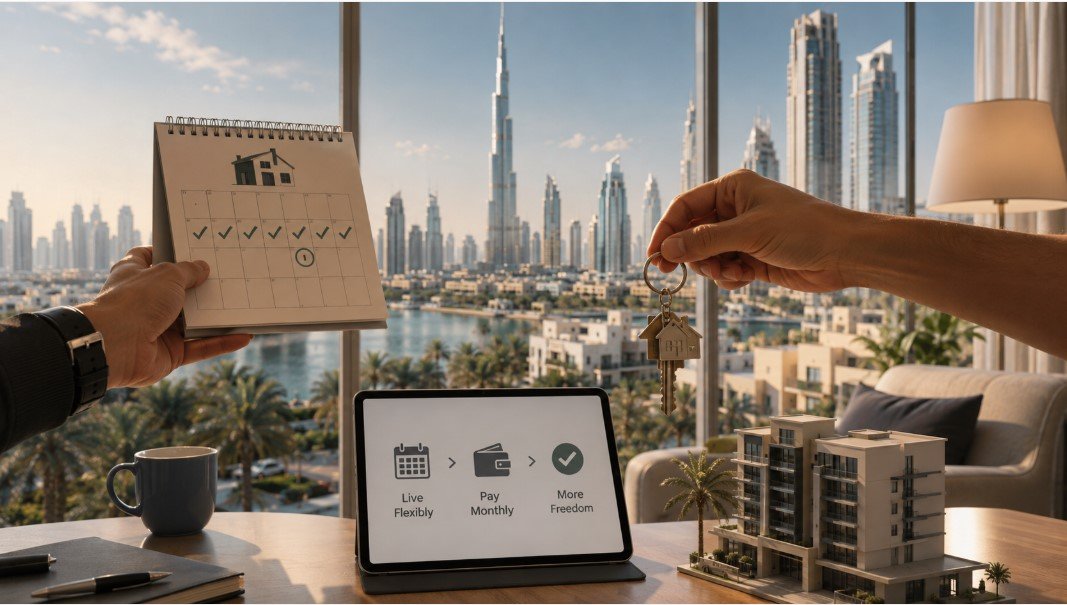
If you have ever rented a home in Dubai, you already know the drill. Most landlords expect the annual rent upfront, split into one, two, or four post-dated cheques. For many tenants, especially those who have just arrived or who earn a monthly salary, gathering tens of thousands of dirhams every few months is a serious financial strain. It can mean dipping into savings, delaying other payments, or simply passing on a property you actually want.
That pressure is exactly why the Dubai Land Department launched FlexiRent in June 2026. The initiative is designed to bring more flexibility to the rental market by allowing tenants to spread payments across monthly, quarterly, or semi-annual instalments. But here is the critical detail that often gets lost in the headlines: FlexiRent does not give every tenant an automatic right to pay monthly. The programme operates through voluntary participation by property management companies, and eligibility depends on several factors that are not always obvious at first glance.
Here is exactly how FlexiRent works, who actually qualifies, what payment options are available, and what both tenants and landlords stand to gain from the system.
What Is FlexiRent?
Dubai FlexiRent is an initiative rolled out by the Dubai Land Department to modernise how rental payments are structured across the emirate. Instead of forcing every tenant into the traditional one or four-cheque model, the programme allows participating property management companies to offer alternative schedules that better match a tenant’s cash flow.
The initiative covers a wide range of property types. Apartments, villas, offices, and retail spaces can all potentially fall under FlexiRent, provided the property management company has chosen to enrol the specific unit. The programme is not a separate law that overrides existing tenancy regulations. It sits inside the DLD ecosystem as an optional layer, with all agreed terms written directly into the official tenancy contract. That means the same legal protections, the same dispute resolution frameworks, and the same registration requirements apply.
DLD’s broader vision is to make Dubai’s rental market more competitive and accessible. By reducing the upfront financial barrier, the authority hopes to attract a wider demographic of residents, increase occupancy rates, and create a more stable flow of rental income for property owners. It is part of the emirate’s push toward a smarter, more tenant-friendly real estate environment without compromising landlord rights.
The Reality Check: Can Every Tenant Pay Monthly?
No. This is the single most important point to understand before you start making plans. FlexiRent is entirely voluntary for property management companies and landlords. DLD does not force any firm to join, and even companies that have signed up retain full control over which properties enter the programme.
A property manager might offer monthly payments on a vacant two-bedroom apartment in Jumeirah while keeping an identical unit in the same building on the traditional four-cheque system. They might enrol new properties but exclude existing tenancies from revised payment terms. The decision is commercial, not legal. The company evaluates vacancy rates, tenant demand, cash flow needs, and administrative capacity before flagging a unit as eligible.
If you are an existing tenant, you cannot simply demand that your landlord switch your current contract to monthly instalments. You will need to check whether your property manager participates in FlexiRent and whether your specific unit has been included. If you are hunting for a new place, the smartest move is to ask the leasing agent upfront whether flexible payment options exist for the unit you are viewing. Do not assume. Verify.
Who Qualifies for FlexiRent?
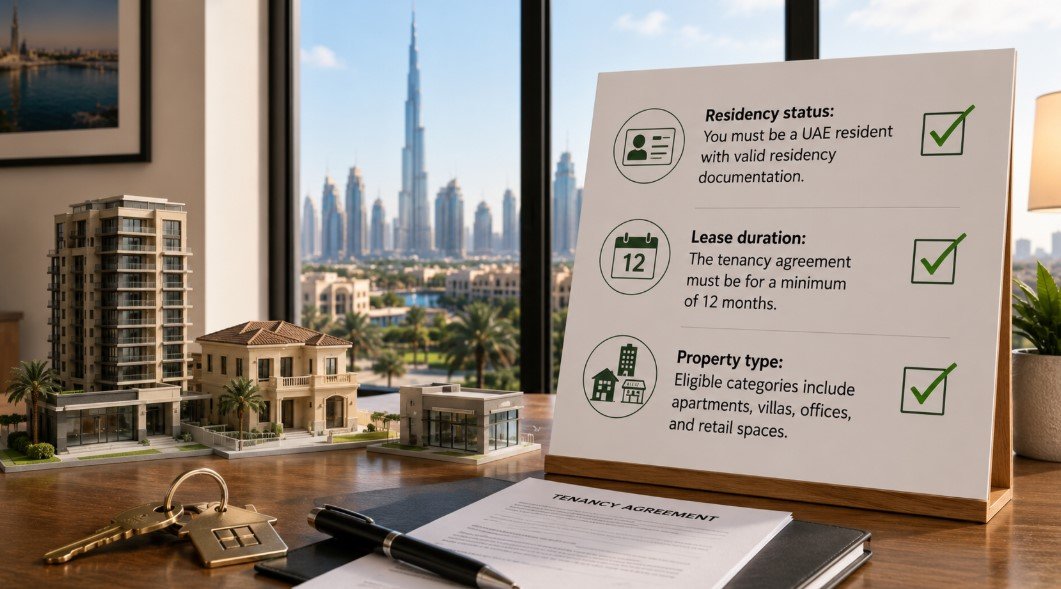
Meeting the basic eligibility criteria is straightforward, but it does not guarantee you will actually get a flexible payment plan. Here is what DLD requires:
- Residency status: You must be a UAE resident with valid residency documentation.
- Lease duration: The tenancy agreement must be for a minimum of 12 months.
- Property type: Eligible categories include apartments, villas, offices, and retail spaces.
Beyond these three points, everything depends on the property management company. They decide which units are enrolled. They decide which payment structures to offer. And they decide whether to include additional incentives like grace periods or discounts. If your company does not participate, or if your specific building has not been flagged, you will not be able to access FlexiRent benefits regardless of how perfectly you meet the personal eligibility criteria.
What Payment Options Are Actually Available?
FlexiRent is not a one-size-fits-all programme. Participating companies can choose from a menu of structures based on their own policies and the specific property. The options include:
- Monthly payments: The annual rent is divided into twelve instalments.
- Quarterly payments: The rent is split into four payments across the year.
- Semi-annual payments: Two larger instalments every six months.
- Grace periods: Some companies may offer a delayed start to the first payment.
- Discounts and promotions: Early-payment incentives or promotional packages may also be available depending on the company.
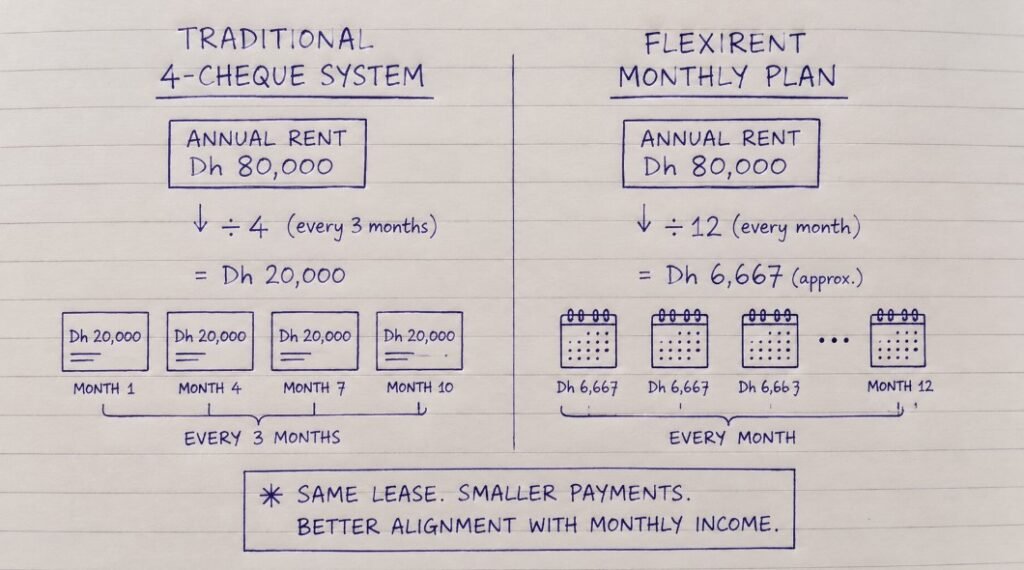
To put this in real numbers, imagine an annual rent of Dh80,000. Under the traditional four-cheque system, you would pay Dh20,000 every three months. If the property manager offers a monthly plan through FlexiRent, that same lease breaks down to roughly Dh6,667 per month. For a salaried tenant, that alignment with monthly income can make a significant difference to household budgeting.
How to Apply for FlexiRent
The application process is designed to be simple and digital. There are three main steps:
- Contact the property management company. Ask whether they participate in FlexiRent and what benefits are available for the specific unit you are interested in. This is where you find out whether monthly, quarterly, or other options exist.
- Select your arrangement. The company presents the available options. You review them, ask questions, and both parties agree on the schedule that works best for your financial situation.
- Lock it into the contract. Once you agree on the terms, the property owner or manager incorporates the payment schedule, grace period, or any other benefits directly into the tenancy contract. The contract is then registered within the DLD ecosystem.
All of this happens through the property manager’s existing approved systems. The contract remains a standard Dubai tenancy agreement, just with modified payment terms. You do not sign a separate side agreement or work through a third-party payment platform controlled by DLD.
Benefits for Tenants
The most immediate benefit is financial breathing room. Paying Dh6,667 a month feels very different from writing a single cheque for Dh20,000. It allows tenants to align their biggest expense with their salary cycle, reducing the need to maintain large cash reserves or rely on credit between quarterly payments.
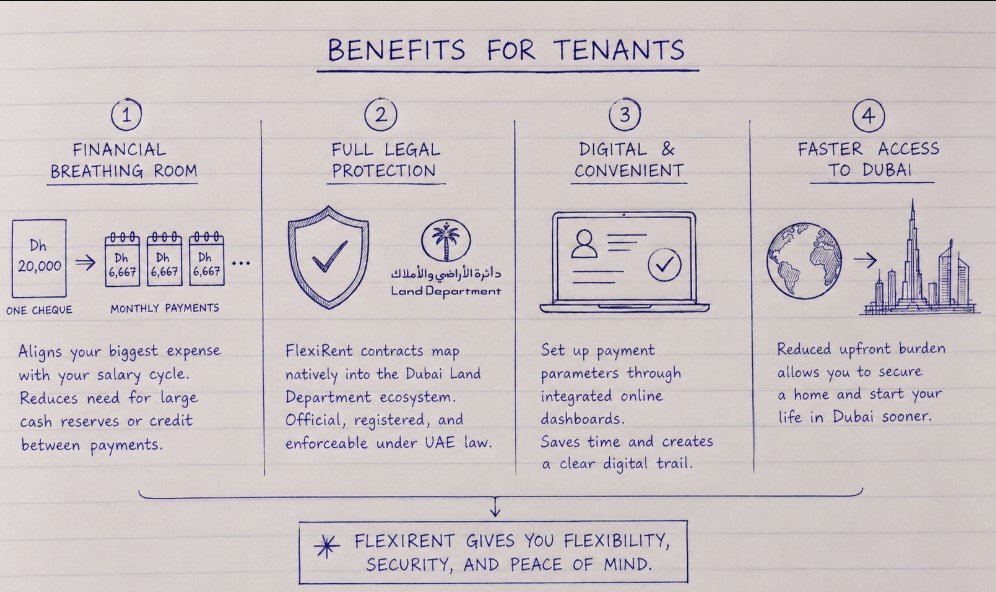
There is also a transparency benefit. Because every FlexiRent contract maps natively into the Dubai Land Department ecosystem, tenants retain full legal recourse. You are not operating in a grey market or relying on an informal arrangement with a landlord. The contract is official, registered, and enforceable under UAE law.
The digital onboarding process is another plus. Instead of shuffling paper forms between offices, many participating companies allow tenants to set up payment parameters through integrated online dashboards. That saves time and creates a clear digital trail of what was agreed.
Finally, for tenants moving from abroad, the reduced upfront burden can make Dubai accessible sooner. Instead of waiting months to build up enough savings for four cheques, a monthly structure allows you to secure a home and start your life here faster.
Benefits for Landlords and Property Companies
From the owner’s side, FlexiRent is a vacancy-fighting tool. Large upfront payments filter out a segment of the tenant market. By offering monthly or quarterly options, property managers open the door to residents who have stable incomes but limited savings. That broader pool often translates into faster lease-ups and lower vacancy periods.
There is also a cash flow argument. While some landlords prefer the certainty of a few large cheques, others find that frequent smaller payments actually reduce delays. A tenant who can comfortably afford Dh6,667 every month is less likely to default than one who is scrambling to gather Dh20,000 before a quarterly deadline. DLD tracks payment compliance across the programme, and early data suggests that aligned payment schedules lead to fewer collection issues.
For property management companies, the initiative offers a competitive edge. In a crowded rental market, being able to advertise flexible payment terms can be the difference between a signed lease and a vacant unit. Companies can also add eligible units to the programme over time, allowing them to test the model on specific properties before rolling it out across their entire portfolio.
Which Companies Are Participating?
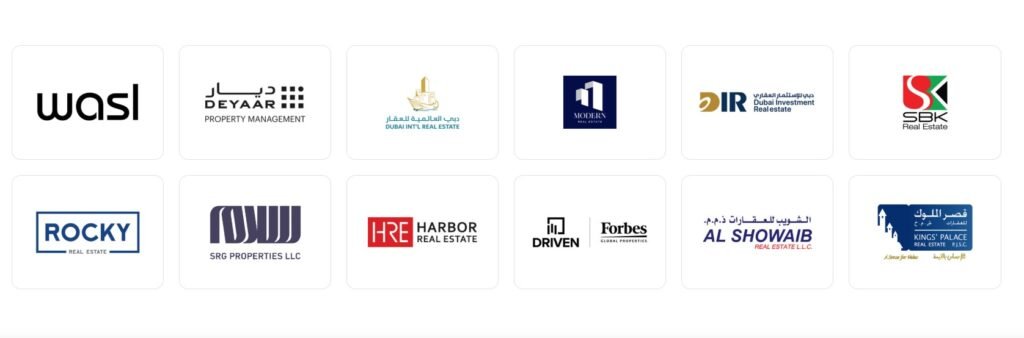
DLD has partnered with a number of established real estate and property management firms. The initial list of participating companies includes:
- Wasl Properties
- Deyaar Property Management
- Dubai World Real Estate
- Modern Real Estate
- Dubai Investment Real Estate
- SBK Real Estate
- Rocky Real Estate
- SRG Properties
- Harbor Real Estate
- Driven Properties
- Al Showaib Real Estate
This list is expected to grow as the market responds to tenant demand. If your current property manager is not on it yet, that does not mean they will never join. The programme is designed to expand as more companies see the commercial benefit of offering flexible terms.
What DLD Actually Does
It is important to understand the division of responsibilities here. The Dubai Land Department provides the regulatory framework, technical integration support, and performance monitoring for FlexiRent. It sets the rules, tracks enrolled units, monitors contract volumes, and keeps an eye on occupancy rates and payment compliance.
However, DLD does not collect rent from tenants. It does not manage individual contracts, handle tenant data, or process payments. Those tasks remain with the property management company. When you pay your monthly instalment, you are paying the landlord or their authorised agent, not a government cashier. The DLD’s role is oversight and ecosystem management, not day-to-day administration.
What If You Do Not Qualify?
If your property manager does not participate in FlexiRent, or if your specific unit has not been enrolled, you still have a few options. The most obvious is to negotiate directly with your landlord. Some private landlords are willing to accept monthly payments even outside the FlexiRent framework, though this is entirely at their discretion and should always be documented in the official tenancy contract.
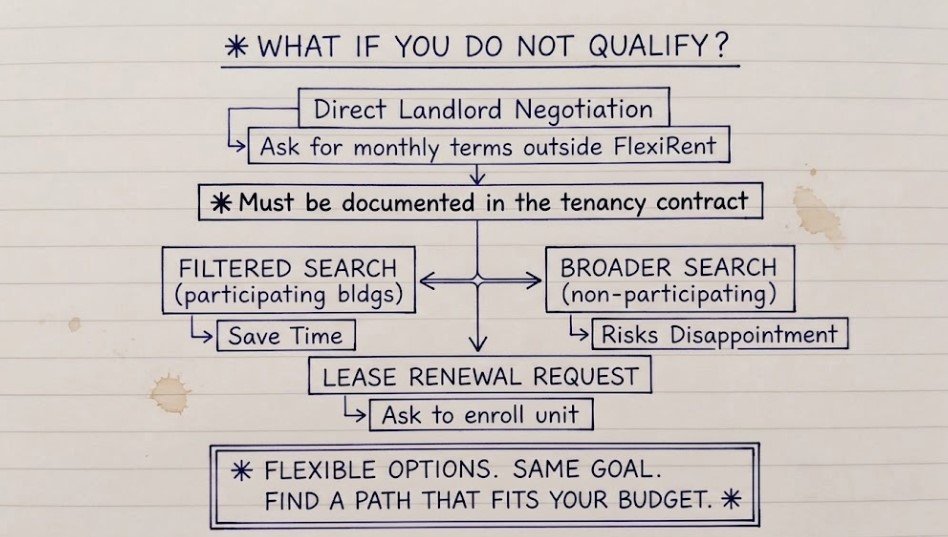
Another option is to focus your property search on buildings and developers known to participate. If monthly payments are non-negotiable for your budget, filtering your search by FlexiRent availability from the start will save you time and disappointment.
Finally, if you are currently on a traditional four-cheque lease, you can always ask your property manager whether they would consider enrolling your unit during renewal. The programme is evolving, and a company that did not offer flexible terms six months ago might have changed its policy.
Important Things to Know Before You Sign
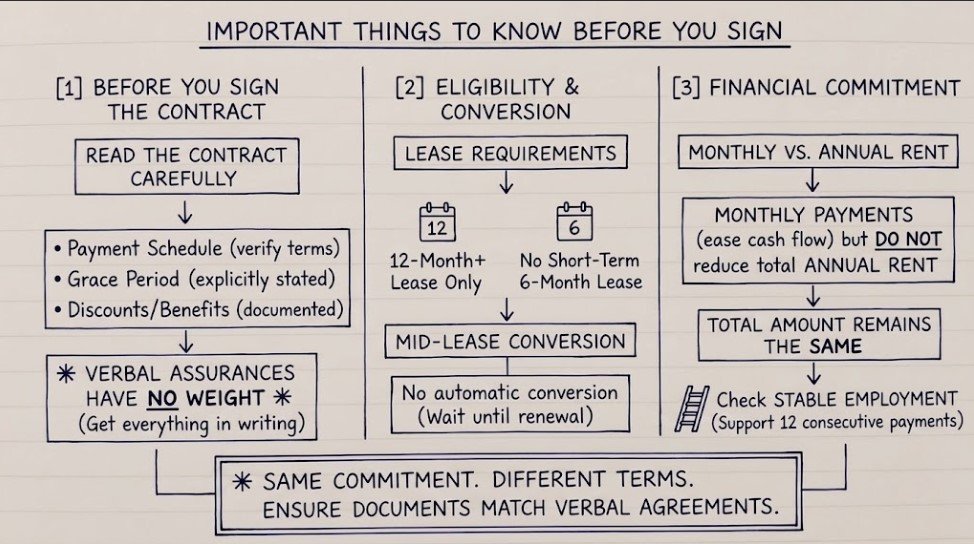
If you are lucky enough to find a FlexiRent property, read the contract carefully before signing. Make sure the payment schedule, any grace period, and any promised discounts or benefits are explicitly written into the tenancy contract. Verbal assurances from a leasing agent carry no weight if they are not documented.
Remember that FlexiRent only applies to standard lease agreements of 12 months or more. If you are looking for a short-term six-month rental, this initiative will not cover you. Also, if you are an existing tenant hoping to switch mid-lease, you will generally need to wait until renewal and negotiate the new terms then. There is no automatic conversion process for active contracts.
Keep in mind that while monthly payments ease cash flow, they do not reduce the total annual rent. You are still committed to the full amount over the course of the year. Make sure your employment situation is stable enough to support twelve consecutive payments before you commit.
Final Thoughts
FlexiRent represents a meaningful shift in how Dubai approaches rental payments. It recognises that the traditional lump-sum or quarterly cheque model does not suit every tenant’s financial reality, and it gives property managers a regulated, transparent way to offer alternatives. But it is not a universal right. Your ability to pay monthly depends on your residency status, your property type, your property management company’s participation, and whether your specific unit has been enrolled.
If flexible rent is a priority for you, start the conversation early. Ask property managers directly about FlexiRent before you view a unit. Check the DLD website for updated lists of participating companies. And always make sure any agreed terms are locked into your official tenancy contract before you hand over a dirham. With the right property and the right company, you can finally align your rent payments with your salary cycle without sacrificing the legal protection of a DLD-registered lease.
Disclaimer: FlexiRent terms, eligibility, payment options, and participating properties may vary. Always confirm the latest terms with the property manager and official Dubai Land Department sources before signing a tenancy contract.